.png)
One of the world's largest diversified natural resource companies operates across mining, metals processing, and commodity trading - with operations spanning more than ten countries across Africa, Latin America, Asia-Pacific, and Europe. The Group Sustainable Development (SD) team, based at the company's European headquarters, serves as the global reputation risk manager - coordinating ESG intelligence, stakeholder engagement, and issue monitoring across regional and site-level teams operating in English, Spanish, Portuguese, and French.
The SD team faced a growing mandate to manage ESG material topics proactively while satisfying an expanding set of disclosure requirements - including Section 172(1) of the UK Companies Act, the EU Corporate Sustainability Reporting Directive (CSRD), and the GRI Sector Standard for Mining.
The SD team's existing approach to ESG intelligence and stakeholder management had several structural gaps:
• Section 172 stakeholder engagement reports were compiled manually twice a year from various national and regional teams, each using inconsistent methods and formats - making it difficult to produce a coherent, defensible narrative for board and regulatory purposes.
• Board-level ESG reporting was labour-intensive and reactive - assembled from scattered inputs with no centralised system to capture engagement history, issue trends, or stakeholder positioning in a structured way.
• External consultants were periodically engaged to interview stakeholders, but this approach was expensive, limited in coverage, and produced only periodic snapshots rather than continuous intelligence.
• Media monitoring generated high volumes of noise with limited actionable signal - cursory mentions of the company were mixed with substantive coverage, making it difficult to identify the issues and stakeholders that required attention.
• The company had no structured capability for mapping global NGO and activist networks - including funders, campaign connections, and their relationship to responsible sourcing topics - despite these being a primary source of reputational risk.
TSC.ai deployed Genie as the SD team's ESG intelligence centre - a centralised platform for issue intelligence, stakeholder engagement, and disclosure reporting across the company's global operations. The system was configured to monitor ESG material topics, track stakeholder conversations within an issue framework, and provide AI-powered analysis of media coverage filtered for relevance and signal quality.
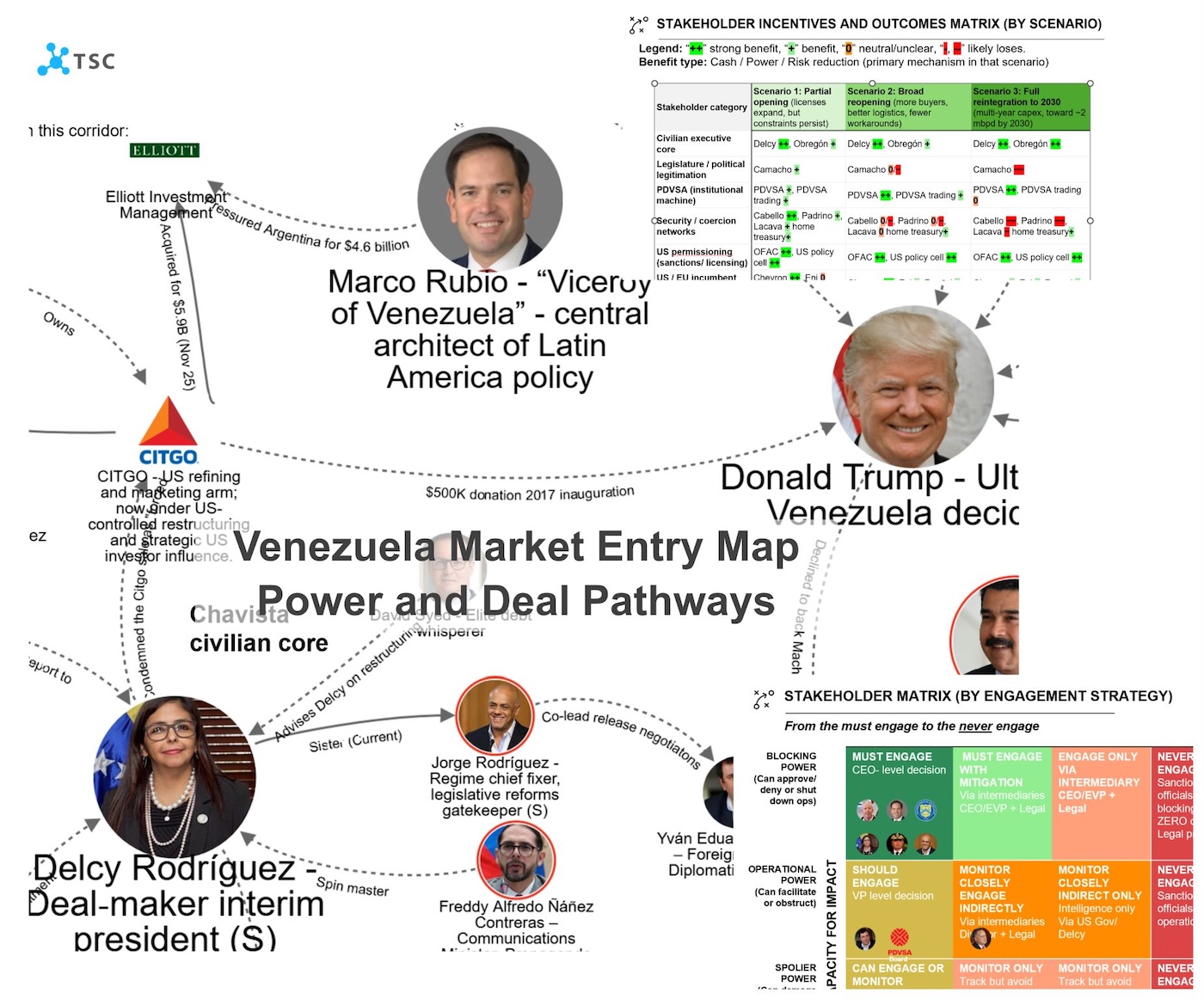
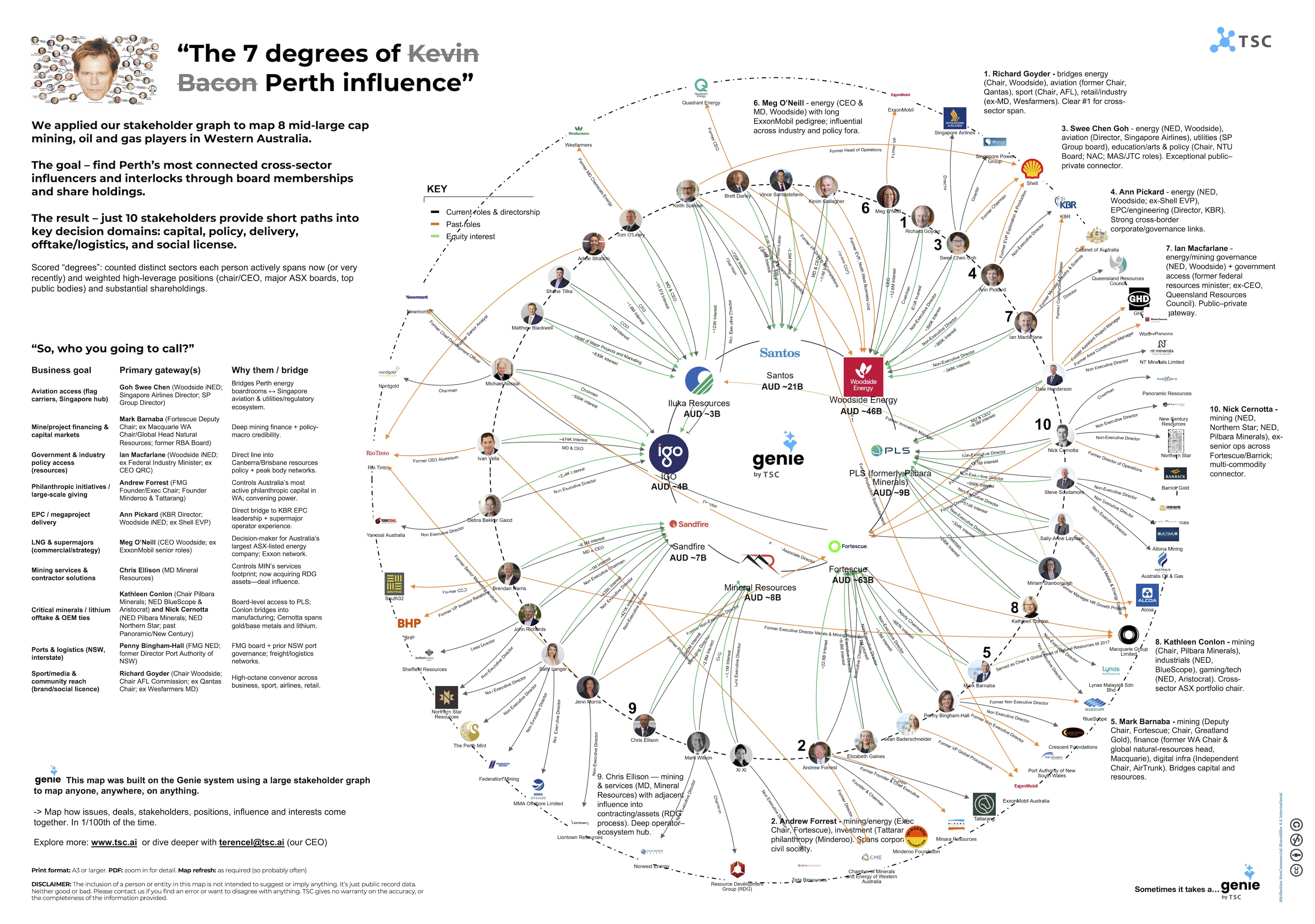
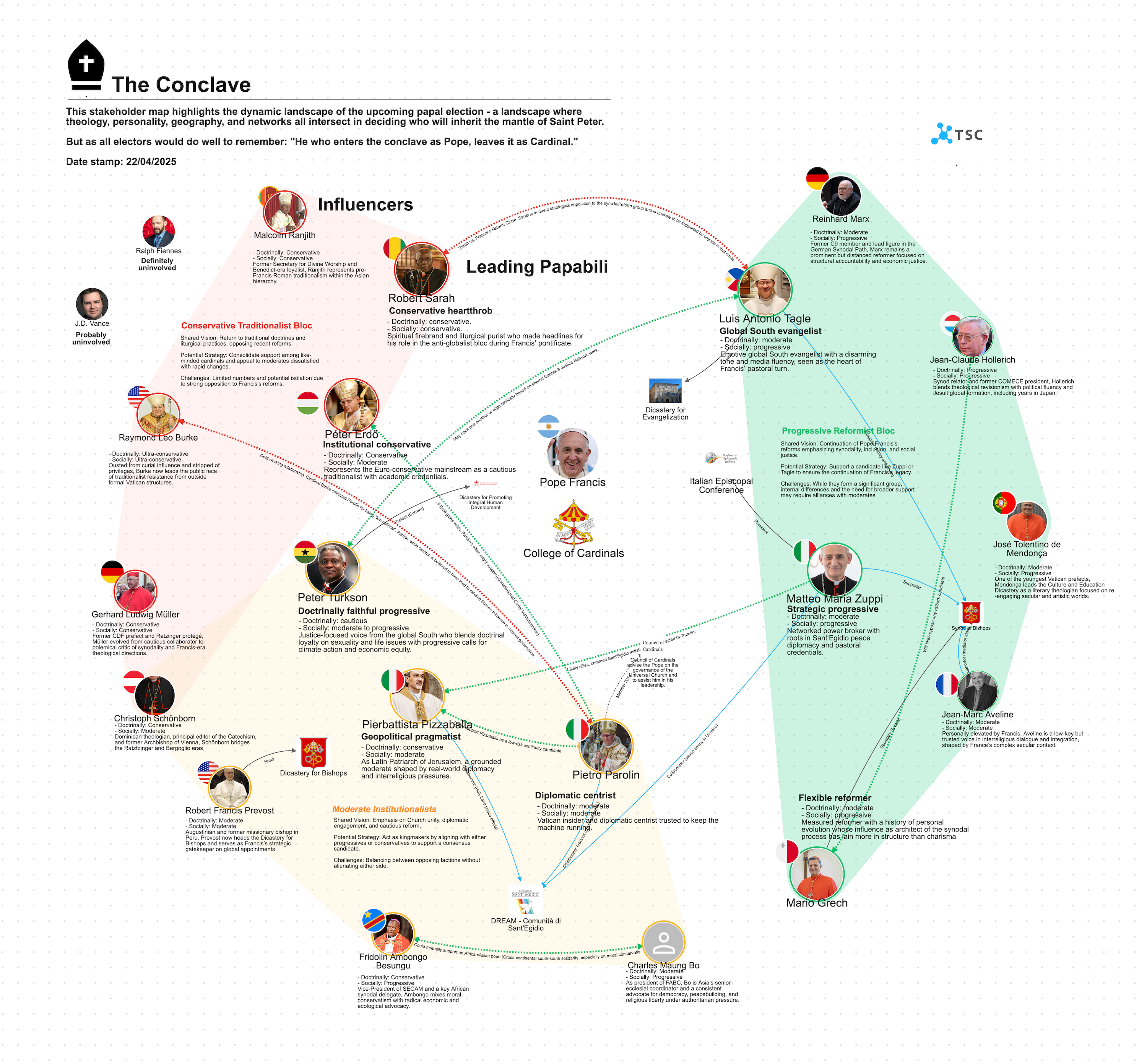
For stakeholder management, Genie became the single repository for capturing all engagements on an issue framework perspective - enabling the team to identify new engagement opportunities and develop aligned strategy across regional teams. Network mapping capabilities were deployed to visualise NGO ecosystems, activist networks, and their connections to responsible sourcing campaigns.
Automated dashboards, newsletters, and reporting workflows were configured to feed directly into disclosure requirements - transforming the twice-yearly manual compilation into a continuous, structured reporting capability aligned with Section 172, CSRD, and GRI Mining standards.
The SD team was responsible for monitoring and analysing the full spectrum of ESG material topics relevant to a diversified mining and commodities operation - from climate transition and water stewardship to human rights, community relations, and responsible sourcing.
Media monitoring was generating significant volume, but the signal-to-noise ratio was poor. As the Head of Sustainable Development observed, there was a lot of noise from cursory mentions of the company, making it difficult to distinguish substantive developments from background chatter and to direct engagement resources accordingly.
Genie was configured as the team's ESG materiality scanning layer, with monitoring structured around the company's material topics and tailored to filter for relevance. Mining content classification and topic modelling enabled the team to separate substantive issue developments from routine mentions, while targeted sentiment analysis by stakeholder group provided a more granular view than the generic sentiment scoring previously available.
The platform's AI capability for summarising and analysing multiple articles became a core part of the daily workflow - the SD team lead logs in each day to check assets and stakeholders across the company's mining sites tracked in Genie.
Ask Genie power briefs enabled the team to generate rapid intelligence summaries on emerging issues without requiring dedicated analysts for each theme.
The company faced growing disclosure requirements under Section 172(1) of the UK Companies Act, the EU CSRD, and the GRI Sector Standard for Mining - all of which demand structured evidence of stakeholder engagement and consideration of stakeholder interests in decision-making. The existing process involved compiling reports manually twice a year from various national and regional teams, each using different methods and formats. Board reporting on stakeholder engagement was described internally as very manually done, making it difficult to produce consistent, auditable, and defensible narratives.
Genie became the centralised engagement documentation system - capturing stakeholder interactions within a structured issue framework that mapped directly to disclosure categories. Each engagement was recorded with linked stakeholder profiles, issue tags, and outcome notes, creating an auditable trail that could be queried by topic, region, or stakeholder group.
The platform's reporting workflows were configured to align with Section 172, CSRD, and GRI reporting structures - enabling the team to generate disclosure-ready outputs from the same data used for daily intelligence and engagement planning, rather than assembling reports from scratch twice a year.
As a major mining and commodities company with operations in high-scrutiny geographies, the company was a frequent subject of NGO campaigns and activist pressure - particularly around responsible sourcing, environmental impact, and community rights. The SD team needed to understand not just individual organisations, but the network structures connecting NGOs, activist groups, campaign funders, and their relationships to specific issues. Without structured mapping, the team relied on ad hoc research and consultancy reports that provided limited visibility into how these networks operated and evolved.
Genie's network mapping capabilities were deployed to visualise the ecosystems surrounding key reputational risk topics. The team built maps connecting NGOs, activist groups, funders, and campaign networks - overlaying these with issue intelligence and media coverage to identify which organisations were driving specific narratives and where new campaign activity was emerging.
Stakeholder group management enabled the team to segment and track these networks systematically. The maps became a strategic tool for anticipating reputational risks and informing engagement strategy with civil society stakeholders.
What began as an initiative to build a centralised ESG intelligence platform has become the operational backbone for the company's global sustainable development function. The SD team now operates with continuous visibility across ESG material topics, structured stakeholder engagement documentation, and network intelligence on the NGO and activist ecosystems most relevant to its operations - replacing manual compilation, periodic consultancy snapshots, and fragmented monitoring with a scalable, disclosure-ready intelligence capability.
One of the world's largest diversified natural resource companies operates across mining, metals processing, and commodity trading - with operations spanning more than ten countries across Africa, Latin America, Asia-Pacific, and Europe. The Group Sustainable Development (SD) team, based at the company's European headquarters, serves as the global reputation risk manager - coordinating ESG intelligence, stakeholder engagement, and issue monitoring across regional and site-level teams operating in English, Spanish, Portuguese, and French.
The SD team faced a growing mandate to manage ESG material topics proactively while satisfying an expanding set of disclosure requirements - including Section 172(1) of the UK Companies Act, the EU Corporate Sustainability Reporting Directive (CSRD), and the GRI Sector Standard for Mining.
The SD team's existing approach to ESG intelligence and stakeholder management had several structural gaps:
• Section 172 stakeholder engagement reports were compiled manually twice a year from various national and regional teams, each using inconsistent methods and formats - making it difficult to produce a coherent, defensible narrative for board and regulatory purposes.
• Board-level ESG reporting was labour-intensive and reactive - assembled from scattered inputs with no centralised system to capture engagement history, issue trends, or stakeholder positioning in a structured way.
• External consultants were periodically engaged to interview stakeholders, but this approach was expensive, limited in coverage, and produced only periodic snapshots rather than continuous intelligence.
• Media monitoring generated high volumes of noise with limited actionable signal - cursory mentions of the company were mixed with substantive coverage, making it difficult to identify the issues and stakeholders that required attention.
• The company had no structured capability for mapping global NGO and activist networks - including funders, campaign connections, and their relationship to responsible sourcing topics - despite these being a primary source of reputational risk.
TSC.ai deployed Genie as the SD team's ESG intelligence centre - a centralised platform for issue intelligence, stakeholder engagement, and disclosure reporting across the company's global operations. The system was configured to monitor ESG material topics, track stakeholder conversations within an issue framework, and provide AI-powered analysis of media coverage filtered for relevance and signal quality.
For stakeholder management, Genie became the single repository for capturing all engagements on an issue framework perspective - enabling the team to identify new engagement opportunities and develop aligned strategy across regional teams. Network mapping capabilities were deployed to visualise NGO ecosystems, activist networks, and their connections to responsible sourcing campaigns.
Automated dashboards, newsletters, and reporting workflows were configured to feed directly into disclosure requirements - transforming the twice-yearly manual compilation into a continuous, structured reporting capability aligned with Section 172, CSRD, and GRI Mining standards.
The SD team was responsible for monitoring and analysing the full spectrum of ESG material topics relevant to a diversified mining and commodities operation - from climate transition and water stewardship to human rights, community relations, and responsible sourcing.
Media monitoring was generating significant volume, but the signal-to-noise ratio was poor. As the Head of Sustainable Development observed, there was a lot of noise from cursory mentions of the company, making it difficult to distinguish substantive developments from background chatter and to direct engagement resources accordingly.
Genie was configured as the team's ESG materiality scanning layer, with monitoring structured around the company's material topics and tailored to filter for relevance. Mining content classification and topic modelling enabled the team to separate substantive issue developments from routine mentions, while targeted sentiment analysis by stakeholder group provided a more granular view than the generic sentiment scoring previously available.
The platform's AI capability for summarising and analysing multiple articles became a core part of the daily workflow - the SD team lead logs in each day to check assets and stakeholders across the company's mining sites tracked in Genie.
Ask Genie power briefs enabled the team to generate rapid intelligence summaries on emerging issues without requiring dedicated analysts for each theme.
The company faced growing disclosure requirements under Section 172(1) of the UK Companies Act, the EU CSRD, and the GRI Sector Standard for Mining - all of which demand structured evidence of stakeholder engagement and consideration of stakeholder interests in decision-making. The existing process involved compiling reports manually twice a year from various national and regional teams, each using different methods and formats. Board reporting on stakeholder engagement was described internally as very manually done, making it difficult to produce consistent, auditable, and defensible narratives.
Genie became the centralised engagement documentation system - capturing stakeholder interactions within a structured issue framework that mapped directly to disclosure categories. Each engagement was recorded with linked stakeholder profiles, issue tags, and outcome notes, creating an auditable trail that could be queried by topic, region, or stakeholder group.
The platform's reporting workflows were configured to align with Section 172, CSRD, and GRI reporting structures - enabling the team to generate disclosure-ready outputs from the same data used for daily intelligence and engagement planning, rather than assembling reports from scratch twice a year.
As a major mining and commodities company with operations in high-scrutiny geographies, the company was a frequent subject of NGO campaigns and activist pressure - particularly around responsible sourcing, environmental impact, and community rights. The SD team needed to understand not just individual organisations, but the network structures connecting NGOs, activist groups, campaign funders, and their relationships to specific issues. Without structured mapping, the team relied on ad hoc research and consultancy reports that provided limited visibility into how these networks operated and evolved.
Genie's network mapping capabilities were deployed to visualise the ecosystems surrounding key reputational risk topics. The team built maps connecting NGOs, activist groups, funders, and campaign networks - overlaying these with issue intelligence and media coverage to identify which organisations were driving specific narratives and where new campaign activity was emerging.
Stakeholder group management enabled the team to segment and track these networks systematically. The maps became a strategic tool for anticipating reputational risks and informing engagement strategy with civil society stakeholders.
What began as an initiative to build a centralised ESG intelligence platform has become the operational backbone for the company's global sustainable development function. The SD team now operates with continuous visibility across ESG material topics, structured stakeholder engagement documentation, and network intelligence on the NGO and activist ecosystems most relevant to its operations - replacing manual compilation, periodic consultancy snapshots, and fragmented monitoring with a scalable, disclosure-ready intelligence capability.
One of the world's largest diversified natural resource companies operates across mining, metals processing, and commodity trading - with operations spanning more than ten countries across Africa, Latin America, Asia-Pacific, and Europe. The Group Sustainable Development (SD) team, based at the company's European headquarters, serves as the global reputation risk manager - coordinating ESG intelligence, stakeholder engagement, and issue monitoring across regional and site-level teams operating in English, Spanish, Portuguese, and French.
The SD team faced a growing mandate to manage ESG material topics proactively while satisfying an expanding set of disclosure requirements - including Section 172(1) of the UK Companies Act, the EU Corporate Sustainability Reporting Directive (CSRD), and the GRI Sector Standard for Mining.
The SD team's existing approach to ESG intelligence and stakeholder management had several structural gaps:
• Section 172 stakeholder engagement reports were compiled manually twice a year from various national and regional teams, each using inconsistent methods and formats - making it difficult to produce a coherent, defensible narrative for board and regulatory purposes.
• Board-level ESG reporting was labour-intensive and reactive - assembled from scattered inputs with no centralised system to capture engagement history, issue trends, or stakeholder positioning in a structured way.
• External consultants were periodically engaged to interview stakeholders, but this approach was expensive, limited in coverage, and produced only periodic snapshots rather than continuous intelligence.
• Media monitoring generated high volumes of noise with limited actionable signal - cursory mentions of the company were mixed with substantive coverage, making it difficult to identify the issues and stakeholders that required attention.
• The company had no structured capability for mapping global NGO and activist networks - including funders, campaign connections, and their relationship to responsible sourcing topics - despite these being a primary source of reputational risk.
TSC.ai deployed Genie as the SD team's ESG intelligence centre - a centralised platform for issue intelligence, stakeholder engagement, and disclosure reporting across the company's global operations. The system was configured to monitor ESG material topics, track stakeholder conversations within an issue framework, and provide AI-powered analysis of media coverage filtered for relevance and signal quality.
For stakeholder management, Genie became the single repository for capturing all engagements on an issue framework perspective - enabling the team to identify new engagement opportunities and develop aligned strategy across regional teams. Network mapping capabilities were deployed to visualise NGO ecosystems, activist networks, and their connections to responsible sourcing campaigns.
Automated dashboards, newsletters, and reporting workflows were configured to feed directly into disclosure requirements - transforming the twice-yearly manual compilation into a continuous, structured reporting capability aligned with Section 172, CSRD, and GRI Mining standards.
The SD team was responsible for monitoring and analysing the full spectrum of ESG material topics relevant to a diversified mining and commodities operation - from climate transition and water stewardship to human rights, community relations, and responsible sourcing.
Media monitoring was generating significant volume, but the signal-to-noise ratio was poor. As the Head of Sustainable Development observed, there was a lot of noise from cursory mentions of the company, making it difficult to distinguish substantive developments from background chatter and to direct engagement resources accordingly.
Genie was configured as the team's ESG materiality scanning layer, with monitoring structured around the company's material topics and tailored to filter for relevance. Mining content classification and topic modelling enabled the team to separate substantive issue developments from routine mentions, while targeted sentiment analysis by stakeholder group provided a more granular view than the generic sentiment scoring previously available.
The platform's AI capability for summarising and analysing multiple articles became a core part of the daily workflow - the SD team lead logs in each day to check assets and stakeholders across the company's mining sites tracked in Genie.
Ask Genie power briefs enabled the team to generate rapid intelligence summaries on emerging issues without requiring dedicated analysts for each theme.
The company faced growing disclosure requirements under Section 172(1) of the UK Companies Act, the EU CSRD, and the GRI Sector Standard for Mining - all of which demand structured evidence of stakeholder engagement and consideration of stakeholder interests in decision-making. The existing process involved compiling reports manually twice a year from various national and regional teams, each using different methods and formats. Board reporting on stakeholder engagement was described internally as very manually done, making it difficult to produce consistent, auditable, and defensible narratives.
Genie became the centralised engagement documentation system - capturing stakeholder interactions within a structured issue framework that mapped directly to disclosure categories. Each engagement was recorded with linked stakeholder profiles, issue tags, and outcome notes, creating an auditable trail that could be queried by topic, region, or stakeholder group.
The platform's reporting workflows were configured to align with Section 172, CSRD, and GRI reporting structures - enabling the team to generate disclosure-ready outputs from the same data used for daily intelligence and engagement planning, rather than assembling reports from scratch twice a year.
As a major mining and commodities company with operations in high-scrutiny geographies, the company was a frequent subject of NGO campaigns and activist pressure - particularly around responsible sourcing, environmental impact, and community rights. The SD team needed to understand not just individual organisations, but the network structures connecting NGOs, activist groups, campaign funders, and their relationships to specific issues. Without structured mapping, the team relied on ad hoc research and consultancy reports that provided limited visibility into how these networks operated and evolved.
Genie's network mapping capabilities were deployed to visualise the ecosystems surrounding key reputational risk topics. The team built maps connecting NGOs, activist groups, funders, and campaign networks - overlaying these with issue intelligence and media coverage to identify which organisations were driving specific narratives and where new campaign activity was emerging.
Stakeholder group management enabled the team to segment and track these networks systematically. The maps became a strategic tool for anticipating reputational risks and informing engagement strategy with civil society stakeholders.
What began as an initiative to build a centralised ESG intelligence platform has become the operational backbone for the company's global sustainable development function. The SD team now operates with continuous visibility across ESG material topics, structured stakeholder engagement documentation, and network intelligence on the NGO and activist ecosystems most relevant to its operations - replacing manual compilation, periodic consultancy snapshots, and fragmented monitoring with a scalable, disclosure-ready intelligence capability.
One of the world's largest diversified natural resource companies operates across mining, metals processing, and commodity trading - with operations spanning more than ten countries across Africa, Latin America, Asia-Pacific, and Europe. The Group Sustainable Development (SD) team, based at the company's European headquarters, serves as the global reputation risk manager - coordinating ESG intelligence, stakeholder engagement, and issue monitoring across regional and site-level teams operating in English, Spanish, Portuguese, and French.
The SD team faced a growing mandate to manage ESG material topics proactively while satisfying an expanding set of disclosure requirements - including Section 172(1) of the UK Companies Act, the EU Corporate Sustainability Reporting Directive (CSRD), and the GRI Sector Standard for Mining.
The SD team's existing approach to ESG intelligence and stakeholder management had several structural gaps:
• Section 172 stakeholder engagement reports were compiled manually twice a year from various national and regional teams, each using inconsistent methods and formats - making it difficult to produce a coherent, defensible narrative for board and regulatory purposes.
• Board-level ESG reporting was labour-intensive and reactive - assembled from scattered inputs with no centralised system to capture engagement history, issue trends, or stakeholder positioning in a structured way.
• External consultants were periodically engaged to interview stakeholders, but this approach was expensive, limited in coverage, and produced only periodic snapshots rather than continuous intelligence.
• Media monitoring generated high volumes of noise with limited actionable signal - cursory mentions of the company were mixed with substantive coverage, making it difficult to identify the issues and stakeholders that required attention.
• The company had no structured capability for mapping global NGO and activist networks - including funders, campaign connections, and their relationship to responsible sourcing topics - despite these being a primary source of reputational risk.
TSC.ai deployed Genie as the SD team's ESG intelligence centre - a centralised platform for issue intelligence, stakeholder engagement, and disclosure reporting across the company's global operations. The system was configured to monitor ESG material topics, track stakeholder conversations within an issue framework, and provide AI-powered analysis of media coverage filtered for relevance and signal quality.
For stakeholder management, Genie became the single repository for capturing all engagements on an issue framework perspective - enabling the team to identify new engagement opportunities and develop aligned strategy across regional teams. Network mapping capabilities were deployed to visualise NGO ecosystems, activist networks, and their connections to responsible sourcing campaigns.
Automated dashboards, newsletters, and reporting workflows were configured to feed directly into disclosure requirements - transforming the twice-yearly manual compilation into a continuous, structured reporting capability aligned with Section 172, CSRD, and GRI Mining standards.
The SD team was responsible for monitoring and analysing the full spectrum of ESG material topics relevant to a diversified mining and commodities operation - from climate transition and water stewardship to human rights, community relations, and responsible sourcing.
Media monitoring was generating significant volume, but the signal-to-noise ratio was poor. As the Head of Sustainable Development observed, there was a lot of noise from cursory mentions of the company, making it difficult to distinguish substantive developments from background chatter and to direct engagement resources accordingly.
Genie was configured as the team's ESG materiality scanning layer, with monitoring structured around the company's material topics and tailored to filter for relevance. Mining content classification and topic modelling enabled the team to separate substantive issue developments from routine mentions, while targeted sentiment analysis by stakeholder group provided a more granular view than the generic sentiment scoring previously available.
The platform's AI capability for summarising and analysing multiple articles became a core part of the daily workflow - the SD team lead logs in each day to check assets and stakeholders across the company's mining sites tracked in Genie.
Ask Genie power briefs enabled the team to generate rapid intelligence summaries on emerging issues without requiring dedicated analysts for each theme.
The company faced growing disclosure requirements under Section 172(1) of the UK Companies Act, the EU CSRD, and the GRI Sector Standard for Mining - all of which demand structured evidence of stakeholder engagement and consideration of stakeholder interests in decision-making. The existing process involved compiling reports manually twice a year from various national and regional teams, each using different methods and formats. Board reporting on stakeholder engagement was described internally as very manually done, making it difficult to produce consistent, auditable, and defensible narratives.
Genie became the centralised engagement documentation system - capturing stakeholder interactions within a structured issue framework that mapped directly to disclosure categories. Each engagement was recorded with linked stakeholder profiles, issue tags, and outcome notes, creating an auditable trail that could be queried by topic, region, or stakeholder group.
The platform's reporting workflows were configured to align with Section 172, CSRD, and GRI reporting structures - enabling the team to generate disclosure-ready outputs from the same data used for daily intelligence and engagement planning, rather than assembling reports from scratch twice a year.
As a major mining and commodities company with operations in high-scrutiny geographies, the company was a frequent subject of NGO campaigns and activist pressure - particularly around responsible sourcing, environmental impact, and community rights. The SD team needed to understand not just individual organisations, but the network structures connecting NGOs, activist groups, campaign funders, and their relationships to specific issues. Without structured mapping, the team relied on ad hoc research and consultancy reports that provided limited visibility into how these networks operated and evolved.
Genie's network mapping capabilities were deployed to visualise the ecosystems surrounding key reputational risk topics. The team built maps connecting NGOs, activist groups, funders, and campaign networks - overlaying these with issue intelligence and media coverage to identify which organisations were driving specific narratives and where new campaign activity was emerging.
Stakeholder group management enabled the team to segment and track these networks systematically. The maps became a strategic tool for anticipating reputational risks and informing engagement strategy with civil society stakeholders.
What began as an initiative to build a centralised ESG intelligence platform has become the operational backbone for the company's global sustainable development function. The SD team now operates with continuous visibility across ESG material topics, structured stakeholder engagement documentation, and network intelligence on the NGO and activist ecosystems most relevant to its operations - replacing manual compilation, periodic consultancy snapshots, and fragmented monitoring with a scalable, disclosure-ready intelligence capability.
One of the world's largest diversified natural resource companies operates across mining, metals processing, and commodity trading - with operations spanning more than ten countries across Africa, Latin America, Asia-Pacific, and Europe. The Group Sustainable Development (SD) team, based at the company's European headquarters, serves as the global reputation risk manager - coordinating ESG intelligence, stakeholder engagement, and issue monitoring across regional and site-level teams operating in English, Spanish, Portuguese, and French.
The SD team faced a growing mandate to manage ESG material topics proactively while satisfying an expanding set of disclosure requirements - including Section 172(1) of the UK Companies Act, the EU Corporate Sustainability Reporting Directive (CSRD), and the GRI Sector Standard for Mining.
The SD team's existing approach to ESG intelligence and stakeholder management had several structural gaps:
• Section 172 stakeholder engagement reports were compiled manually twice a year from various national and regional teams, each using inconsistent methods and formats - making it difficult to produce a coherent, defensible narrative for board and regulatory purposes.
• Board-level ESG reporting was labour-intensive and reactive - assembled from scattered inputs with no centralised system to capture engagement history, issue trends, or stakeholder positioning in a structured way.
• External consultants were periodically engaged to interview stakeholders, but this approach was expensive, limited in coverage, and produced only periodic snapshots rather than continuous intelligence.
• Media monitoring generated high volumes of noise with limited actionable signal - cursory mentions of the company were mixed with substantive coverage, making it difficult to identify the issues and stakeholders that required attention.
• The company had no structured capability for mapping global NGO and activist networks - including funders, campaign connections, and their relationship to responsible sourcing topics - despite these being a primary source of reputational risk.
TSC.ai deployed Genie as the SD team's ESG intelligence centre - a centralised platform for issue intelligence, stakeholder engagement, and disclosure reporting across the company's global operations. The system was configured to monitor ESG material topics, track stakeholder conversations within an issue framework, and provide AI-powered analysis of media coverage filtered for relevance and signal quality.
For stakeholder management, Genie became the single repository for capturing all engagements on an issue framework perspective - enabling the team to identify new engagement opportunities and develop aligned strategy across regional teams. Network mapping capabilities were deployed to visualise NGO ecosystems, activist networks, and their connections to responsible sourcing campaigns.
Automated dashboards, newsletters, and reporting workflows were configured to feed directly into disclosure requirements - transforming the twice-yearly manual compilation into a continuous, structured reporting capability aligned with Section 172, CSRD, and GRI Mining standards.
The SD team was responsible for monitoring and analysing the full spectrum of ESG material topics relevant to a diversified mining and commodities operation - from climate transition and water stewardship to human rights, community relations, and responsible sourcing.
Media monitoring was generating significant volume, but the signal-to-noise ratio was poor. As the Head of Sustainable Development observed, there was a lot of noise from cursory mentions of the company, making it difficult to distinguish substantive developments from background chatter and to direct engagement resources accordingly.
Genie was configured as the team's ESG materiality scanning layer, with monitoring structured around the company's material topics and tailored to filter for relevance. Mining content classification and topic modelling enabled the team to separate substantive issue developments from routine mentions, while targeted sentiment analysis by stakeholder group provided a more granular view than the generic sentiment scoring previously available.
The platform's AI capability for summarising and analysing multiple articles became a core part of the daily workflow - the SD team lead logs in each day to check assets and stakeholders across the company's mining sites tracked in Genie.
Ask Genie power briefs enabled the team to generate rapid intelligence summaries on emerging issues without requiring dedicated analysts for each theme.
The company faced growing disclosure requirements under Section 172(1) of the UK Companies Act, the EU CSRD, and the GRI Sector Standard for Mining - all of which demand structured evidence of stakeholder engagement and consideration of stakeholder interests in decision-making. The existing process involved compiling reports manually twice a year from various national and regional teams, each using different methods and formats. Board reporting on stakeholder engagement was described internally as very manually done, making it difficult to produce consistent, auditable, and defensible narratives.
Genie became the centralised engagement documentation system - capturing stakeholder interactions within a structured issue framework that mapped directly to disclosure categories. Each engagement was recorded with linked stakeholder profiles, issue tags, and outcome notes, creating an auditable trail that could be queried by topic, region, or stakeholder group.
The platform's reporting workflows were configured to align with Section 172, CSRD, and GRI reporting structures - enabling the team to generate disclosure-ready outputs from the same data used for daily intelligence and engagement planning, rather than assembling reports from scratch twice a year.
As a major mining and commodities company with operations in high-scrutiny geographies, the company was a frequent subject of NGO campaigns and activist pressure - particularly around responsible sourcing, environmental impact, and community rights. The SD team needed to understand not just individual organisations, but the network structures connecting NGOs, activist groups, campaign funders, and their relationships to specific issues. Without structured mapping, the team relied on ad hoc research and consultancy reports that provided limited visibility into how these networks operated and evolved.
Genie's network mapping capabilities were deployed to visualise the ecosystems surrounding key reputational risk topics. The team built maps connecting NGOs, activist groups, funders, and campaign networks - overlaying these with issue intelligence and media coverage to identify which organisations were driving specific narratives and where new campaign activity was emerging.
Stakeholder group management enabled the team to segment and track these networks systematically. The maps became a strategic tool for anticipating reputational risks and informing engagement strategy with civil society stakeholders.
What began as an initiative to build a centralised ESG intelligence platform has become the operational backbone for the company's global sustainable development function. The SD team now operates with continuous visibility across ESG material topics, structured stakeholder engagement documentation, and network intelligence on the NGO and activist ecosystems most relevant to its operations - replacing manual compilation, periodic consultancy snapshots, and fragmented monitoring with a scalable, disclosure-ready intelligence capability.
One of the world's largest diversified natural resource companies operates across mining, metals processing, and commodity trading - with operations spanning more than ten countries across Africa, Latin America, Asia-Pacific, and Europe. The Group Sustainable Development (SD) team, based at the company's European headquarters, serves as the global reputation risk manager - coordinating ESG intelligence, stakeholder engagement, and issue monitoring across regional and site-level teams operating in English, Spanish, Portuguese, and French.
The SD team faced a growing mandate to manage ESG material topics proactively while satisfying an expanding set of disclosure requirements - including Section 172(1) of the UK Companies Act, the EU Corporate Sustainability Reporting Directive (CSRD), and the GRI Sector Standard for Mining.
The SD team's existing approach to ESG intelligence and stakeholder management had several structural gaps:
• Section 172 stakeholder engagement reports were compiled manually twice a year from various national and regional teams, each using inconsistent methods and formats - making it difficult to produce a coherent, defensible narrative for board and regulatory purposes.
• Board-level ESG reporting was labour-intensive and reactive - assembled from scattered inputs with no centralised system to capture engagement history, issue trends, or stakeholder positioning in a structured way.
• External consultants were periodically engaged to interview stakeholders, but this approach was expensive, limited in coverage, and produced only periodic snapshots rather than continuous intelligence.
• Media monitoring generated high volumes of noise with limited actionable signal - cursory mentions of the company were mixed with substantive coverage, making it difficult to identify the issues and stakeholders that required attention.
• The company had no structured capability for mapping global NGO and activist networks - including funders, campaign connections, and their relationship to responsible sourcing topics - despite these being a primary source of reputational risk.
TSC.ai deployed Genie as the SD team's ESG intelligence centre - a centralised platform for issue intelligence, stakeholder engagement, and disclosure reporting across the company's global operations. The system was configured to monitor ESG material topics, track stakeholder conversations within an issue framework, and provide AI-powered analysis of media coverage filtered for relevance and signal quality.
For stakeholder management, Genie became the single repository for capturing all engagements on an issue framework perspective - enabling the team to identify new engagement opportunities and develop aligned strategy across regional teams. Network mapping capabilities were deployed to visualise NGO ecosystems, activist networks, and their connections to responsible sourcing campaigns.
Automated dashboards, newsletters, and reporting workflows were configured to feed directly into disclosure requirements - transforming the twice-yearly manual compilation into a continuous, structured reporting capability aligned with Section 172, CSRD, and GRI Mining standards.
The SD team was responsible for monitoring and analysing the full spectrum of ESG material topics relevant to a diversified mining and commodities operation - from climate transition and water stewardship to human rights, community relations, and responsible sourcing.
Media monitoring was generating significant volume, but the signal-to-noise ratio was poor. As the Head of Sustainable Development observed, there was a lot of noise from cursory mentions of the company, making it difficult to distinguish substantive developments from background chatter and to direct engagement resources accordingly.
Genie was configured as the team's ESG materiality scanning layer, with monitoring structured around the company's material topics and tailored to filter for relevance. Mining content classification and topic modelling enabled the team to separate substantive issue developments from routine mentions, while targeted sentiment analysis by stakeholder group provided a more granular view than the generic sentiment scoring previously available.
The platform's AI capability for summarising and analysing multiple articles became a core part of the daily workflow - the SD team lead logs in each day to check assets and stakeholders across the company's mining sites tracked in Genie.
Ask Genie power briefs enabled the team to generate rapid intelligence summaries on emerging issues without requiring dedicated analysts for each theme.
The company faced growing disclosure requirements under Section 172(1) of the UK Companies Act, the EU CSRD, and the GRI Sector Standard for Mining - all of which demand structured evidence of stakeholder engagement and consideration of stakeholder interests in decision-making. The existing process involved compiling reports manually twice a year from various national and regional teams, each using different methods and formats. Board reporting on stakeholder engagement was described internally as very manually done, making it difficult to produce consistent, auditable, and defensible narratives.
Genie became the centralised engagement documentation system - capturing stakeholder interactions within a structured issue framework that mapped directly to disclosure categories. Each engagement was recorded with linked stakeholder profiles, issue tags, and outcome notes, creating an auditable trail that could be queried by topic, region, or stakeholder group.
The platform's reporting workflows were configured to align with Section 172, CSRD, and GRI reporting structures - enabling the team to generate disclosure-ready outputs from the same data used for daily intelligence and engagement planning, rather than assembling reports from scratch twice a year.
As a major mining and commodities company with operations in high-scrutiny geographies, the company was a frequent subject of NGO campaigns and activist pressure - particularly around responsible sourcing, environmental impact, and community rights. The SD team needed to understand not just individual organisations, but the network structures connecting NGOs, activist groups, campaign funders, and their relationships to specific issues. Without structured mapping, the team relied on ad hoc research and consultancy reports that provided limited visibility into how these networks operated and evolved.
Genie's network mapping capabilities were deployed to visualise the ecosystems surrounding key reputational risk topics. The team built maps connecting NGOs, activist groups, funders, and campaign networks - overlaying these with issue intelligence and media coverage to identify which organisations were driving specific narratives and where new campaign activity was emerging.
Stakeholder group management enabled the team to segment and track these networks systematically. The maps became a strategic tool for anticipating reputational risks and informing engagement strategy with civil society stakeholders.
What began as an initiative to build a centralised ESG intelligence platform has become the operational backbone for the company's global sustainable development function. The SD team now operates with continuous visibility across ESG material topics, structured stakeholder engagement documentation, and network intelligence on the NGO and activist ecosystems most relevant to its operations - replacing manual compilation, periodic consultancy snapshots, and fragmented monitoring with a scalable, disclosure-ready intelligence capability.
One of the world's largest diversified natural resource companies operates across mining, metals processing, and commodity trading - with operations spanning more than ten countries across Africa, Latin America, Asia-Pacific, and Europe. The Group Sustainable Development (SD) team, based at the company's European headquarters, serves as the global reputation risk manager - coordinating ESG intelligence, stakeholder engagement, and issue monitoring across regional and site-level teams operating in English, Spanish, Portuguese, and French.
The SD team faced a growing mandate to manage ESG material topics proactively while satisfying an expanding set of disclosure requirements - including Section 172(1) of the UK Companies Act, the EU Corporate Sustainability Reporting Directive (CSRD), and the GRI Sector Standard for Mining.
The SD team's existing approach to ESG intelligence and stakeholder management had several structural gaps:
• Section 172 stakeholder engagement reports were compiled manually twice a year from various national and regional teams, each using inconsistent methods and formats - making it difficult to produce a coherent, defensible narrative for board and regulatory purposes.
• Board-level ESG reporting was labour-intensive and reactive - assembled from scattered inputs with no centralised system to capture engagement history, issue trends, or stakeholder positioning in a structured way.
• External consultants were periodically engaged to interview stakeholders, but this approach was expensive, limited in coverage, and produced only periodic snapshots rather than continuous intelligence.
• Media monitoring generated high volumes of noise with limited actionable signal - cursory mentions of the company were mixed with substantive coverage, making it difficult to identify the issues and stakeholders that required attention.
• The company had no structured capability for mapping global NGO and activist networks - including funders, campaign connections, and their relationship to responsible sourcing topics - despite these being a primary source of reputational risk.
TSC.ai deployed Genie as the SD team's ESG intelligence centre - a centralised platform for issue intelligence, stakeholder engagement, and disclosure reporting across the company's global operations. The system was configured to monitor ESG material topics, track stakeholder conversations within an issue framework, and provide AI-powered analysis of media coverage filtered for relevance and signal quality.
For stakeholder management, Genie became the single repository for capturing all engagements on an issue framework perspective - enabling the team to identify new engagement opportunities and develop aligned strategy across regional teams. Network mapping capabilities were deployed to visualise NGO ecosystems, activist networks, and their connections to responsible sourcing campaigns.
Automated dashboards, newsletters, and reporting workflows were configured to feed directly into disclosure requirements - transforming the twice-yearly manual compilation into a continuous, structured reporting capability aligned with Section 172, CSRD, and GRI Mining standards.
The SD team was responsible for monitoring and analysing the full spectrum of ESG material topics relevant to a diversified mining and commodities operation - from climate transition and water stewardship to human rights, community relations, and responsible sourcing.
Media monitoring was generating significant volume, but the signal-to-noise ratio was poor. As the Head of Sustainable Development observed, there was a lot of noise from cursory mentions of the company, making it difficult to distinguish substantive developments from background chatter and to direct engagement resources accordingly.
Genie was configured as the team's ESG materiality scanning layer, with monitoring structured around the company's material topics and tailored to filter for relevance. Mining content classification and topic modelling enabled the team to separate substantive issue developments from routine mentions, while targeted sentiment analysis by stakeholder group provided a more granular view than the generic sentiment scoring previously available.
The platform's AI capability for summarising and analysing multiple articles became a core part of the daily workflow - the SD team lead logs in each day to check assets and stakeholders across the company's mining sites tracked in Genie.
Ask Genie power briefs enabled the team to generate rapid intelligence summaries on emerging issues without requiring dedicated analysts for each theme.
The company faced growing disclosure requirements under Section 172(1) of the UK Companies Act, the EU CSRD, and the GRI Sector Standard for Mining - all of which demand structured evidence of stakeholder engagement and consideration of stakeholder interests in decision-making. The existing process involved compiling reports manually twice a year from various national and regional teams, each using different methods and formats. Board reporting on stakeholder engagement was described internally as very manually done, making it difficult to produce consistent, auditable, and defensible narratives.
Genie became the centralised engagement documentation system - capturing stakeholder interactions within a structured issue framework that mapped directly to disclosure categories. Each engagement was recorded with linked stakeholder profiles, issue tags, and outcome notes, creating an auditable trail that could be queried by topic, region, or stakeholder group.
The platform's reporting workflows were configured to align with Section 172, CSRD, and GRI reporting structures - enabling the team to generate disclosure-ready outputs from the same data used for daily intelligence and engagement planning, rather than assembling reports from scratch twice a year.
As a major mining and commodities company with operations in high-scrutiny geographies, the company was a frequent subject of NGO campaigns and activist pressure - particularly around responsible sourcing, environmental impact, and community rights. The SD team needed to understand not just individual organisations, but the network structures connecting NGOs, activist groups, campaign funders, and their relationships to specific issues. Without structured mapping, the team relied on ad hoc research and consultancy reports that provided limited visibility into how these networks operated and evolved.
Genie's network mapping capabilities were deployed to visualise the ecosystems surrounding key reputational risk topics. The team built maps connecting NGOs, activist groups, funders, and campaign networks - overlaying these with issue intelligence and media coverage to identify which organisations were driving specific narratives and where new campaign activity was emerging.
Stakeholder group management enabled the team to segment and track these networks systematically. The maps became a strategic tool for anticipating reputational risks and informing engagement strategy with civil society stakeholders.
What began as an initiative to build a centralised ESG intelligence platform has become the operational backbone for the company's global sustainable development function. The SD team now operates with continuous visibility across ESG material topics, structured stakeholder engagement documentation, and network intelligence on the NGO and activist ecosystems most relevant to its operations - replacing manual compilation, periodic consultancy snapshots, and fragmented monitoring with a scalable, disclosure-ready intelligence capability.
One of the world's largest diversified natural resource companies operates across mining, metals processing, and commodity trading - with operations spanning more than ten countries across Africa, Latin America, Asia-Pacific, and Europe. The Group Sustainable Development (SD) team, based at the company's European headquarters, serves as the global reputation risk manager - coordinating ESG intelligence, stakeholder engagement, and issue monitoring across regional and site-level teams operating in English, Spanish, Portuguese, and French.
The SD team faced a growing mandate to manage ESG material topics proactively while satisfying an expanding set of disclosure requirements - including Section 172(1) of the UK Companies Act, the EU Corporate Sustainability Reporting Directive (CSRD), and the GRI Sector Standard for Mining.
The SD team's existing approach to ESG intelligence and stakeholder management had several structural gaps:
• Section 172 stakeholder engagement reports were compiled manually twice a year from various national and regional teams, each using inconsistent methods and formats - making it difficult to produce a coherent, defensible narrative for board and regulatory purposes.
• Board-level ESG reporting was labour-intensive and reactive - assembled from scattered inputs with no centralised system to capture engagement history, issue trends, or stakeholder positioning in a structured way.
• External consultants were periodically engaged to interview stakeholders, but this approach was expensive, limited in coverage, and produced only periodic snapshots rather than continuous intelligence.
• Media monitoring generated high volumes of noise with limited actionable signal - cursory mentions of the company were mixed with substantive coverage, making it difficult to identify the issues and stakeholders that required attention.
• The company had no structured capability for mapping global NGO and activist networks - including funders, campaign connections, and their relationship to responsible sourcing topics - despite these being a primary source of reputational risk.
TSC.ai deployed Genie as the SD team's ESG intelligence centre - a centralised platform for issue intelligence, stakeholder engagement, and disclosure reporting across the company's global operations. The system was configured to monitor ESG material topics, track stakeholder conversations within an issue framework, and provide AI-powered analysis of media coverage filtered for relevance and signal quality.
For stakeholder management, Genie became the single repository for capturing all engagements on an issue framework perspective - enabling the team to identify new engagement opportunities and develop aligned strategy across regional teams. Network mapping capabilities were deployed to visualise NGO ecosystems, activist networks, and their connections to responsible sourcing campaigns.
Automated dashboards, newsletters, and reporting workflows were configured to feed directly into disclosure requirements - transforming the twice-yearly manual compilation into a continuous, structured reporting capability aligned with Section 172, CSRD, and GRI Mining standards.
The SD team was responsible for monitoring and analysing the full spectrum of ESG material topics relevant to a diversified mining and commodities operation - from climate transition and water stewardship to human rights, community relations, and responsible sourcing.
Media monitoring was generating significant volume, but the signal-to-noise ratio was poor. As the Head of Sustainable Development observed, there was a lot of noise from cursory mentions of the company, making it difficult to distinguish substantive developments from background chatter and to direct engagement resources accordingly.
Genie was configured as the team's ESG materiality scanning layer, with monitoring structured around the company's material topics and tailored to filter for relevance. Mining content classification and topic modelling enabled the team to separate substantive issue developments from routine mentions, while targeted sentiment analysis by stakeholder group provided a more granular view than the generic sentiment scoring previously available.
The platform's AI capability for summarising and analysing multiple articles became a core part of the daily workflow - the SD team lead logs in each day to check assets and stakeholders across the company's mining sites tracked in Genie.
Ask Genie power briefs enabled the team to generate rapid intelligence summaries on emerging issues without requiring dedicated analysts for each theme.
The company faced growing disclosure requirements under Section 172(1) of the UK Companies Act, the EU CSRD, and the GRI Sector Standard for Mining - all of which demand structured evidence of stakeholder engagement and consideration of stakeholder interests in decision-making. The existing process involved compiling reports manually twice a year from various national and regional teams, each using different methods and formats. Board reporting on stakeholder engagement was described internally as very manually done, making it difficult to produce consistent, auditable, and defensible narratives.
Genie became the centralised engagement documentation system - capturing stakeholder interactions within a structured issue framework that mapped directly to disclosure categories. Each engagement was recorded with linked stakeholder profiles, issue tags, and outcome notes, creating an auditable trail that could be queried by topic, region, or stakeholder group.
The platform's reporting workflows were configured to align with Section 172, CSRD, and GRI reporting structures - enabling the team to generate disclosure-ready outputs from the same data used for daily intelligence and engagement planning, rather than assembling reports from scratch twice a year.
As a major mining and commodities company with operations in high-scrutiny geographies, the company was a frequent subject of NGO campaigns and activist pressure - particularly around responsible sourcing, environmental impact, and community rights. The SD team needed to understand not just individual organisations, but the network structures connecting NGOs, activist groups, campaign funders, and their relationships to specific issues. Without structured mapping, the team relied on ad hoc research and consultancy reports that provided limited visibility into how these networks operated and evolved.
Genie's network mapping capabilities were deployed to visualise the ecosystems surrounding key reputational risk topics. The team built maps connecting NGOs, activist groups, funders, and campaign networks - overlaying these with issue intelligence and media coverage to identify which organisations were driving specific narratives and where new campaign activity was emerging.
Stakeholder group management enabled the team to segment and track these networks systematically. The maps became a strategic tool for anticipating reputational risks and informing engagement strategy with civil society stakeholders.
What began as an initiative to build a centralised ESG intelligence platform has become the operational backbone for the company's global sustainable development function. The SD team now operates with continuous visibility across ESG material topics, structured stakeholder engagement documentation, and network intelligence on the NGO and activist ecosystems most relevant to its operations - replacing manual compilation, periodic consultancy snapshots, and fragmented monitoring with a scalable, disclosure-ready intelligence capability.
One of the world's largest diversified natural resource companies operates across mining, metals processing, and commodity trading - with operations spanning more than ten countries across Africa, Latin America, Asia-Pacific, and Europe. The Group Sustainable Development (SD) team, based at the company's European headquarters, serves as the global reputation risk manager - coordinating ESG intelligence, stakeholder engagement, and issue monitoring across regional and site-level teams operating in English, Spanish, Portuguese, and French.
The SD team faced a growing mandate to manage ESG material topics proactively while satisfying an expanding set of disclosure requirements - including Section 172(1) of the UK Companies Act, the EU Corporate Sustainability Reporting Directive (CSRD), and the GRI Sector Standard for Mining.
The SD team's existing approach to ESG intelligence and stakeholder management had several structural gaps:
• Section 172 stakeholder engagement reports were compiled manually twice a year from various national and regional teams, each using inconsistent methods and formats - making it difficult to produce a coherent, defensible narrative for board and regulatory purposes.
• Board-level ESG reporting was labour-intensive and reactive - assembled from scattered inputs with no centralised system to capture engagement history, issue trends, or stakeholder positioning in a structured way.
• External consultants were periodically engaged to interview stakeholders, but this approach was expensive, limited in coverage, and produced only periodic snapshots rather than continuous intelligence.
• Media monitoring generated high volumes of noise with limited actionable signal - cursory mentions of the company were mixed with substantive coverage, making it difficult to identify the issues and stakeholders that required attention.
• The company had no structured capability for mapping global NGO and activist networks - including funders, campaign connections, and their relationship to responsible sourcing topics - despite these being a primary source of reputational risk.
TSC.ai deployed Genie as the SD team's ESG intelligence centre - a centralised platform for issue intelligence, stakeholder engagement, and disclosure reporting across the company's global operations. The system was configured to monitor ESG material topics, track stakeholder conversations within an issue framework, and provide AI-powered analysis of media coverage filtered for relevance and signal quality.
For stakeholder management, Genie became the single repository for capturing all engagements on an issue framework perspective - enabling the team to identify new engagement opportunities and develop aligned strategy across regional teams. Network mapping capabilities were deployed to visualise NGO ecosystems, activist networks, and their connections to responsible sourcing campaigns.
Automated dashboards, newsletters, and reporting workflows were configured to feed directly into disclosure requirements - transforming the twice-yearly manual compilation into a continuous, structured reporting capability aligned with Section 172, CSRD, and GRI Mining standards.
The SD team was responsible for monitoring and analysing the full spectrum of ESG material topics relevant to a diversified mining and commodities operation - from climate transition and water stewardship to human rights, community relations, and responsible sourcing.
Media monitoring was generating significant volume, but the signal-to-noise ratio was poor. As the Head of Sustainable Development observed, there was a lot of noise from cursory mentions of the company, making it difficult to distinguish substantive developments from background chatter and to direct engagement resources accordingly.
Genie was configured as the team's ESG materiality scanning layer, with monitoring structured around the company's material topics and tailored to filter for relevance. Mining content classification and topic modelling enabled the team to separate substantive issue developments from routine mentions, while targeted sentiment analysis by stakeholder group provided a more granular view than the generic sentiment scoring previously available.
The platform's AI capability for summarising and analysing multiple articles became a core part of the daily workflow - the SD team lead logs in each day to check assets and stakeholders across the company's mining sites tracked in Genie.
Ask Genie power briefs enabled the team to generate rapid intelligence summaries on emerging issues without requiring dedicated analysts for each theme.
The company faced growing disclosure requirements under Section 172(1) of the UK Companies Act, the EU CSRD, and the GRI Sector Standard for Mining - all of which demand structured evidence of stakeholder engagement and consideration of stakeholder interests in decision-making. The existing process involved compiling reports manually twice a year from various national and regional teams, each using different methods and formats. Board reporting on stakeholder engagement was described internally as very manually done, making it difficult to produce consistent, auditable, and defensible narratives.
Genie became the centralised engagement documentation system - capturing stakeholder interactions within a structured issue framework that mapped directly to disclosure categories. Each engagement was recorded with linked stakeholder profiles, issue tags, and outcome notes, creating an auditable trail that could be queried by topic, region, or stakeholder group.
The platform's reporting workflows were configured to align with Section 172, CSRD, and GRI reporting structures - enabling the team to generate disclosure-ready outputs from the same data used for daily intelligence and engagement planning, rather than assembling reports from scratch twice a year.
As a major mining and commodities company with operations in high-scrutiny geographies, the company was a frequent subject of NGO campaigns and activist pressure - particularly around responsible sourcing, environmental impact, and community rights. The SD team needed to understand not just individual organisations, but the network structures connecting NGOs, activist groups, campaign funders, and their relationships to specific issues. Without structured mapping, the team relied on ad hoc research and consultancy reports that provided limited visibility into how these networks operated and evolved.
Genie's network mapping capabilities were deployed to visualise the ecosystems surrounding key reputational risk topics. The team built maps connecting NGOs, activist groups, funders, and campaign networks - overlaying these with issue intelligence and media coverage to identify which organisations were driving specific narratives and where new campaign activity was emerging.
Stakeholder group management enabled the team to segment and track these networks systematically. The maps became a strategic tool for anticipating reputational risks and informing engagement strategy with civil society stakeholders.
What began as an initiative to build a centralised ESG intelligence platform has become the operational backbone for the company's global sustainable development function. The SD team now operates with continuous visibility across ESG material topics, structured stakeholder engagement documentation, and network intelligence on the NGO and activist ecosystems most relevant to its operations - replacing manual compilation, periodic consultancy snapshots, and fragmented monitoring with a scalable, disclosure-ready intelligence capability.

.png)
.png)





%20(1).png)