.png)
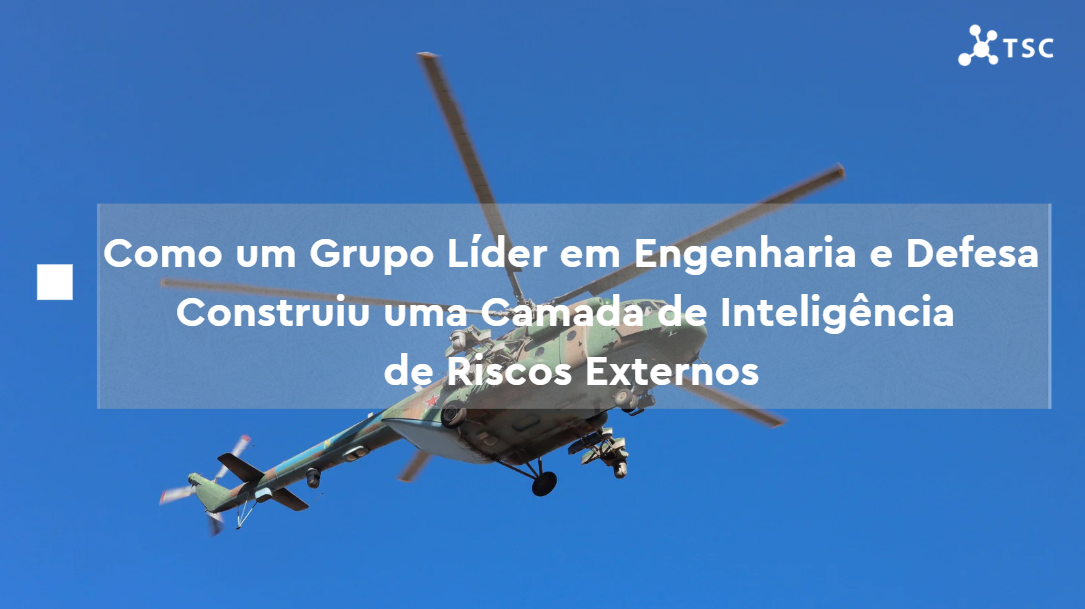
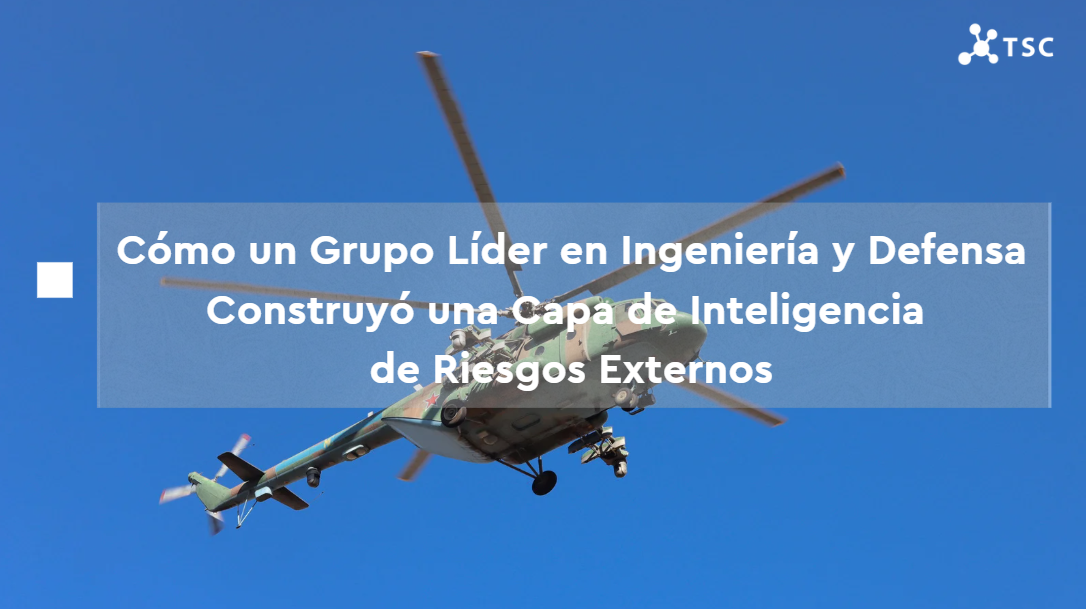
Operating across 78 locations in 26 countries, and overseeing more than 60 subsidiaries, the Risk function of a leading global engineering and defence group faces a uniquely complex exposure landscape. Regulatory scrutiny, negative media coverage, competitor incidents, supplier disruptions, and geopolitical events can emerge in different jurisdictions, languages, and stakeholder ecosystems, often with little warning.
For this organisation, risk is not confined to a single entity or market. A localised regulatory development, a negative sentiment shift involving one subsidiary, or a crisis affecting a key counterparty can quickly escalate into enterprise-level exposure. The ability to systematically detect, contextualise, and prioritise the right signals across the markets is hence of pertinence.
To strengthen enterprise-wide risk readiness, the organisation partnered with TSC to institutionalise a structured external risk intelligence capability enabling the Risk team to continuously monitor sentiment, competitor and counterparty incidents, global crisis events, and emerging trends aligned to its Key Risk Indicators (KRIs).
The team needed to monitor external risk signals across a large operational footprint spanning multiple countries and languages.
However, the external intelligence was fragmented:
At the same time, internal productivity tools (e.g., Copilot) were useful for governance workflows but inherently dependent on already-available information. They could not discover and prioritise live external risks in real time.
TSC.ai deployed Genie (its 5th Gen Stakeholder and Intelligence platform) as a dedicated external risk monitoring layer for the team. The system centralises media intelligence, stakeholder intelligence, and horizon scanning into a unified environment mapped in the context of the organisation’s 23 Key Risk Indicators (KRIs).
Through customised monitoring streams, automated alerts, and structured insight delivery, Genie provides the team with continuous visibility into emerging trends and abnormal issue spikes. This reduces reliance on manual synthesis and ensures that external signals are translated into clear, executive-ready risk narratives.
The fragmented intelligence sources create blind spots in monitoring risks as signals emerge in different jurisdictions, in different languages, and through different stakeholder ecosystems. For the Risk team, early indicators were often buried inside noise, requiring manual effort to spot meaningful change.
Genie was configured as a context-trained external sensing layer that continuously scans for relevant signals and ties them back to the Risk Management & Assurance (RMA) framework.
This enabled the team to strengthen early-warning capability by:
This provides the team with structured, early-warning visibility and reduces the need for manual signal screening.
The team needed consistent briefings that translate dispersed signals into “what changed, why it matters, and what to watch next.” Without a structured system, creating executive updates often became a manual synthesis exercise.
Through customised monitoring streams and predefined reporting logic, Genie generates risks briefing that highlights key changes across KRIs.
The reports:
This standardises risk communication, reduces reporting workload, and ensures leadership receives timely, consistent intelligence.
Regulatory and reputational exposure rarely moves on content alone. It moves through people and institutions - regulators, competitors, suppliers, contractors, and clients. The team previously didn’t prioritise the stakeholders aspect, and hence risk missing information on who is shaping momentum, where influence in forming, and which relationships may become risk multipliers.
Genie’s Stakeholder Intelligence supports real-time monitoring of key stakeholders in the risk landscape - including competitors, peers, regulatory bodies, suppliers and contractors, clients, and counterparties. This also enabled systematic monitoring of major risk incidents impacting competitors and counterparties, allowing the team to anticipate potential spillover exposure.
The recommendation engine reduces blind spots by dynamically surfacing relevant stakeholders as the external environment shifts, improving visibility into who may be influencing exposure across KRIs and geographies.
By implementing Genie as a dedicated external sensing layer - mapped to the RMA risk framework - this leading global engineering and defence group strengthened its ability to anticipate and operationalise external risk signals across markets.
The result is an Risk Management & Assurance capability that is less dependent on fragmented monitoring and manual synthesis, and more anchored in:
Operating across 78 locations in 26 countries, and overseeing more than 60 subsidiaries, the Risk function of a leading global engineering and defence group faces a uniquely complex exposure landscape. Regulatory scrutiny, negative media coverage, competitor incidents, supplier disruptions, and geopolitical events can emerge in different jurisdictions, languages, and stakeholder ecosystems, often with little warning.
For this organisation, risk is not confined to a single entity or market. A localised regulatory development, a negative sentiment shift involving one subsidiary, or a crisis affecting a key counterparty can quickly escalate into enterprise-level exposure. The ability to systematically detect, contextualise, and prioritise the right signals across the markets is hence of pertinence.
To strengthen enterprise-wide risk readiness, the organisation partnered with TSC to institutionalise a structured external risk intelligence capability enabling the Risk team to continuously monitor sentiment, competitor and counterparty incidents, global crisis events, and emerging trends aligned to its Key Risk Indicators (KRIs).
The team needed to monitor external risk signals across a large operational footprint spanning multiple countries and languages.
However, the external intelligence was fragmented:
At the same time, internal productivity tools (e.g., Copilot) were useful for governance workflows but inherently dependent on already-available information. They could not discover and prioritise live external risks in real time.
TSC.ai deployed Genie (its 5th Gen Stakeholder and Intelligence platform) as a dedicated external risk monitoring layer for the team. The system centralises media intelligence, stakeholder intelligence, and horizon scanning into a unified environment mapped in the context of the organisation’s 23 Key Risk Indicators (KRIs).
Through customised monitoring streams, automated alerts, and structured insight delivery, Genie provides the team with continuous visibility into emerging trends and abnormal issue spikes. This reduces reliance on manual synthesis and ensures that external signals are translated into clear, executive-ready risk narratives.
The fragmented intelligence sources create blind spots in monitoring risks as signals emerge in different jurisdictions, in different languages, and through different stakeholder ecosystems. For the Risk team, early indicators were often buried inside noise, requiring manual effort to spot meaningful change.
Genie was configured as a context-trained external sensing layer that continuously scans for relevant signals and ties them back to the Risk Management & Assurance (RMA) framework.
This enabled the team to strengthen early-warning capability by:
This provides the team with structured, early-warning visibility and reduces the need for manual signal screening.
The team needed consistent briefings that translate dispersed signals into “what changed, why it matters, and what to watch next.” Without a structured system, creating executive updates often became a manual synthesis exercise.
Through customised monitoring streams and predefined reporting logic, Genie generates risks briefing that highlights key changes across KRIs.
The reports:
This standardises risk communication, reduces reporting workload, and ensures leadership receives timely, consistent intelligence.
Regulatory and reputational exposure rarely moves on content alone. It moves through people and institutions - regulators, competitors, suppliers, contractors, and clients. The team previously didn’t prioritise the stakeholders aspect, and hence risk missing information on who is shaping momentum, where influence in forming, and which relationships may become risk multipliers.
Genie’s Stakeholder Intelligence supports real-time monitoring of key stakeholders in the risk landscape - including competitors, peers, regulatory bodies, suppliers and contractors, clients, and counterparties. This also enabled systematic monitoring of major risk incidents impacting competitors and counterparties, allowing the team to anticipate potential spillover exposure.
The recommendation engine reduces blind spots by dynamically surfacing relevant stakeholders as the external environment shifts, improving visibility into who may be influencing exposure across KRIs and geographies.
By implementing Genie as a dedicated external sensing layer - mapped to the RMA risk framework - this leading global engineering and defence group strengthened its ability to anticipate and operationalise external risk signals across markets.
The result is an Risk Management & Assurance capability that is less dependent on fragmented monitoring and manual synthesis, and more anchored in:
Operating across 78 locations in 26 countries, and overseeing more than 60 subsidiaries, the Risk function of a leading global engineering and defence group faces a uniquely complex exposure landscape. Regulatory scrutiny, negative media coverage, competitor incidents, supplier disruptions, and geopolitical events can emerge in different jurisdictions, languages, and stakeholder ecosystems, often with little warning.
For this organisation, risk is not confined to a single entity or market. A localised regulatory development, a negative sentiment shift involving one subsidiary, or a crisis affecting a key counterparty can quickly escalate into enterprise-level exposure. The ability to systematically detect, contextualise, and prioritise the right signals across the markets is hence of pertinence.
To strengthen enterprise-wide risk readiness, the organisation partnered with TSC to institutionalise a structured external risk intelligence capability enabling the Risk team to continuously monitor sentiment, competitor and counterparty incidents, global crisis events, and emerging trends aligned to its Key Risk Indicators (KRIs).
The team needed to monitor external risk signals across a large operational footprint spanning multiple countries and languages.
However, the external intelligence was fragmented:
At the same time, internal productivity tools (e.g., Copilot) were useful for governance workflows but inherently dependent on already-available information. They could not discover and prioritise live external risks in real time.
TSC.ai deployed Genie (its 5th Gen Stakeholder and Intelligence platform) as a dedicated external risk monitoring layer for the team. The system centralises media intelligence, stakeholder intelligence, and horizon scanning into a unified environment mapped in the context of the organisation’s 23 Key Risk Indicators (KRIs).
Through customised monitoring streams, automated alerts, and structured insight delivery, Genie provides the team with continuous visibility into emerging trends and abnormal issue spikes. This reduces reliance on manual synthesis and ensures that external signals are translated into clear, executive-ready risk narratives.
The fragmented intelligence sources create blind spots in monitoring risks as signals emerge in different jurisdictions, in different languages, and through different stakeholder ecosystems. For the Risk team, early indicators were often buried inside noise, requiring manual effort to spot meaningful change.
Genie was configured as a context-trained external sensing layer that continuously scans for relevant signals and ties them back to the Risk Management & Assurance (RMA) framework.
This enabled the team to strengthen early-warning capability by:
This provides the team with structured, early-warning visibility and reduces the need for manual signal screening.
The team needed consistent briefings that translate dispersed signals into “what changed, why it matters, and what to watch next.” Without a structured system, creating executive updates often became a manual synthesis exercise.
Through customised monitoring streams and predefined reporting logic, Genie generates risks briefing that highlights key changes across KRIs.
The reports:
This standardises risk communication, reduces reporting workload, and ensures leadership receives timely, consistent intelligence.
Regulatory and reputational exposure rarely moves on content alone. It moves through people and institutions - regulators, competitors, suppliers, contractors, and clients. The team previously didn’t prioritise the stakeholders aspect, and hence risk missing information on who is shaping momentum, where influence in forming, and which relationships may become risk multipliers.
Genie’s Stakeholder Intelligence supports real-time monitoring of key stakeholders in the risk landscape - including competitors, peers, regulatory bodies, suppliers and contractors, clients, and counterparties. This also enabled systematic monitoring of major risk incidents impacting competitors and counterparties, allowing the team to anticipate potential spillover exposure.
The recommendation engine reduces blind spots by dynamically surfacing relevant stakeholders as the external environment shifts, improving visibility into who may be influencing exposure across KRIs and geographies.
By implementing Genie as a dedicated external sensing layer - mapped to the RMA risk framework - this leading global engineering and defence group strengthened its ability to anticipate and operationalise external risk signals across markets.
The result is an Risk Management & Assurance capability that is less dependent on fragmented monitoring and manual synthesis, and more anchored in:
Operating across 78 locations in 26 countries, and overseeing more than 60 subsidiaries, the Risk function of a leading global engineering and defence group faces a uniquely complex exposure landscape. Regulatory scrutiny, negative media coverage, competitor incidents, supplier disruptions, and geopolitical events can emerge in different jurisdictions, languages, and stakeholder ecosystems, often with little warning.
For this organisation, risk is not confined to a single entity or market. A localised regulatory development, a negative sentiment shift involving one subsidiary, or a crisis affecting a key counterparty can quickly escalate into enterprise-level exposure. The ability to systematically detect, contextualise, and prioritise the right signals across the markets is hence of pertinence.
To strengthen enterprise-wide risk readiness, the organisation partnered with TSC to institutionalise a structured external risk intelligence capability enabling the Risk team to continuously monitor sentiment, competitor and counterparty incidents, global crisis events, and emerging trends aligned to its Key Risk Indicators (KRIs).
The team needed to monitor external risk signals across a large operational footprint spanning multiple countries and languages.
However, the external intelligence was fragmented:
At the same time, internal productivity tools (e.g., Copilot) were useful for governance workflows but inherently dependent on already-available information. They could not discover and prioritise live external risks in real time.
TSC.ai deployed Genie (its 5th Gen Stakeholder and Intelligence platform) as a dedicated external risk monitoring layer for the team. The system centralises media intelligence, stakeholder intelligence, and horizon scanning into a unified environment mapped in the context of the organisation’s 23 Key Risk Indicators (KRIs).
Through customised monitoring streams, automated alerts, and structured insight delivery, Genie provides the team with continuous visibility into emerging trends and abnormal issue spikes. This reduces reliance on manual synthesis and ensures that external signals are translated into clear, executive-ready risk narratives.
The fragmented intelligence sources create blind spots in monitoring risks as signals emerge in different jurisdictions, in different languages, and through different stakeholder ecosystems. For the Risk team, early indicators were often buried inside noise, requiring manual effort to spot meaningful change.
Genie was configured as a context-trained external sensing layer that continuously scans for relevant signals and ties them back to the Risk Management & Assurance (RMA) framework.
This enabled the team to strengthen early-warning capability by:
This provides the team with structured, early-warning visibility and reduces the need for manual signal screening.
The team needed consistent briefings that translate dispersed signals into “what changed, why it matters, and what to watch next.” Without a structured system, creating executive updates often became a manual synthesis exercise.
Through customised monitoring streams and predefined reporting logic, Genie generates risks briefing that highlights key changes across KRIs.
The reports:
This standardises risk communication, reduces reporting workload, and ensures leadership receives timely, consistent intelligence.
Regulatory and reputational exposure rarely moves on content alone. It moves through people and institutions - regulators, competitors, suppliers, contractors, and clients. The team previously didn’t prioritise the stakeholders aspect, and hence risk missing information on who is shaping momentum, where influence in forming, and which relationships may become risk multipliers.
Genie’s Stakeholder Intelligence supports real-time monitoring of key stakeholders in the risk landscape - including competitors, peers, regulatory bodies, suppliers and contractors, clients, and counterparties. This also enabled systematic monitoring of major risk incidents impacting competitors and counterparties, allowing the team to anticipate potential spillover exposure.
The recommendation engine reduces blind spots by dynamically surfacing relevant stakeholders as the external environment shifts, improving visibility into who may be influencing exposure across KRIs and geographies.
By implementing Genie as a dedicated external sensing layer - mapped to the RMA risk framework - this leading global engineering and defence group strengthened its ability to anticipate and operationalise external risk signals across markets.
The result is an Risk Management & Assurance capability that is less dependent on fragmented monitoring and manual synthesis, and more anchored in:
Operating across 78 locations in 26 countries, and overseeing more than 60 subsidiaries, the Risk function of a leading global engineering and defence group faces a uniquely complex exposure landscape. Regulatory scrutiny, negative media coverage, competitor incidents, supplier disruptions, and geopolitical events can emerge in different jurisdictions, languages, and stakeholder ecosystems, often with little warning.
For this organisation, risk is not confined to a single entity or market. A localised regulatory development, a negative sentiment shift involving one subsidiary, or a crisis affecting a key counterparty can quickly escalate into enterprise-level exposure. The ability to systematically detect, contextualise, and prioritise the right signals across the markets is hence of pertinence.
To strengthen enterprise-wide risk readiness, the organisation partnered with TSC to institutionalise a structured external risk intelligence capability enabling the Risk team to continuously monitor sentiment, competitor and counterparty incidents, global crisis events, and emerging trends aligned to its Key Risk Indicators (KRIs).
The team needed to monitor external risk signals across a large operational footprint spanning multiple countries and languages.
However, the external intelligence was fragmented:
At the same time, internal productivity tools (e.g., Copilot) were useful for governance workflows but inherently dependent on already-available information. They could not discover and prioritise live external risks in real time.
TSC.ai deployed Genie (its 5th Gen Stakeholder and Intelligence platform) as a dedicated external risk monitoring layer for the team. The system centralises media intelligence, stakeholder intelligence, and horizon scanning into a unified environment mapped in the context of the organisation’s 23 Key Risk Indicators (KRIs).
Through customised monitoring streams, automated alerts, and structured insight delivery, Genie provides the team with continuous visibility into emerging trends and abnormal issue spikes. This reduces reliance on manual synthesis and ensures that external signals are translated into clear, executive-ready risk narratives.
The fragmented intelligence sources create blind spots in monitoring risks as signals emerge in different jurisdictions, in different languages, and through different stakeholder ecosystems. For the Risk team, early indicators were often buried inside noise, requiring manual effort to spot meaningful change.
Genie was configured as a context-trained external sensing layer that continuously scans for relevant signals and ties them back to the Risk Management & Assurance (RMA) framework.
This enabled the team to strengthen early-warning capability by:
This provides the team with structured, early-warning visibility and reduces the need for manual signal screening.
The team needed consistent briefings that translate dispersed signals into “what changed, why it matters, and what to watch next.” Without a structured system, creating executive updates often became a manual synthesis exercise.
Through customised monitoring streams and predefined reporting logic, Genie generates risks briefing that highlights key changes across KRIs.
The reports:
This standardises risk communication, reduces reporting workload, and ensures leadership receives timely, consistent intelligence.
Regulatory and reputational exposure rarely moves on content alone. It moves through people and institutions - regulators, competitors, suppliers, contractors, and clients. The team previously didn’t prioritise the stakeholders aspect, and hence risk missing information on who is shaping momentum, where influence in forming, and which relationships may become risk multipliers.
Genie’s Stakeholder Intelligence supports real-time monitoring of key stakeholders in the risk landscape - including competitors, peers, regulatory bodies, suppliers and contractors, clients, and counterparties. This also enabled systematic monitoring of major risk incidents impacting competitors and counterparties, allowing the team to anticipate potential spillover exposure.
The recommendation engine reduces blind spots by dynamically surfacing relevant stakeholders as the external environment shifts, improving visibility into who may be influencing exposure across KRIs and geographies.
By implementing Genie as a dedicated external sensing layer - mapped to the RMA risk framework - this leading global engineering and defence group strengthened its ability to anticipate and operationalise external risk signals across markets.
The result is an Risk Management & Assurance capability that is less dependent on fragmented monitoring and manual synthesis, and more anchored in:
Operating across 78 locations in 26 countries, and overseeing more than 60 subsidiaries, the Risk function of a leading global engineering and defence group faces a uniquely complex exposure landscape. Regulatory scrutiny, negative media coverage, competitor incidents, supplier disruptions, and geopolitical events can emerge in different jurisdictions, languages, and stakeholder ecosystems, often with little warning.
For this organisation, risk is not confined to a single entity or market. A localised regulatory development, a negative sentiment shift involving one subsidiary, or a crisis affecting a key counterparty can quickly escalate into enterprise-level exposure. The ability to systematically detect, contextualise, and prioritise the right signals across the markets is hence of pertinence.
To strengthen enterprise-wide risk readiness, the organisation partnered with TSC to institutionalise a structured external risk intelligence capability enabling the Risk team to continuously monitor sentiment, competitor and counterparty incidents, global crisis events, and emerging trends aligned to its Key Risk Indicators (KRIs).
The team needed to monitor external risk signals across a large operational footprint spanning multiple countries and languages.
However, the external intelligence was fragmented:
At the same time, internal productivity tools (e.g., Copilot) were useful for governance workflows but inherently dependent on already-available information. They could not discover and prioritise live external risks in real time.
TSC.ai deployed Genie (its 5th Gen Stakeholder and Intelligence platform) as a dedicated external risk monitoring layer for the team. The system centralises media intelligence, stakeholder intelligence, and horizon scanning into a unified environment mapped in the context of the organisation’s 23 Key Risk Indicators (KRIs).
Through customised monitoring streams, automated alerts, and structured insight delivery, Genie provides the team with continuous visibility into emerging trends and abnormal issue spikes. This reduces reliance on manual synthesis and ensures that external signals are translated into clear, executive-ready risk narratives.
The fragmented intelligence sources create blind spots in monitoring risks as signals emerge in different jurisdictions, in different languages, and through different stakeholder ecosystems. For the Risk team, early indicators were often buried inside noise, requiring manual effort to spot meaningful change.
Genie was configured as a context-trained external sensing layer that continuously scans for relevant signals and ties them back to the Risk Management & Assurance (RMA) framework.
This enabled the team to strengthen early-warning capability by:
This provides the team with structured, early-warning visibility and reduces the need for manual signal screening.
The team needed consistent briefings that translate dispersed signals into “what changed, why it matters, and what to watch next.” Without a structured system, creating executive updates often became a manual synthesis exercise.
Through customised monitoring streams and predefined reporting logic, Genie generates risks briefing that highlights key changes across KRIs.
The reports:
This standardises risk communication, reduces reporting workload, and ensures leadership receives timely, consistent intelligence.
Regulatory and reputational exposure rarely moves on content alone. It moves through people and institutions - regulators, competitors, suppliers, contractors, and clients. The team previously didn’t prioritise the stakeholders aspect, and hence risk missing information on who is shaping momentum, where influence in forming, and which relationships may become risk multipliers.
Genie’s Stakeholder Intelligence supports real-time monitoring of key stakeholders in the risk landscape - including competitors, peers, regulatory bodies, suppliers and contractors, clients, and counterparties. This also enabled systematic monitoring of major risk incidents impacting competitors and counterparties, allowing the team to anticipate potential spillover exposure.
The recommendation engine reduces blind spots by dynamically surfacing relevant stakeholders as the external environment shifts, improving visibility into who may be influencing exposure across KRIs and geographies.
By implementing Genie as a dedicated external sensing layer - mapped to the RMA risk framework - this leading global engineering and defence group strengthened its ability to anticipate and operationalise external risk signals across markets.
The result is an Risk Management & Assurance capability that is less dependent on fragmented monitoring and manual synthesis, and more anchored in:
Operating across 78 locations in 26 countries, and overseeing more than 60 subsidiaries, the Risk function of a leading global engineering and defence group faces a uniquely complex exposure landscape. Regulatory scrutiny, negative media coverage, competitor incidents, supplier disruptions, and geopolitical events can emerge in different jurisdictions, languages, and stakeholder ecosystems, often with little warning.
For this organisation, risk is not confined to a single entity or market. A localised regulatory development, a negative sentiment shift involving one subsidiary, or a crisis affecting a key counterparty can quickly escalate into enterprise-level exposure. The ability to systematically detect, contextualise, and prioritise the right signals across the markets is hence of pertinence.
To strengthen enterprise-wide risk readiness, the organisation partnered with TSC to institutionalise a structured external risk intelligence capability enabling the Risk team to continuously monitor sentiment, competitor and counterparty incidents, global crisis events, and emerging trends aligned to its Key Risk Indicators (KRIs).
The team needed to monitor external risk signals across a large operational footprint spanning multiple countries and languages.
However, the external intelligence was fragmented:
At the same time, internal productivity tools (e.g., Copilot) were useful for governance workflows but inherently dependent on already-available information. They could not discover and prioritise live external risks in real time.
TSC.ai deployed Genie (its 5th Gen Stakeholder and Intelligence platform) as a dedicated external risk monitoring layer for the team. The system centralises media intelligence, stakeholder intelligence, and horizon scanning into a unified environment mapped in the context of the organisation’s 23 Key Risk Indicators (KRIs).
Through customised monitoring streams, automated alerts, and structured insight delivery, Genie provides the team with continuous visibility into emerging trends and abnormal issue spikes. This reduces reliance on manual synthesis and ensures that external signals are translated into clear, executive-ready risk narratives.
The fragmented intelligence sources create blind spots in monitoring risks as signals emerge in different jurisdictions, in different languages, and through different stakeholder ecosystems. For the Risk team, early indicators were often buried inside noise, requiring manual effort to spot meaningful change.
Genie was configured as a context-trained external sensing layer that continuously scans for relevant signals and ties them back to the Risk Management & Assurance (RMA) framework.
This enabled the team to strengthen early-warning capability by:
This provides the team with structured, early-warning visibility and reduces the need for manual signal screening.
The team needed consistent briefings that translate dispersed signals into “what changed, why it matters, and what to watch next.” Without a structured system, creating executive updates often became a manual synthesis exercise.
Through customised monitoring streams and predefined reporting logic, Genie generates risks briefing that highlights key changes across KRIs.
The reports:
This standardises risk communication, reduces reporting workload, and ensures leadership receives timely, consistent intelligence.
Regulatory and reputational exposure rarely moves on content alone. It moves through people and institutions - regulators, competitors, suppliers, contractors, and clients. The team previously didn’t prioritise the stakeholders aspect, and hence risk missing information on who is shaping momentum, where influence in forming, and which relationships may become risk multipliers.
Genie’s Stakeholder Intelligence supports real-time monitoring of key stakeholders in the risk landscape - including competitors, peers, regulatory bodies, suppliers and contractors, clients, and counterparties. This also enabled systematic monitoring of major risk incidents impacting competitors and counterparties, allowing the team to anticipate potential spillover exposure.
The recommendation engine reduces blind spots by dynamically surfacing relevant stakeholders as the external environment shifts, improving visibility into who may be influencing exposure across KRIs and geographies.
By implementing Genie as a dedicated external sensing layer - mapped to the RMA risk framework - this leading global engineering and defence group strengthened its ability to anticipate and operationalise external risk signals across markets.
The result is an Risk Management & Assurance capability that is less dependent on fragmented monitoring and manual synthesis, and more anchored in:
Operating across 78 locations in 26 countries, and overseeing more than 60 subsidiaries, the Risk function of a leading global engineering and defence group faces a uniquely complex exposure landscape. Regulatory scrutiny, negative media coverage, competitor incidents, supplier disruptions, and geopolitical events can emerge in different jurisdictions, languages, and stakeholder ecosystems, often with little warning.
For this organisation, risk is not confined to a single entity or market. A localised regulatory development, a negative sentiment shift involving one subsidiary, or a crisis affecting a key counterparty can quickly escalate into enterprise-level exposure. The ability to systematically detect, contextualise, and prioritise the right signals across the markets is hence of pertinence.
To strengthen enterprise-wide risk readiness, the organisation partnered with TSC to institutionalise a structured external risk intelligence capability enabling the Risk team to continuously monitor sentiment, competitor and counterparty incidents, global crisis events, and emerging trends aligned to its Key Risk Indicators (KRIs).
The team needed to monitor external risk signals across a large operational footprint spanning multiple countries and languages.
However, the external intelligence was fragmented:
At the same time, internal productivity tools (e.g., Copilot) were useful for governance workflows but inherently dependent on already-available information. They could not discover and prioritise live external risks in real time.
TSC.ai deployed Genie (its 5th Gen Stakeholder and Intelligence platform) as a dedicated external risk monitoring layer for the team. The system centralises media intelligence, stakeholder intelligence, and horizon scanning into a unified environment mapped in the context of the organisation’s 23 Key Risk Indicators (KRIs).
Through customised monitoring streams, automated alerts, and structured insight delivery, Genie provides the team with continuous visibility into emerging trends and abnormal issue spikes. This reduces reliance on manual synthesis and ensures that external signals are translated into clear, executive-ready risk narratives.
The fragmented intelligence sources create blind spots in monitoring risks as signals emerge in different jurisdictions, in different languages, and through different stakeholder ecosystems. For the Risk team, early indicators were often buried inside noise, requiring manual effort to spot meaningful change.
Genie was configured as a context-trained external sensing layer that continuously scans for relevant signals and ties them back to the Risk Management & Assurance (RMA) framework.
This enabled the team to strengthen early-warning capability by:
This provides the team with structured, early-warning visibility and reduces the need for manual signal screening.
The team needed consistent briefings that translate dispersed signals into “what changed, why it matters, and what to watch next.” Without a structured system, creating executive updates often became a manual synthesis exercise.
Through customised monitoring streams and predefined reporting logic, Genie generates risks briefing that highlights key changes across KRIs.
The reports:
This standardises risk communication, reduces reporting workload, and ensures leadership receives timely, consistent intelligence.
Regulatory and reputational exposure rarely moves on content alone. It moves through people and institutions - regulators, competitors, suppliers, contractors, and clients. The team previously didn’t prioritise the stakeholders aspect, and hence risk missing information on who is shaping momentum, where influence in forming, and which relationships may become risk multipliers.
Genie’s Stakeholder Intelligence supports real-time monitoring of key stakeholders in the risk landscape - including competitors, peers, regulatory bodies, suppliers and contractors, clients, and counterparties. This also enabled systematic monitoring of major risk incidents impacting competitors and counterparties, allowing the team to anticipate potential spillover exposure.
The recommendation engine reduces blind spots by dynamically surfacing relevant stakeholders as the external environment shifts, improving visibility into who may be influencing exposure across KRIs and geographies.
By implementing Genie as a dedicated external sensing layer - mapped to the RMA risk framework - this leading global engineering and defence group strengthened its ability to anticipate and operationalise external risk signals across markets.
The result is an Risk Management & Assurance capability that is less dependent on fragmented monitoring and manual synthesis, and more anchored in:
Operating across 78 locations in 26 countries, and overseeing more than 60 subsidiaries, the Risk function of a leading global engineering and defence group faces a uniquely complex exposure landscape. Regulatory scrutiny, negative media coverage, competitor incidents, supplier disruptions, and geopolitical events can emerge in different jurisdictions, languages, and stakeholder ecosystems, often with little warning.
For this organisation, risk is not confined to a single entity or market. A localised regulatory development, a negative sentiment shift involving one subsidiary, or a crisis affecting a key counterparty can quickly escalate into enterprise-level exposure. The ability to systematically detect, contextualise, and prioritise the right signals across the markets is hence of pertinence.
To strengthen enterprise-wide risk readiness, the organisation partnered with TSC to institutionalise a structured external risk intelligence capability enabling the Risk team to continuously monitor sentiment, competitor and counterparty incidents, global crisis events, and emerging trends aligned to its Key Risk Indicators (KRIs).
The team needed to monitor external risk signals across a large operational footprint spanning multiple countries and languages.
However, the external intelligence was fragmented:
At the same time, internal productivity tools (e.g., Copilot) were useful for governance workflows but inherently dependent on already-available information. They could not discover and prioritise live external risks in real time.
TSC.ai deployed Genie (its 5th Gen Stakeholder and Intelligence platform) as a dedicated external risk monitoring layer for the team. The system centralises media intelligence, stakeholder intelligence, and horizon scanning into a unified environment mapped in the context of the organisation’s 23 Key Risk Indicators (KRIs).
Through customised monitoring streams, automated alerts, and structured insight delivery, Genie provides the team with continuous visibility into emerging trends and abnormal issue spikes. This reduces reliance on manual synthesis and ensures that external signals are translated into clear, executive-ready risk narratives.
The fragmented intelligence sources create blind spots in monitoring risks as signals emerge in different jurisdictions, in different languages, and through different stakeholder ecosystems. For the Risk team, early indicators were often buried inside noise, requiring manual effort to spot meaningful change.
Genie was configured as a context-trained external sensing layer that continuously scans for relevant signals and ties them back to the Risk Management & Assurance (RMA) framework.
This enabled the team to strengthen early-warning capability by:
This provides the team with structured, early-warning visibility and reduces the need for manual signal screening.
The team needed consistent briefings that translate dispersed signals into “what changed, why it matters, and what to watch next.” Without a structured system, creating executive updates often became a manual synthesis exercise.
Through customised monitoring streams and predefined reporting logic, Genie generates risks briefing that highlights key changes across KRIs.
The reports:
This standardises risk communication, reduces reporting workload, and ensures leadership receives timely, consistent intelligence.
Regulatory and reputational exposure rarely moves on content alone. It moves through people and institutions - regulators, competitors, suppliers, contractors, and clients. The team previously didn’t prioritise the stakeholders aspect, and hence risk missing information on who is shaping momentum, where influence in forming, and which relationships may become risk multipliers.
Genie’s Stakeholder Intelligence supports real-time monitoring of key stakeholders in the risk landscape - including competitors, peers, regulatory bodies, suppliers and contractors, clients, and counterparties. This also enabled systematic monitoring of major risk incidents impacting competitors and counterparties, allowing the team to anticipate potential spillover exposure.
The recommendation engine reduces blind spots by dynamically surfacing relevant stakeholders as the external environment shifts, improving visibility into who may be influencing exposure across KRIs and geographies.
By implementing Genie as a dedicated external sensing layer - mapped to the RMA risk framework - this leading global engineering and defence group strengthened its ability to anticipate and operationalise external risk signals across markets.
The result is an Risk Management & Assurance capability that is less dependent on fragmented monitoring and manual synthesis, and more anchored in:

.png)
.png)

.png)



%20(1).png)