Venezuela Oil Market Entry Map: Who gets in and why
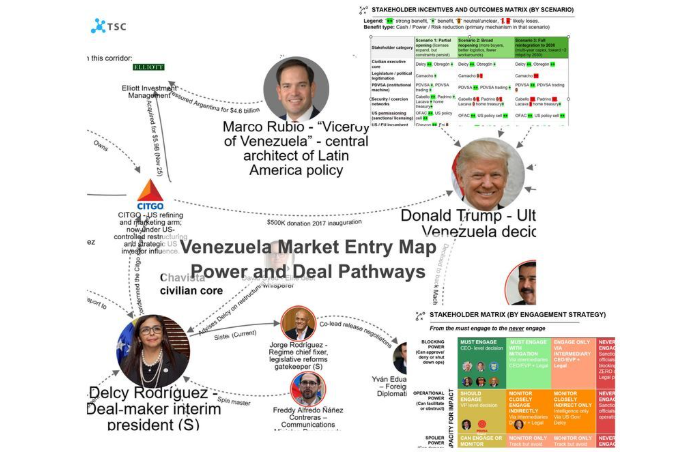
Venezuela’s return to global oil markets signals a selective re-entry.
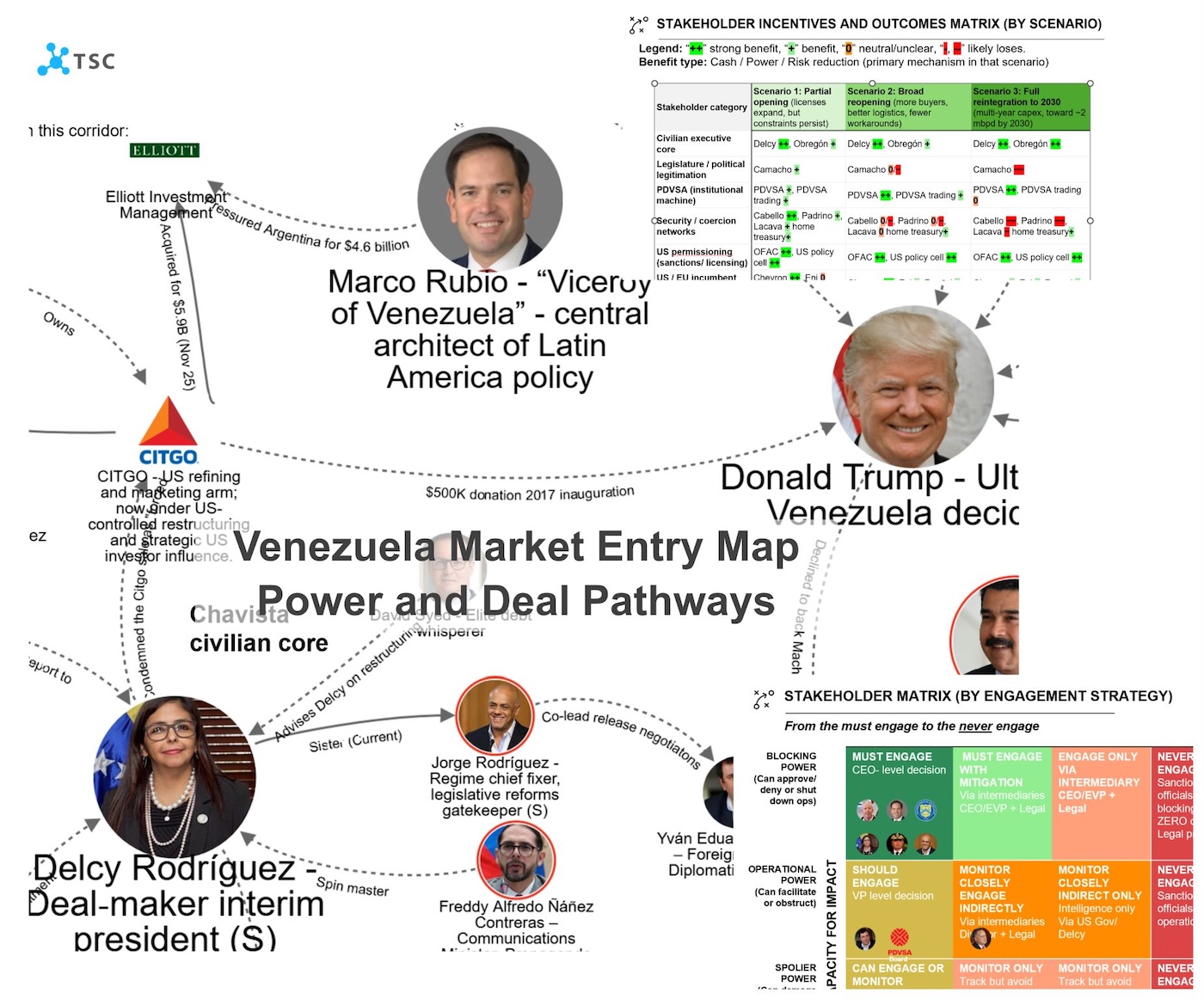
As sanctions shift and licensing windows open unevenly, access to Venezuela’s energy sector is being renegotiated, not just by Caracas, but across Washington, creditor courts, and competing political power centres.
For energy companies, traders, and investors, opportunity is real. However, market entry is no longer determined by technical capability or capital alone. It is shaped by permissioning, political alignment, and who controls the deal narrative at each stage of execution.
This map examines the power dynamics behind Venezuela’s oil re-entry and the structures that quietly decide which deals move forward, and which never do.
What this map helps you see:
✅ Where power actually sits in Venezuela’s oil landscape (beyond formal titles and contracts)
✅ How access is mediated through sanctions, licenses, and external approval channels
✅ Which actors enable entry, and which introduce delay, risk, or outright blockage
✅ Why similar deals produce different outcomes, depending on political and legal alignment
✅ How incumbents and new entrants are positioned as the market reconfigures
Why this matters now:
Venezuela’s oil sector is reopening under constraints, and misreading the power structure can strand capital, invalidate contracts, or expose firms to secondary risks beyond mere project delays.
This map provides a clear, structured view of the forces shaping market access, helping decision-makers assess whether entry is viable before deciding how to pursue it.
Download the high-resolution Venezuela Oil Market Entry Map.
Venezuela Oil Market Entry Map: Who gets in and why
Venezuela’s return to global oil markets signals a selective re-entry.
As sanctions shift and licensing windows open unevenly, access to Venezuela’s energy sector is being renegotiated, not just by Caracas, but across Washington, creditor courts, and competing political power centres.
For energy companies, traders, and investors, opportunity is real. However, market entry is no longer determined by technical capability or capital alone. It is shaped by permissioning, political alignment, and who controls the deal narrative at each stage of execution.
This map examines the power dynamics behind Venezuela’s oil re-entry and the structures that quietly decide which deals move forward, and which never do.
What this map helps you see:
✅ Where power actually sits in Venezuela’s oil landscape (beyond formal titles and contracts)
✅ How access is mediated through sanctions, licenses, and external approval channels
✅ Which actors enable entry, and which introduce delay, risk, or outright blockage
✅ Why similar deals produce different outcomes, depending on political and legal alignment
✅ How incumbents and new entrants are positioned as the market reconfigures
Why this matters now:
Venezuela’s oil sector is reopening under constraints, and misreading the power structure can strand capital, invalidate contracts, or expose firms to secondary risks beyond mere project delays.
This map provides a clear, structured view of the forces shaping market access, helping decision-makers assess whether entry is viable before deciding how to pursue it.
Download the high-resolution Venezuela Oil Market Entry Map.
Venezuela Oil Market Entry Map: Who gets in and why
Venezuela’s return to global oil markets signals a selective re-entry.
As sanctions shift and licensing windows open unevenly, access to Venezuela’s energy sector is being renegotiated, not just by Caracas, but across Washington, creditor courts, and competing political power centres.
For energy companies, traders, and investors, opportunity is real. However, market entry is no longer determined by technical capability or capital alone. It is shaped by permissioning, political alignment, and who controls the deal narrative at each stage of execution.
This map examines the power dynamics behind Venezuela’s oil re-entry and the structures that quietly decide which deals move forward, and which never do.
What this map helps you see:
✅ Where power actually sits in Venezuela’s oil landscape (beyond formal titles and contracts)
✅ How access is mediated through sanctions, licenses, and external approval channels
✅ Which actors enable entry, and which introduce delay, risk, or outright blockage
✅ Why similar deals produce different outcomes, depending on political and legal alignment
✅ How incumbents and new entrants are positioned as the market reconfigures
Why this matters now:
Venezuela’s oil sector is reopening under constraints, and misreading the power structure can strand capital, invalidate contracts, or expose firms to secondary risks beyond mere project delays.
This map provides a clear, structured view of the forces shaping market access, helping decision-makers assess whether entry is viable before deciding how to pursue it.
Download the high-resolution Venezuela Oil Market Entry Map.
Venezuela Oil Market Entry Map: Who gets in and why
Venezuela’s return to global oil markets signals a selective re-entry.
As sanctions shift and licensing windows open unevenly, access to Venezuela’s energy sector is being renegotiated, not just by Caracas, but across Washington, creditor courts, and competing political power centres.
For energy companies, traders, and investors, opportunity is real. However, market entry is no longer determined by technical capability or capital alone. It is shaped by permissioning, political alignment, and who controls the deal narrative at each stage of execution.
This map examines the power dynamics behind Venezuela’s oil re-entry and the structures that quietly decide which deals move forward, and which never do.
What this map helps you see:
✅ Where power actually sits in Venezuela’s oil landscape (beyond formal titles and contracts)
✅ How access is mediated through sanctions, licenses, and external approval channels
✅ Which actors enable entry, and which introduce delay, risk, or outright blockage
✅ Why similar deals produce different outcomes, depending on political and legal alignment
✅ How incumbents and new entrants are positioned as the market reconfigures
Why this matters now:
Venezuela’s oil sector is reopening under constraints, and misreading the power structure can strand capital, invalidate contracts, or expose firms to secondary risks beyond mere project delays.
This map provides a clear, structured view of the forces shaping market access, helping decision-makers assess whether entry is viable before deciding how to pursue it.
Download the high-resolution Venezuela Oil Market Entry Map.
Venezuela Oil Market Entry Map: Who gets in and why
Venezuela’s return to global oil markets signals a selective re-entry.
As sanctions shift and licensing windows open unevenly, access to Venezuela’s energy sector is being renegotiated, not just by Caracas, but across Washington, creditor courts, and competing political power centres.
For energy companies, traders, and investors, opportunity is real. However, market entry is no longer determined by technical capability or capital alone. It is shaped by permissioning, political alignment, and who controls the deal narrative at each stage of execution.
This map examines the power dynamics behind Venezuela’s oil re-entry and the structures that quietly decide which deals move forward, and which never do.
What this map helps you see:
✅ Where power actually sits in Venezuela’s oil landscape (beyond formal titles and contracts)
✅ How access is mediated through sanctions, licenses, and external approval channels
✅ Which actors enable entry, and which introduce delay, risk, or outright blockage
✅ Why similar deals produce different outcomes, depending on political and legal alignment
✅ How incumbents and new entrants are positioned as the market reconfigures
Why this matters now:
Venezuela’s oil sector is reopening under constraints, and misreading the power structure can strand capital, invalidate contracts, or expose firms to secondary risks beyond mere project delays.
This map provides a clear, structured view of the forces shaping market access, helping decision-makers assess whether entry is viable before deciding how to pursue it.
Download the high-resolution Venezuela Oil Market Entry Map.
Venezuela Oil Market Entry Map: Who gets in and why
Venezuela’s return to global oil markets signals a selective re-entry.
As sanctions shift and licensing windows open unevenly, access to Venezuela’s energy sector is being renegotiated, not just by Caracas, but across Washington, creditor courts, and competing political power centres.
For energy companies, traders, and investors, opportunity is real. However, market entry is no longer determined by technical capability or capital alone. It is shaped by permissioning, political alignment, and who controls the deal narrative at each stage of execution.
This map examines the power dynamics behind Venezuela’s oil re-entry and the structures that quietly decide which deals move forward, and which never do.
What this map helps you see:
✅ Where power actually sits in Venezuela’s oil landscape (beyond formal titles and contracts)
✅ How access is mediated through sanctions, licenses, and external approval channels
✅ Which actors enable entry, and which introduce delay, risk, or outright blockage
✅ Why similar deals produce different outcomes, depending on political and legal alignment
✅ How incumbents and new entrants are positioned as the market reconfigures
Why this matters now:
Venezuela’s oil sector is reopening under constraints, and misreading the power structure can strand capital, invalidate contracts, or expose firms to secondary risks beyond mere project delays.
This map provides a clear, structured view of the forces shaping market access, helping decision-makers assess whether entry is viable before deciding how to pursue it.
Download the high-resolution Venezuela Oil Market Entry Map.
Venezuela Oil Market Entry Map: Who gets in and why
Venezuela’s return to global oil markets signals a selective re-entry.
As sanctions shift and licensing windows open unevenly, access to Venezuela’s energy sector is being renegotiated, not just by Caracas, but across Washington, creditor courts, and competing political power centres.
For energy companies, traders, and investors, opportunity is real. However, market entry is no longer determined by technical capability or capital alone. It is shaped by permissioning, political alignment, and who controls the deal narrative at each stage of execution.
This map examines the power dynamics behind Venezuela’s oil re-entry and the structures that quietly decide which deals move forward, and which never do.
What this map helps you see:
✅ Where power actually sits in Venezuela’s oil landscape (beyond formal titles and contracts)
✅ How access is mediated through sanctions, licenses, and external approval channels
✅ Which actors enable entry, and which introduce delay, risk, or outright blockage
✅ Why similar deals produce different outcomes, depending on political and legal alignment
✅ How incumbents and new entrants are positioned as the market reconfigures
Why this matters now:
Venezuela’s oil sector is reopening under constraints, and misreading the power structure can strand capital, invalidate contracts, or expose firms to secondary risks beyond mere project delays.
This map provides a clear, structured view of the forces shaping market access, helping decision-makers assess whether entry is viable before deciding how to pursue it.
Download the high-resolution Venezuela Oil Market Entry Map.
Venezuela Oil Market Entry Map: Who gets in and why
Venezuela’s return to global oil markets signals a selective re-entry.
As sanctions shift and licensing windows open unevenly, access to Venezuela’s energy sector is being renegotiated, not just by Caracas, but across Washington, creditor courts, and competing political power centres.
For energy companies, traders, and investors, opportunity is real. However, market entry is no longer determined by technical capability or capital alone. It is shaped by permissioning, political alignment, and who controls the deal narrative at each stage of execution.
This map examines the power dynamics behind Venezuela’s oil re-entry and the structures that quietly decide which deals move forward, and which never do.
What this map helps you see:
✅ Where power actually sits in Venezuela’s oil landscape (beyond formal titles and contracts)
✅ How access is mediated through sanctions, licenses, and external approval channels
✅ Which actors enable entry, and which introduce delay, risk, or outright blockage
✅ Why similar deals produce different outcomes, depending on political and legal alignment
✅ How incumbents and new entrants are positioned as the market reconfigures
Why this matters now:
Venezuela’s oil sector is reopening under constraints, and misreading the power structure can strand capital, invalidate contracts, or expose firms to secondary risks beyond mere project delays.
This map provides a clear, structured view of the forces shaping market access, helping decision-makers assess whether entry is viable before deciding how to pursue it.
Download the high-resolution Venezuela Oil Market Entry Map.
Venezuela Oil Market Entry Map: Who gets in and why
Venezuela’s return to global oil markets signals a selective re-entry.
As sanctions shift and licensing windows open unevenly, access to Venezuela’s energy sector is being renegotiated, not just by Caracas, but across Washington, creditor courts, and competing political power centres.
For energy companies, traders, and investors, opportunity is real. However, market entry is no longer determined by technical capability or capital alone. It is shaped by permissioning, political alignment, and who controls the deal narrative at each stage of execution.
This map examines the power dynamics behind Venezuela’s oil re-entry and the structures that quietly decide which deals move forward, and which never do.
What this map helps you see:
✅ Where power actually sits in Venezuela’s oil landscape (beyond formal titles and contracts)
✅ How access is mediated through sanctions, licenses, and external approval channels
✅ Which actors enable entry, and which introduce delay, risk, or outright blockage
✅ Why similar deals produce different outcomes, depending on political and legal alignment
✅ How incumbents and new entrants are positioned as the market reconfigures
Why this matters now:
Venezuela’s oil sector is reopening under constraints, and misreading the power structure can strand capital, invalidate contracts, or expose firms to secondary risks beyond mere project delays.
This map provides a clear, structured view of the forces shaping market access, helping decision-makers assess whether entry is viable before deciding how to pursue it.
Download the high-resolution Venezuela Oil Market Entry Map.

.png)
.png)


.png)



%20(1).png)