Who's dead. Who's alive. Who's a successor.
Iran’s power structure is entering a period of uncertainty.
Recent deaths, health questions, and leadership turnover have reopened a question that Iran’s system is designed to suppress: what happens next and who is positioned to inherit power when continuity breaks.
Formal institutions remain intact. Real influence does not.
Decision-making authority in Iran is distributed across religious, military, and civilian power centres, with succession shaped as much by informal alignment and security backing as by constitutional process. In this environment, misreading who matters and when carries strategic consequences.
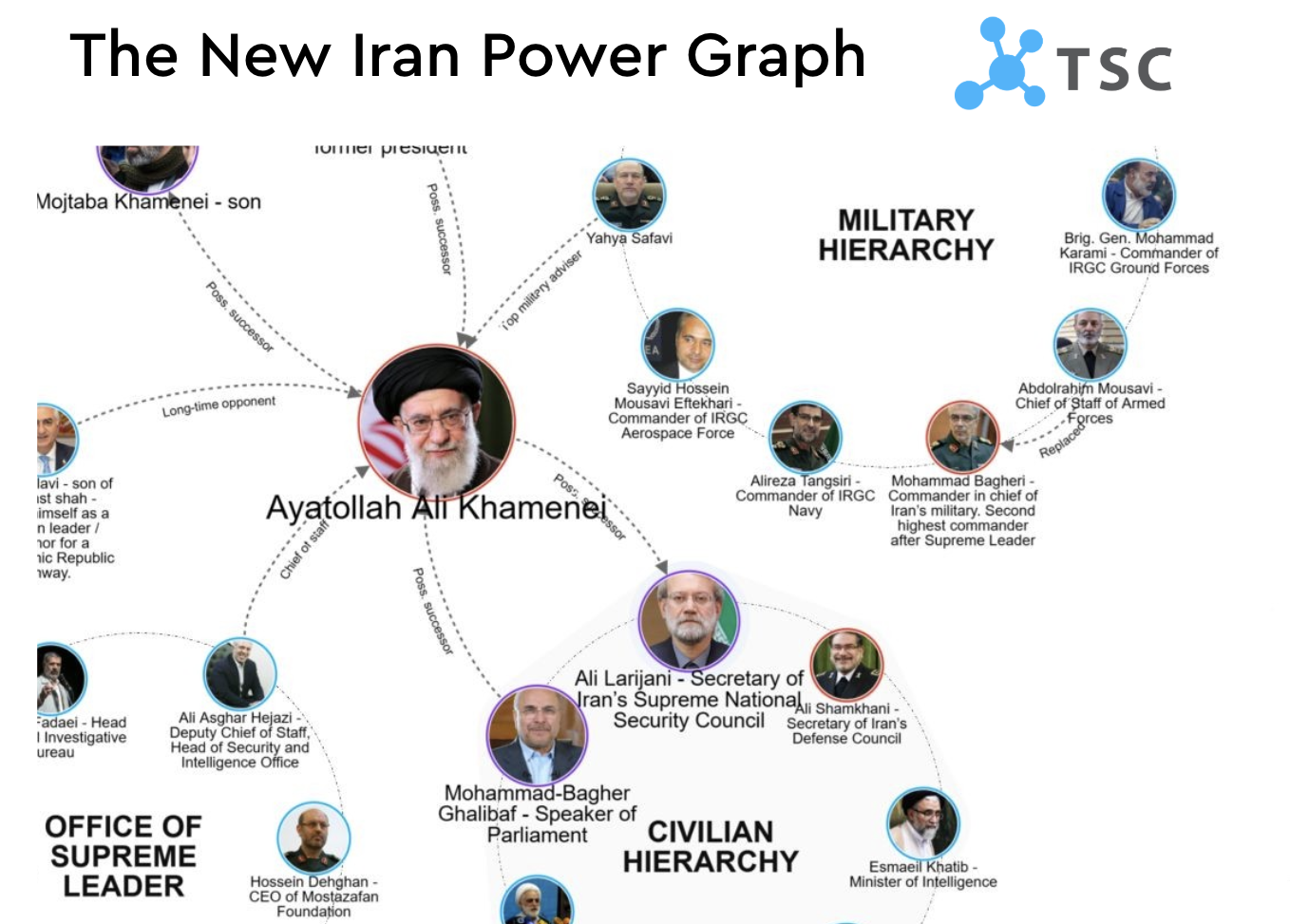
This map surfaces the power dynamics inside Iran’s leadership system at a moment of transition.
What this map helps you see:
✅ Who currently holds power across Iran’s religious, military, and civilian hierarchies
✅ Which figures are presumed dead, alive, or positioned as potential successors
✅ How authority flows beyond formal titles and constitutional roles
✅ The role of the IRGC and security institutions in shaping leadership outcomes
✅ Where succession risk concentrates, and where continuity is likely to be enforced
Why this matters now:
Iran’s system prioritises stability but succession introduces volatility.
As uncertainty increases, external actors, markets, and policymakers risk acting on outdated assumptions about who decides, who influences, and who enforces outcomes. These blind spots can distort diplomacy, sanctions strategy, risk assessment, and long-term planning.
This map provides a clear, structured view of Iran’s current power configuration, helping decision-makers understand who matters now and who may matter next.
Download the high-resolution Iran Power Graph.
Who's dead. Who's alive. Who's a successor.
Iran’s power structure is entering a period of uncertainty.
Recent deaths, health questions, and leadership turnover have reopened a question that Iran’s system is designed to suppress: what happens next and who is positioned to inherit power when continuity breaks.
Formal institutions remain intact. Real influence does not.
Decision-making authority in Iran is distributed across religious, military, and civilian power centres, with succession shaped as much by informal alignment and security backing as by constitutional process. In this environment, misreading who matters and when carries strategic consequences.
This map surfaces the power dynamics inside Iran’s leadership system at a moment of transition.
What this map helps you see:
✅ Who currently holds power across Iran’s religious, military, and civilian hierarchies
✅ Which figures are presumed dead, alive, or positioned as potential successors
✅ How authority flows beyond formal titles and constitutional roles
✅ The role of the IRGC and security institutions in shaping leadership outcomes
✅ Where succession risk concentrates, and where continuity is likely to be enforced
Why this matters now:
Iran’s system prioritises stability but succession introduces volatility.
As uncertainty increases, external actors, markets, and policymakers risk acting on outdated assumptions about who decides, who influences, and who enforces outcomes. These blind spots can distort diplomacy, sanctions strategy, risk assessment, and long-term planning.
This map provides a clear, structured view of Iran’s current power configuration, helping decision-makers understand who matters now and who may matter next.
Download the high-resolution Iran Power Graph.
Who's dead. Who's alive. Who's a successor.
Iran’s power structure is entering a period of uncertainty.
Recent deaths, health questions, and leadership turnover have reopened a question that Iran’s system is designed to suppress: what happens next and who is positioned to inherit power when continuity breaks.
Formal institutions remain intact. Real influence does not.
Decision-making authority in Iran is distributed across religious, military, and civilian power centres, with succession shaped as much by informal alignment and security backing as by constitutional process. In this environment, misreading who matters and when carries strategic consequences.
This map surfaces the power dynamics inside Iran’s leadership system at a moment of transition.
What this map helps you see:
✅ Who currently holds power across Iran’s religious, military, and civilian hierarchies
✅ Which figures are presumed dead, alive, or positioned as potential successors
✅ How authority flows beyond formal titles and constitutional roles
✅ The role of the IRGC and security institutions in shaping leadership outcomes
✅ Where succession risk concentrates, and where continuity is likely to be enforced
Why this matters now:
Iran’s system prioritises stability but succession introduces volatility.
As uncertainty increases, external actors, markets, and policymakers risk acting on outdated assumptions about who decides, who influences, and who enforces outcomes. These blind spots can distort diplomacy, sanctions strategy, risk assessment, and long-term planning.
This map provides a clear, structured view of Iran’s current power configuration, helping decision-makers understand who matters now and who may matter next.
Download the high-resolution Iran Power Graph.
Who's dead. Who's alive. Who's a successor.
Iran’s power structure is entering a period of uncertainty.
Recent deaths, health questions, and leadership turnover have reopened a question that Iran’s system is designed to suppress: what happens next and who is positioned to inherit power when continuity breaks.
Formal institutions remain intact. Real influence does not.
Decision-making authority in Iran is distributed across religious, military, and civilian power centres, with succession shaped as much by informal alignment and security backing as by constitutional process. In this environment, misreading who matters and when carries strategic consequences.
This map surfaces the power dynamics inside Iran’s leadership system at a moment of transition.
What this map helps you see:
✅ Who currently holds power across Iran’s religious, military, and civilian hierarchies
✅ Which figures are presumed dead, alive, or positioned as potential successors
✅ How authority flows beyond formal titles and constitutional roles
✅ The role of the IRGC and security institutions in shaping leadership outcomes
✅ Where succession risk concentrates, and where continuity is likely to be enforced
Why this matters now:
Iran’s system prioritises stability but succession introduces volatility.
As uncertainty increases, external actors, markets, and policymakers risk acting on outdated assumptions about who decides, who influences, and who enforces outcomes. These blind spots can distort diplomacy, sanctions strategy, risk assessment, and long-term planning.
This map provides a clear, structured view of Iran’s current power configuration, helping decision-makers understand who matters now and who may matter next.
Download the high-resolution Iran Power Graph.
Who's dead. Who's alive. Who's a successor.
Iran’s power structure is entering a period of uncertainty.
Recent deaths, health questions, and leadership turnover have reopened a question that Iran’s system is designed to suppress: what happens next and who is positioned to inherit power when continuity breaks.
Formal institutions remain intact. Real influence does not.
Decision-making authority in Iran is distributed across religious, military, and civilian power centres, with succession shaped as much by informal alignment and security backing as by constitutional process. In this environment, misreading who matters and when carries strategic consequences.
This map surfaces the power dynamics inside Iran’s leadership system at a moment of transition.
What this map helps you see:
✅ Who currently holds power across Iran’s religious, military, and civilian hierarchies
✅ Which figures are presumed dead, alive, or positioned as potential successors
✅ How authority flows beyond formal titles and constitutional roles
✅ The role of the IRGC and security institutions in shaping leadership outcomes
✅ Where succession risk concentrates, and where continuity is likely to be enforced
Why this matters now:
Iran’s system prioritises stability but succession introduces volatility.
As uncertainty increases, external actors, markets, and policymakers risk acting on outdated assumptions about who decides, who influences, and who enforces outcomes. These blind spots can distort diplomacy, sanctions strategy, risk assessment, and long-term planning.
This map provides a clear, structured view of Iran’s current power configuration, helping decision-makers understand who matters now and who may matter next.
Download the high-resolution Iran Power Graph.
Who's dead. Who's alive. Who's a successor.
Iran’s power structure is entering a period of uncertainty.
Recent deaths, health questions, and leadership turnover have reopened a question that Iran’s system is designed to suppress: what happens next and who is positioned to inherit power when continuity breaks.
Formal institutions remain intact. Real influence does not.
Decision-making authority in Iran is distributed across religious, military, and civilian power centres, with succession shaped as much by informal alignment and security backing as by constitutional process. In this environment, misreading who matters and when carries strategic consequences.
This map surfaces the power dynamics inside Iran’s leadership system at a moment of transition.
What this map helps you see:
✅ Who currently holds power across Iran’s religious, military, and civilian hierarchies
✅ Which figures are presumed dead, alive, or positioned as potential successors
✅ How authority flows beyond formal titles and constitutional roles
✅ The role of the IRGC and security institutions in shaping leadership outcomes
✅ Where succession risk concentrates, and where continuity is likely to be enforced
Why this matters now:
Iran’s system prioritises stability but succession introduces volatility.
As uncertainty increases, external actors, markets, and policymakers risk acting on outdated assumptions about who decides, who influences, and who enforces outcomes. These blind spots can distort diplomacy, sanctions strategy, risk assessment, and long-term planning.
This map provides a clear, structured view of Iran’s current power configuration, helping decision-makers understand who matters now and who may matter next.
Download the high-resolution Iran Power Graph.
Who's dead. Who's alive. Who's a successor.
Iran’s power structure is entering a period of uncertainty.
Recent deaths, health questions, and leadership turnover have reopened a question that Iran’s system is designed to suppress: what happens next and who is positioned to inherit power when continuity breaks.
Formal institutions remain intact. Real influence does not.
Decision-making authority in Iran is distributed across religious, military, and civilian power centres, with succession shaped as much by informal alignment and security backing as by constitutional process. In this environment, misreading who matters and when carries strategic consequences.
This map surfaces the power dynamics inside Iran’s leadership system at a moment of transition.
What this map helps you see:
✅ Who currently holds power across Iran’s religious, military, and civilian hierarchies
✅ Which figures are presumed dead, alive, or positioned as potential successors
✅ How authority flows beyond formal titles and constitutional roles
✅ The role of the IRGC and security institutions in shaping leadership outcomes
✅ Where succession risk concentrates, and where continuity is likely to be enforced
Why this matters now:
Iran’s system prioritises stability but succession introduces volatility.
As uncertainty increases, external actors, markets, and policymakers risk acting on outdated assumptions about who decides, who influences, and who enforces outcomes. These blind spots can distort diplomacy, sanctions strategy, risk assessment, and long-term planning.
This map provides a clear, structured view of Iran’s current power configuration, helping decision-makers understand who matters now and who may matter next.
Download the high-resolution Iran Power Graph.
Who's dead. Who's alive. Who's a successor.
Iran’s power structure is entering a period of uncertainty.
Recent deaths, health questions, and leadership turnover have reopened a question that Iran’s system is designed to suppress: what happens next and who is positioned to inherit power when continuity breaks.
Formal institutions remain intact. Real influence does not.
Decision-making authority in Iran is distributed across religious, military, and civilian power centres, with succession shaped as much by informal alignment and security backing as by constitutional process. In this environment, misreading who matters and when carries strategic consequences.
This map surfaces the power dynamics inside Iran’s leadership system at a moment of transition.
What this map helps you see:
✅ Who currently holds power across Iran’s religious, military, and civilian hierarchies
✅ Which figures are presumed dead, alive, or positioned as potential successors
✅ How authority flows beyond formal titles and constitutional roles
✅ The role of the IRGC and security institutions in shaping leadership outcomes
✅ Where succession risk concentrates, and where continuity is likely to be enforced
Why this matters now:
Iran’s system prioritises stability but succession introduces volatility.
As uncertainty increases, external actors, markets, and policymakers risk acting on outdated assumptions about who decides, who influences, and who enforces outcomes. These blind spots can distort diplomacy, sanctions strategy, risk assessment, and long-term planning.
This map provides a clear, structured view of Iran’s current power configuration, helping decision-makers understand who matters now and who may matter next.
Download the high-resolution Iran Power Graph.
Who's dead. Who's alive. Who's a successor.
Iran’s power structure is entering a period of uncertainty.
Recent deaths, health questions, and leadership turnover have reopened a question that Iran’s system is designed to suppress: what happens next and who is positioned to inherit power when continuity breaks.
Formal institutions remain intact. Real influence does not.
Decision-making authority in Iran is distributed across religious, military, and civilian power centres, with succession shaped as much by informal alignment and security backing as by constitutional process. In this environment, misreading who matters and when carries strategic consequences.
This map surfaces the power dynamics inside Iran’s leadership system at a moment of transition.
What this map helps you see:
✅ Who currently holds power across Iran’s religious, military, and civilian hierarchies
✅ Which figures are presumed dead, alive, or positioned as potential successors
✅ How authority flows beyond formal titles and constitutional roles
✅ The role of the IRGC and security institutions in shaping leadership outcomes
✅ Where succession risk concentrates, and where continuity is likely to be enforced
Why this matters now:
Iran’s system prioritises stability but succession introduces volatility.
As uncertainty increases, external actors, markets, and policymakers risk acting on outdated assumptions about who decides, who influences, and who enforces outcomes. These blind spots can distort diplomacy, sanctions strategy, risk assessment, and long-term planning.
This map provides a clear, structured view of Iran’s current power configuration, helping decision-makers understand who matters now and who may matter next.
Download the high-resolution Iran Power Graph.

.png)
.png)

.png)



%20(1).png)