.png)
One of the world’s largest chemical manufacturers operates across virtually every major industry - from agriculture and nutrition to construction, automotive, and energy.
In South America, the company's Institutional Relations (IR) function, encompassing Government Affairs, Sustainability, and Corporate Communications, manages relationships with hundreds of government officials, NGOs, industry associations, community stakeholders, and research institutions across multiple countries, while navigating diverse regulatory and political environments.
To support this work, the team uses Genie as a single intelligence platform to coordinate stakeholder engagement and preserve institutional knowledge across the region. At the same time, the platform continuously monitors major policy and sustainability issues, including chemical regulation, environmental policy, international forums such as the UN Climate Change Conference (COP) and the B20 Business Summit, and other strategic developments that shape the company's operating environment.
With teams across Brazil, Argentina, Colombia, Uruguay, and Chile, and responsibilities spanning Government Affairs, Communications, and Sustainability, coordination was inherently complex. Operating in two languages and across distinct national policy environments, teams often engaged with the same stakeholders and addressed overlapping policy, sustainability, and reputational issues without a shared view of those interactions.
A regulatory or political development in Argentina, for example, could quickly shape discussions in Uruguay or elsewhere in the region, yet those emerging trends were difficult to identify and act upon without a common intelligence platform. As a result, opportunities for collaboration were frequently missed, efforts were duplicated, and valuable institutional knowledge remained fragmented and vulnerable to being lost as team members changed roles.
TSC.ai’s Genie was deployed as the central stakeholder and issue intelligence platform for the company’s South American IR function. Rather than deploying the system to a single team or use case, the implementation was designed from the outset to bridge the three functional areas into a shared intelligence environment.
Genie was configured with distinct project and stakeholder workspaces aligned to each country’s priority issues, while maintaining cross-team visibility across the broader South American (S.A.) region.
The most fundamental operational problem for the IR function was fragmentation. Government Affairs teams in Brazil, Argentina, and the Andean region were each managing their own stakeholder relationships and regulatory monitoring workflows.
The Government Affairs, Sustainability, and Communications each operated through separate processes and information flows. Although their responsibilities differed, the issues they managed were closely interconnected. Regulatory developments often had sustainability implications, while environmental and social issues could quickly evolve into reputational challenges, requiring coordination across all three functions.
Without a shared system, stakeholder engagements, meeting outcomes, and policy intelligence remained fragmented across teams. Information was stored in individual inboxes, spreadsheets, and personal notes, making it difficult for colleagues to access valuable context or build on previous interactions.
Developments identified in one country were rarely shared with teams in others, even when they signalled broader regional trends. As a result, opportunities for cross-functional collaboration were missed, emerging issues were recognised too late, and institutional knowledge was at risk of being lost.
The platform brought together Government Affairs teams across the five countries into a single intelligence and stakeholder engagement environment. Each country team manages its own projects and stakeholder relationships within the platform, while cross-team visibility ensures that engagement history, issue developments, and stakeholder intelligence are accessible across the region.
Stakeholder profiles covering government officials, regulatory bodies, NGOs, sustainability partners, and industry associations are maintained centrally and enriched as engagement accumulates.
Over the course of the engagement, the teams have logged an average of more than 180 touchpoints (engagements) per month, building a searchable record of interactions spanning countries, teams, and years. This record enables meeting preparation based on documented engagement history rather than individual memory, while providing regional leadership with a consolidated view of who the function is engaging, on which topics, and with what outcomes.
The company’s S. American operations are exposed to a wide and fast-moving regulatory agenda. Chemical substance regulation, plastics legislation, carbon markets, the EU-Mercosur agreement, and AI governance debates all carry material implications for the business - but tracking each of these topics across multiple national contexts, in two languages, using general-purpose news tools was neither efficient nor systematic.
The team lacked a structured mechanism for detecting regulatory signals early, assessing their significance, and connecting them to the relevant stakeholders in their network.
Genie’s context-aware issue-monitoring capability was configured to continuously track the regulatory and policy topics most relevant to the company’s South American operations.
Dedicated workspaces and watchlists were established for PFAS regulations and chemical substance inventories; the EU-Mercosur Agreement; the Global Plastics Treaty; AI legislation; genetic heritage and supply chain regulation; and carbon market development. Monitoring runs across Portuguese- and Spanish-language sources, ensuring comprehensive coverage of legislative developments, government announcements, NGO activity, and media across the region.
Beyond monitoring, Genie connects external signals with stakeholders' data to identify the actors behind the changes in policies and regulations. This empowers the team to understand who to engage on the different issues.
The company has long-term sustainability commitments for its supply chains in the Brazilian Cerrado and the Amazon. Delivering on these commitments requires collaboration with a broad network of implementation partners, NGOs, research institutions, government agencies, and industry organisations.
The Sustainability team needed continuous visibility into this stakeholder ecosystem, monitoring partner organisations, regulatory developments, media coverage, and NGO activity to identify emerging risks that could affect sustainability commitments or create reputational exposure. Maintaining oversight across multiple partnerships and evolving policy landscapes was difficult without a centralised intelligence platform.
Internally, the need was for an operational solution that combined stakeholder intelligence with continuous issue monitoring, enabling the team to oversee partner organisations, identify potential risks early, and support informed decision-making throughout the life of these long-term commitments.
Genie serves as the central intelligence workspace supporting the Sustainability team’s major supply chain and sustainability commitments across South America.
Dedicated workspaces bring together stakeholder profiles, engagement records, issue monitoring (such as COP16 on Biodiversity, carbon market regulation, palm oil supply chains, battery materials, and the Sustainable Shrimp Partnership in Ecuador), and project-specific intelligence, enabling the team to maintain visibility across complex networks of partners and external stakeholders.
Stakeholder mapping has been a particularly valuable capability. TSC’s professional services team developed stakeholder network maps that identify the key actors within each sustainability ecosystem, illustrate their connections, and highlight opportunities to strengthen engagement. These insights have also supported the company's corporate foundation in identifying potential partners and monitoring organisations and initiatives relevant to its sustainability agenda.
The platform also plays a key role in both due diligence and ongoing compliance. Before engaging new partners, the Sustainability team uses Genie’s stakeholder profiles and media monitoring to assess an organisation's public positioning and identify potential reputational risks.
Similarly, for existing initiatives, the platform supports reputational compliance monitoring by tracking NGOs, media coverage, regulatory developments, and partner-related issues, helping the team proactively manage emerging concerns that could affect broader ESG commitments
The result is a structured intelligence capability that supports the company's Institutional Relations function across South America. Bringing together Government Affairs, Communications, and Sustainability within a single operating environment, Genie enables stakeholder engagements to be documented, institutional knowledge to be preserved, and regulatory and reputational developments to be monitored continuously.
For a function operating at the intersection of public policy, sustainability, corporate reputation, and stakeholder engagement in one of the world's most complex regulatory environments, this represents a significant shift - from fragmented information and isolated workflows to a coordinated, intelligence-driven approach to decision-making.
One of the world’s largest chemical manufacturers operates across virtually every major industry - from agriculture and nutrition to construction, automotive, and energy.
In South America, the company's Institutional Relations (IR) function, encompassing Government Affairs, Sustainability, and Corporate Communications, manages relationships with hundreds of government officials, NGOs, industry associations, community stakeholders, and research institutions across multiple countries, while navigating diverse regulatory and political environments.
To support this work, the team uses Genie as a single intelligence platform to coordinate stakeholder engagement and preserve institutional knowledge across the region. At the same time, the platform continuously monitors major policy and sustainability issues, including chemical regulation, environmental policy, international forums such as the UN Climate Change Conference (COP) and the B20 Business Summit, and other strategic developments that shape the company's operating environment.
With teams across Brazil, Argentina, Colombia, Uruguay, and Chile, and responsibilities spanning Government Affairs, Communications, and Sustainability, coordination was inherently complex. Operating in two languages and across distinct national policy environments, teams often engaged with the same stakeholders and addressed overlapping policy, sustainability, and reputational issues without a shared view of those interactions.
A regulatory or political development in Argentina, for example, could quickly shape discussions in Uruguay or elsewhere in the region, yet those emerging trends were difficult to identify and act upon without a common intelligence platform. As a result, opportunities for collaboration were frequently missed, efforts were duplicated, and valuable institutional knowledge remained fragmented and vulnerable to being lost as team members changed roles.
TSC.ai’s Genie was deployed as the central stakeholder and issue intelligence platform for the company’s South American IR function. Rather than deploying the system to a single team or use case, the implementation was designed from the outset to bridge the three functional areas into a shared intelligence environment.
Genie was configured with distinct project and stakeholder workspaces aligned to each country’s priority issues, while maintaining cross-team visibility across the broader South American (S.A.) region.
The most fundamental operational problem for the IR function was fragmentation. Government Affairs teams in Brazil, Argentina, and the Andean region were each managing their own stakeholder relationships and regulatory monitoring workflows.
The Government Affairs, Sustainability, and Communications each operated through separate processes and information flows. Although their responsibilities differed, the issues they managed were closely interconnected. Regulatory developments often had sustainability implications, while environmental and social issues could quickly evolve into reputational challenges, requiring coordination across all three functions.
Without a shared system, stakeholder engagements, meeting outcomes, and policy intelligence remained fragmented across teams. Information was stored in individual inboxes, spreadsheets, and personal notes, making it difficult for colleagues to access valuable context or build on previous interactions.
Developments identified in one country were rarely shared with teams in others, even when they signalled broader regional trends. As a result, opportunities for cross-functional collaboration were missed, emerging issues were recognised too late, and institutional knowledge was at risk of being lost.
The platform brought together Government Affairs teams across the five countries into a single intelligence and stakeholder engagement environment. Each country team manages its own projects and stakeholder relationships within the platform, while cross-team visibility ensures that engagement history, issue developments, and stakeholder intelligence are accessible across the region.
Stakeholder profiles covering government officials, regulatory bodies, NGOs, sustainability partners, and industry associations are maintained centrally and enriched as engagement accumulates.
Over the course of the engagement, the teams have logged an average of more than 180 touchpoints (engagements) per month, building a searchable record of interactions spanning countries, teams, and years. This record enables meeting preparation based on documented engagement history rather than individual memory, while providing regional leadership with a consolidated view of who the function is engaging, on which topics, and with what outcomes.
The company’s S. American operations are exposed to a wide and fast-moving regulatory agenda. Chemical substance regulation, plastics legislation, carbon markets, the EU-Mercosur agreement, and AI governance debates all carry material implications for the business - but tracking each of these topics across multiple national contexts, in two languages, using general-purpose news tools was neither efficient nor systematic.
The team lacked a structured mechanism for detecting regulatory signals early, assessing their significance, and connecting them to the relevant stakeholders in their network.
Genie’s context-aware issue-monitoring capability was configured to continuously track the regulatory and policy topics most relevant to the company’s South American operations.
Dedicated workspaces and watchlists were established for PFAS regulations and chemical substance inventories; the EU-Mercosur Agreement; the Global Plastics Treaty; AI legislation; genetic heritage and supply chain regulation; and carbon market development. Monitoring runs across Portuguese- and Spanish-language sources, ensuring comprehensive coverage of legislative developments, government announcements, NGO activity, and media across the region.
Beyond monitoring, Genie connects external signals with stakeholders' data to identify the actors behind the changes in policies and regulations. This empowers the team to understand who to engage on the different issues.
The company has long-term sustainability commitments for its supply chains in the Brazilian Cerrado and the Amazon. Delivering on these commitments requires collaboration with a broad network of implementation partners, NGOs, research institutions, government agencies, and industry organisations.
The Sustainability team needed continuous visibility into this stakeholder ecosystem, monitoring partner organisations, regulatory developments, media coverage, and NGO activity to identify emerging risks that could affect sustainability commitments or create reputational exposure. Maintaining oversight across multiple partnerships and evolving policy landscapes was difficult without a centralised intelligence platform.
Internally, the need was for an operational solution that combined stakeholder intelligence with continuous issue monitoring, enabling the team to oversee partner organisations, identify potential risks early, and support informed decision-making throughout the life of these long-term commitments.
Genie serves as the central intelligence workspace supporting the Sustainability team’s major supply chain and sustainability commitments across South America.
Dedicated workspaces bring together stakeholder profiles, engagement records, issue monitoring (such as COP16 on Biodiversity, carbon market regulation, palm oil supply chains, battery materials, and the Sustainable Shrimp Partnership in Ecuador), and project-specific intelligence, enabling the team to maintain visibility across complex networks of partners and external stakeholders.
Stakeholder mapping has been a particularly valuable capability. TSC’s professional services team developed stakeholder network maps that identify the key actors within each sustainability ecosystem, illustrate their connections, and highlight opportunities to strengthen engagement. These insights have also supported the company's corporate foundation in identifying potential partners and monitoring organisations and initiatives relevant to its sustainability agenda.
The platform also plays a key role in both due diligence and ongoing compliance. Before engaging new partners, the Sustainability team uses Genie’s stakeholder profiles and media monitoring to assess an organisation's public positioning and identify potential reputational risks.
Similarly, for existing initiatives, the platform supports reputational compliance monitoring by tracking NGOs, media coverage, regulatory developments, and partner-related issues, helping the team proactively manage emerging concerns that could affect broader ESG commitments
The result is a structured intelligence capability that supports the company's Institutional Relations function across South America. Bringing together Government Affairs, Communications, and Sustainability within a single operating environment, Genie enables stakeholder engagements to be documented, institutional knowledge to be preserved, and regulatory and reputational developments to be monitored continuously.
For a function operating at the intersection of public policy, sustainability, corporate reputation, and stakeholder engagement in one of the world's most complex regulatory environments, this represents a significant shift - from fragmented information and isolated workflows to a coordinated, intelligence-driven approach to decision-making.
One of the world’s largest chemical manufacturers operates across virtually every major industry - from agriculture and nutrition to construction, automotive, and energy.
In South America, the company's Institutional Relations (IR) function, encompassing Government Affairs, Sustainability, and Corporate Communications, manages relationships with hundreds of government officials, NGOs, industry associations, community stakeholders, and research institutions across multiple countries, while navigating diverse regulatory and political environments.
To support this work, the team uses Genie as a single intelligence platform to coordinate stakeholder engagement and preserve institutional knowledge across the region. At the same time, the platform continuously monitors major policy and sustainability issues, including chemical regulation, environmental policy, international forums such as the UN Climate Change Conference (COP) and the B20 Business Summit, and other strategic developments that shape the company's operating environment.
With teams across Brazil, Argentina, Colombia, Uruguay, and Chile, and responsibilities spanning Government Affairs, Communications, and Sustainability, coordination was inherently complex. Operating in two languages and across distinct national policy environments, teams often engaged with the same stakeholders and addressed overlapping policy, sustainability, and reputational issues without a shared view of those interactions.
A regulatory or political development in Argentina, for example, could quickly shape discussions in Uruguay or elsewhere in the region, yet those emerging trends were difficult to identify and act upon without a common intelligence platform. As a result, opportunities for collaboration were frequently missed, efforts were duplicated, and valuable institutional knowledge remained fragmented and vulnerable to being lost as team members changed roles.
TSC.ai’s Genie was deployed as the central stakeholder and issue intelligence platform for the company’s South American IR function. Rather than deploying the system to a single team or use case, the implementation was designed from the outset to bridge the three functional areas into a shared intelligence environment.
Genie was configured with distinct project and stakeholder workspaces aligned to each country’s priority issues, while maintaining cross-team visibility across the broader South American (S.A.) region.
The most fundamental operational problem for the IR function was fragmentation. Government Affairs teams in Brazil, Argentina, and the Andean region were each managing their own stakeholder relationships and regulatory monitoring workflows.
The Government Affairs, Sustainability, and Communications each operated through separate processes and information flows. Although their responsibilities differed, the issues they managed were closely interconnected. Regulatory developments often had sustainability implications, while environmental and social issues could quickly evolve into reputational challenges, requiring coordination across all three functions.
Without a shared system, stakeholder engagements, meeting outcomes, and policy intelligence remained fragmented across teams. Information was stored in individual inboxes, spreadsheets, and personal notes, making it difficult for colleagues to access valuable context or build on previous interactions.
Developments identified in one country were rarely shared with teams in others, even when they signalled broader regional trends. As a result, opportunities for cross-functional collaboration were missed, emerging issues were recognised too late, and institutional knowledge was at risk of being lost.
The platform brought together Government Affairs teams across the five countries into a single intelligence and stakeholder engagement environment. Each country team manages its own projects and stakeholder relationships within the platform, while cross-team visibility ensures that engagement history, issue developments, and stakeholder intelligence are accessible across the region.
Stakeholder profiles covering government officials, regulatory bodies, NGOs, sustainability partners, and industry associations are maintained centrally and enriched as engagement accumulates.
Over the course of the engagement, the teams have logged an average of more than 180 touchpoints (engagements) per month, building a searchable record of interactions spanning countries, teams, and years. This record enables meeting preparation based on documented engagement history rather than individual memory, while providing regional leadership with a consolidated view of who the function is engaging, on which topics, and with what outcomes.
The company’s S. American operations are exposed to a wide and fast-moving regulatory agenda. Chemical substance regulation, plastics legislation, carbon markets, the EU-Mercosur agreement, and AI governance debates all carry material implications for the business - but tracking each of these topics across multiple national contexts, in two languages, using general-purpose news tools was neither efficient nor systematic.
The team lacked a structured mechanism for detecting regulatory signals early, assessing their significance, and connecting them to the relevant stakeholders in their network.
Genie’s context-aware issue-monitoring capability was configured to continuously track the regulatory and policy topics most relevant to the company’s South American operations.
Dedicated workspaces and watchlists were established for PFAS regulations and chemical substance inventories; the EU-Mercosur Agreement; the Global Plastics Treaty; AI legislation; genetic heritage and supply chain regulation; and carbon market development. Monitoring runs across Portuguese- and Spanish-language sources, ensuring comprehensive coverage of legislative developments, government announcements, NGO activity, and media across the region.
Beyond monitoring, Genie connects external signals with stakeholders' data to identify the actors behind the changes in policies and regulations. This empowers the team to understand who to engage on the different issues.
The company has long-term sustainability commitments for its supply chains in the Brazilian Cerrado and the Amazon. Delivering on these commitments requires collaboration with a broad network of implementation partners, NGOs, research institutions, government agencies, and industry organisations.
The Sustainability team needed continuous visibility into this stakeholder ecosystem, monitoring partner organisations, regulatory developments, media coverage, and NGO activity to identify emerging risks that could affect sustainability commitments or create reputational exposure. Maintaining oversight across multiple partnerships and evolving policy landscapes was difficult without a centralised intelligence platform.
Internally, the need was for an operational solution that combined stakeholder intelligence with continuous issue monitoring, enabling the team to oversee partner organisations, identify potential risks early, and support informed decision-making throughout the life of these long-term commitments.
Genie serves as the central intelligence workspace supporting the Sustainability team’s major supply chain and sustainability commitments across South America.
Dedicated workspaces bring together stakeholder profiles, engagement records, issue monitoring (such as COP16 on Biodiversity, carbon market regulation, palm oil supply chains, battery materials, and the Sustainable Shrimp Partnership in Ecuador), and project-specific intelligence, enabling the team to maintain visibility across complex networks of partners and external stakeholders.
Stakeholder mapping has been a particularly valuable capability. TSC’s professional services team developed stakeholder network maps that identify the key actors within each sustainability ecosystem, illustrate their connections, and highlight opportunities to strengthen engagement. These insights have also supported the company's corporate foundation in identifying potential partners and monitoring organisations and initiatives relevant to its sustainability agenda.
The platform also plays a key role in both due diligence and ongoing compliance. Before engaging new partners, the Sustainability team uses Genie’s stakeholder profiles and media monitoring to assess an organisation's public positioning and identify potential reputational risks.
Similarly, for existing initiatives, the platform supports reputational compliance monitoring by tracking NGOs, media coverage, regulatory developments, and partner-related issues, helping the team proactively manage emerging concerns that could affect broader ESG commitments
The result is a structured intelligence capability that supports the company's Institutional Relations function across South America. Bringing together Government Affairs, Communications, and Sustainability within a single operating environment, Genie enables stakeholder engagements to be documented, institutional knowledge to be preserved, and regulatory and reputational developments to be monitored continuously.
For a function operating at the intersection of public policy, sustainability, corporate reputation, and stakeholder engagement in one of the world's most complex regulatory environments, this represents a significant shift - from fragmented information and isolated workflows to a coordinated, intelligence-driven approach to decision-making.
One of the world’s largest chemical manufacturers operates across virtually every major industry - from agriculture and nutrition to construction, automotive, and energy.
In South America, the company's Institutional Relations (IR) function, encompassing Government Affairs, Sustainability, and Corporate Communications, manages relationships with hundreds of government officials, NGOs, industry associations, community stakeholders, and research institutions across multiple countries, while navigating diverse regulatory and political environments.
To support this work, the team uses Genie as a single intelligence platform to coordinate stakeholder engagement and preserve institutional knowledge across the region. At the same time, the platform continuously monitors major policy and sustainability issues, including chemical regulation, environmental policy, international forums such as the UN Climate Change Conference (COP) and the B20 Business Summit, and other strategic developments that shape the company's operating environment.
With teams across Brazil, Argentina, Colombia, Uruguay, and Chile, and responsibilities spanning Government Affairs, Communications, and Sustainability, coordination was inherently complex. Operating in two languages and across distinct national policy environments, teams often engaged with the same stakeholders and addressed overlapping policy, sustainability, and reputational issues without a shared view of those interactions.
A regulatory or political development in Argentina, for example, could quickly shape discussions in Uruguay or elsewhere in the region, yet those emerging trends were difficult to identify and act upon without a common intelligence platform. As a result, opportunities for collaboration were frequently missed, efforts were duplicated, and valuable institutional knowledge remained fragmented and vulnerable to being lost as team members changed roles.
TSC.ai’s Genie was deployed as the central stakeholder and issue intelligence platform for the company’s South American IR function. Rather than deploying the system to a single team or use case, the implementation was designed from the outset to bridge the three functional areas into a shared intelligence environment.
Genie was configured with distinct project and stakeholder workspaces aligned to each country’s priority issues, while maintaining cross-team visibility across the broader South American (S.A.) region.
The most fundamental operational problem for the IR function was fragmentation. Government Affairs teams in Brazil, Argentina, and the Andean region were each managing their own stakeholder relationships and regulatory monitoring workflows.
The Government Affairs, Sustainability, and Communications each operated through separate processes and information flows. Although their responsibilities differed, the issues they managed were closely interconnected. Regulatory developments often had sustainability implications, while environmental and social issues could quickly evolve into reputational challenges, requiring coordination across all three functions.
Without a shared system, stakeholder engagements, meeting outcomes, and policy intelligence remained fragmented across teams. Information was stored in individual inboxes, spreadsheets, and personal notes, making it difficult for colleagues to access valuable context or build on previous interactions.
Developments identified in one country were rarely shared with teams in others, even when they signalled broader regional trends. As a result, opportunities for cross-functional collaboration were missed, emerging issues were recognised too late, and institutional knowledge was at risk of being lost.
The platform brought together Government Affairs teams across the five countries into a single intelligence and stakeholder engagement environment. Each country team manages its own projects and stakeholder relationships within the platform, while cross-team visibility ensures that engagement history, issue developments, and stakeholder intelligence are accessible across the region.
Stakeholder profiles covering government officials, regulatory bodies, NGOs, sustainability partners, and industry associations are maintained centrally and enriched as engagement accumulates.
Over the course of the engagement, the teams have logged an average of more than 180 touchpoints (engagements) per month, building a searchable record of interactions spanning countries, teams, and years. This record enables meeting preparation based on documented engagement history rather than individual memory, while providing regional leadership with a consolidated view of who the function is engaging, on which topics, and with what outcomes.
The company’s S. American operations are exposed to a wide and fast-moving regulatory agenda. Chemical substance regulation, plastics legislation, carbon markets, the EU-Mercosur agreement, and AI governance debates all carry material implications for the business - but tracking each of these topics across multiple national contexts, in two languages, using general-purpose news tools was neither efficient nor systematic.
The team lacked a structured mechanism for detecting regulatory signals early, assessing their significance, and connecting them to the relevant stakeholders in their network.
Genie’s context-aware issue-monitoring capability was configured to continuously track the regulatory and policy topics most relevant to the company’s South American operations.
Dedicated workspaces and watchlists were established for PFAS regulations and chemical substance inventories; the EU-Mercosur Agreement; the Global Plastics Treaty; AI legislation; genetic heritage and supply chain regulation; and carbon market development. Monitoring runs across Portuguese- and Spanish-language sources, ensuring comprehensive coverage of legislative developments, government announcements, NGO activity, and media across the region.
Beyond monitoring, Genie connects external signals with stakeholders' data to identify the actors behind the changes in policies and regulations. This empowers the team to understand who to engage on the different issues.
The company has long-term sustainability commitments for its supply chains in the Brazilian Cerrado and the Amazon. Delivering on these commitments requires collaboration with a broad network of implementation partners, NGOs, research institutions, government agencies, and industry organisations.
The Sustainability team needed continuous visibility into this stakeholder ecosystem, monitoring partner organisations, regulatory developments, media coverage, and NGO activity to identify emerging risks that could affect sustainability commitments or create reputational exposure. Maintaining oversight across multiple partnerships and evolving policy landscapes was difficult without a centralised intelligence platform.
Internally, the need was for an operational solution that combined stakeholder intelligence with continuous issue monitoring, enabling the team to oversee partner organisations, identify potential risks early, and support informed decision-making throughout the life of these long-term commitments.
Genie serves as the central intelligence workspace supporting the Sustainability team’s major supply chain and sustainability commitments across South America.
Dedicated workspaces bring together stakeholder profiles, engagement records, issue monitoring (such as COP16 on Biodiversity, carbon market regulation, palm oil supply chains, battery materials, and the Sustainable Shrimp Partnership in Ecuador), and project-specific intelligence, enabling the team to maintain visibility across complex networks of partners and external stakeholders.
Stakeholder mapping has been a particularly valuable capability. TSC’s professional services team developed stakeholder network maps that identify the key actors within each sustainability ecosystem, illustrate their connections, and highlight opportunities to strengthen engagement. These insights have also supported the company's corporate foundation in identifying potential partners and monitoring organisations and initiatives relevant to its sustainability agenda.
The platform also plays a key role in both due diligence and ongoing compliance. Before engaging new partners, the Sustainability team uses Genie’s stakeholder profiles and media monitoring to assess an organisation's public positioning and identify potential reputational risks.
Similarly, for existing initiatives, the platform supports reputational compliance monitoring by tracking NGOs, media coverage, regulatory developments, and partner-related issues, helping the team proactively manage emerging concerns that could affect broader ESG commitments
The result is a structured intelligence capability that supports the company's Institutional Relations function across South America. Bringing together Government Affairs, Communications, and Sustainability within a single operating environment, Genie enables stakeholder engagements to be documented, institutional knowledge to be preserved, and regulatory and reputational developments to be monitored continuously.
For a function operating at the intersection of public policy, sustainability, corporate reputation, and stakeholder engagement in one of the world's most complex regulatory environments, this represents a significant shift - from fragmented information and isolated workflows to a coordinated, intelligence-driven approach to decision-making.
One of the world’s largest chemical manufacturers operates across virtually every major industry - from agriculture and nutrition to construction, automotive, and energy.
In South America, the company's Institutional Relations (IR) function, encompassing Government Affairs, Sustainability, and Corporate Communications, manages relationships with hundreds of government officials, NGOs, industry associations, community stakeholders, and research institutions across multiple countries, while navigating diverse regulatory and political environments.
To support this work, the team uses Genie as a single intelligence platform to coordinate stakeholder engagement and preserve institutional knowledge across the region. At the same time, the platform continuously monitors major policy and sustainability issues, including chemical regulation, environmental policy, international forums such as the UN Climate Change Conference (COP) and the B20 Business Summit, and other strategic developments that shape the company's operating environment.
With teams across Brazil, Argentina, Colombia, Uruguay, and Chile, and responsibilities spanning Government Affairs, Communications, and Sustainability, coordination was inherently complex. Operating in two languages and across distinct national policy environments, teams often engaged with the same stakeholders and addressed overlapping policy, sustainability, and reputational issues without a shared view of those interactions.
A regulatory or political development in Argentina, for example, could quickly shape discussions in Uruguay or elsewhere in the region, yet those emerging trends were difficult to identify and act upon without a common intelligence platform. As a result, opportunities for collaboration were frequently missed, efforts were duplicated, and valuable institutional knowledge remained fragmented and vulnerable to being lost as team members changed roles.
TSC.ai’s Genie was deployed as the central stakeholder and issue intelligence platform for the company’s South American IR function. Rather than deploying the system to a single team or use case, the implementation was designed from the outset to bridge the three functional areas into a shared intelligence environment.
Genie was configured with distinct project and stakeholder workspaces aligned to each country’s priority issues, while maintaining cross-team visibility across the broader South American (S.A.) region.
The most fundamental operational problem for the IR function was fragmentation. Government Affairs teams in Brazil, Argentina, and the Andean region were each managing their own stakeholder relationships and regulatory monitoring workflows.
The Government Affairs, Sustainability, and Communications each operated through separate processes and information flows. Although their responsibilities differed, the issues they managed were closely interconnected. Regulatory developments often had sustainability implications, while environmental and social issues could quickly evolve into reputational challenges, requiring coordination across all three functions.
Without a shared system, stakeholder engagements, meeting outcomes, and policy intelligence remained fragmented across teams. Information was stored in individual inboxes, spreadsheets, and personal notes, making it difficult for colleagues to access valuable context or build on previous interactions.
Developments identified in one country were rarely shared with teams in others, even when they signalled broader regional trends. As a result, opportunities for cross-functional collaboration were missed, emerging issues were recognised too late, and institutional knowledge was at risk of being lost.
The platform brought together Government Affairs teams across the five countries into a single intelligence and stakeholder engagement environment. Each country team manages its own projects and stakeholder relationships within the platform, while cross-team visibility ensures that engagement history, issue developments, and stakeholder intelligence are accessible across the region.
Stakeholder profiles covering government officials, regulatory bodies, NGOs, sustainability partners, and industry associations are maintained centrally and enriched as engagement accumulates.
Over the course of the engagement, the teams have logged an average of more than 180 touchpoints (engagements) per month, building a searchable record of interactions spanning countries, teams, and years. This record enables meeting preparation based on documented engagement history rather than individual memory, while providing regional leadership with a consolidated view of who the function is engaging, on which topics, and with what outcomes.
The company’s S. American operations are exposed to a wide and fast-moving regulatory agenda. Chemical substance regulation, plastics legislation, carbon markets, the EU-Mercosur agreement, and AI governance debates all carry material implications for the business - but tracking each of these topics across multiple national contexts, in two languages, using general-purpose news tools was neither efficient nor systematic.
The team lacked a structured mechanism for detecting regulatory signals early, assessing their significance, and connecting them to the relevant stakeholders in their network.
Genie’s context-aware issue-monitoring capability was configured to continuously track the regulatory and policy topics most relevant to the company’s South American operations.
Dedicated workspaces and watchlists were established for PFAS regulations and chemical substance inventories; the EU-Mercosur Agreement; the Global Plastics Treaty; AI legislation; genetic heritage and supply chain regulation; and carbon market development. Monitoring runs across Portuguese- and Spanish-language sources, ensuring comprehensive coverage of legislative developments, government announcements, NGO activity, and media across the region.
Beyond monitoring, Genie connects external signals with stakeholders' data to identify the actors behind the changes in policies and regulations. This empowers the team to understand who to engage on the different issues.
The company has long-term sustainability commitments for its supply chains in the Brazilian Cerrado and the Amazon. Delivering on these commitments requires collaboration with a broad network of implementation partners, NGOs, research institutions, government agencies, and industry organisations.
The Sustainability team needed continuous visibility into this stakeholder ecosystem, monitoring partner organisations, regulatory developments, media coverage, and NGO activity to identify emerging risks that could affect sustainability commitments or create reputational exposure. Maintaining oversight across multiple partnerships and evolving policy landscapes was difficult without a centralised intelligence platform.
Internally, the need was for an operational solution that combined stakeholder intelligence with continuous issue monitoring, enabling the team to oversee partner organisations, identify potential risks early, and support informed decision-making throughout the life of these long-term commitments.
Genie serves as the central intelligence workspace supporting the Sustainability team’s major supply chain and sustainability commitments across South America.
Dedicated workspaces bring together stakeholder profiles, engagement records, issue monitoring (such as COP16 on Biodiversity, carbon market regulation, palm oil supply chains, battery materials, and the Sustainable Shrimp Partnership in Ecuador), and project-specific intelligence, enabling the team to maintain visibility across complex networks of partners and external stakeholders.
Stakeholder mapping has been a particularly valuable capability. TSC’s professional services team developed stakeholder network maps that identify the key actors within each sustainability ecosystem, illustrate their connections, and highlight opportunities to strengthen engagement. These insights have also supported the company's corporate foundation in identifying potential partners and monitoring organisations and initiatives relevant to its sustainability agenda.
The platform also plays a key role in both due diligence and ongoing compliance. Before engaging new partners, the Sustainability team uses Genie’s stakeholder profiles and media monitoring to assess an organisation's public positioning and identify potential reputational risks.
Similarly, for existing initiatives, the platform supports reputational compliance monitoring by tracking NGOs, media coverage, regulatory developments, and partner-related issues, helping the team proactively manage emerging concerns that could affect broader ESG commitments
The result is a structured intelligence capability that supports the company's Institutional Relations function across South America. Bringing together Government Affairs, Communications, and Sustainability within a single operating environment, Genie enables stakeholder engagements to be documented, institutional knowledge to be preserved, and regulatory and reputational developments to be monitored continuously.
For a function operating at the intersection of public policy, sustainability, corporate reputation, and stakeholder engagement in one of the world's most complex regulatory environments, this represents a significant shift - from fragmented information and isolated workflows to a coordinated, intelligence-driven approach to decision-making.
One of the world’s largest chemical manufacturers operates across virtually every major industry - from agriculture and nutrition to construction, automotive, and energy.
In South America, the company's Institutional Relations (IR) function, encompassing Government Affairs, Sustainability, and Corporate Communications, manages relationships with hundreds of government officials, NGOs, industry associations, community stakeholders, and research institutions across multiple countries, while navigating diverse regulatory and political environments.
To support this work, the team uses Genie as a single intelligence platform to coordinate stakeholder engagement and preserve institutional knowledge across the region. At the same time, the platform continuously monitors major policy and sustainability issues, including chemical regulation, environmental policy, international forums such as the UN Climate Change Conference (COP) and the B20 Business Summit, and other strategic developments that shape the company's operating environment.
With teams across Brazil, Argentina, Colombia, Uruguay, and Chile, and responsibilities spanning Government Affairs, Communications, and Sustainability, coordination was inherently complex. Operating in two languages and across distinct national policy environments, teams often engaged with the same stakeholders and addressed overlapping policy, sustainability, and reputational issues without a shared view of those interactions.
A regulatory or political development in Argentina, for example, could quickly shape discussions in Uruguay or elsewhere in the region, yet those emerging trends were difficult to identify and act upon without a common intelligence platform. As a result, opportunities for collaboration were frequently missed, efforts were duplicated, and valuable institutional knowledge remained fragmented and vulnerable to being lost as team members changed roles.
TSC.ai’s Genie was deployed as the central stakeholder and issue intelligence platform for the company’s South American IR function. Rather than deploying the system to a single team or use case, the implementation was designed from the outset to bridge the three functional areas into a shared intelligence environment.
Genie was configured with distinct project and stakeholder workspaces aligned to each country’s priority issues, while maintaining cross-team visibility across the broader South American (S.A.) region.
The most fundamental operational problem for the IR function was fragmentation. Government Affairs teams in Brazil, Argentina, and the Andean region were each managing their own stakeholder relationships and regulatory monitoring workflows.
The Government Affairs, Sustainability, and Communications each operated through separate processes and information flows. Although their responsibilities differed, the issues they managed were closely interconnected. Regulatory developments often had sustainability implications, while environmental and social issues could quickly evolve into reputational challenges, requiring coordination across all three functions.
Without a shared system, stakeholder engagements, meeting outcomes, and policy intelligence remained fragmented across teams. Information was stored in individual inboxes, spreadsheets, and personal notes, making it difficult for colleagues to access valuable context or build on previous interactions.
Developments identified in one country were rarely shared with teams in others, even when they signalled broader regional trends. As a result, opportunities for cross-functional collaboration were missed, emerging issues were recognised too late, and institutional knowledge was at risk of being lost.
The platform brought together Government Affairs teams across the five countries into a single intelligence and stakeholder engagement environment. Each country team manages its own projects and stakeholder relationships within the platform, while cross-team visibility ensures that engagement history, issue developments, and stakeholder intelligence are accessible across the region.
Stakeholder profiles covering government officials, regulatory bodies, NGOs, sustainability partners, and industry associations are maintained centrally and enriched as engagement accumulates.
Over the course of the engagement, the teams have logged an average of more than 180 touchpoints (engagements) per month, building a searchable record of interactions spanning countries, teams, and years. This record enables meeting preparation based on documented engagement history rather than individual memory, while providing regional leadership with a consolidated view of who the function is engaging, on which topics, and with what outcomes.
The company’s S. American operations are exposed to a wide and fast-moving regulatory agenda. Chemical substance regulation, plastics legislation, carbon markets, the EU-Mercosur agreement, and AI governance debates all carry material implications for the business - but tracking each of these topics across multiple national contexts, in two languages, using general-purpose news tools was neither efficient nor systematic.
The team lacked a structured mechanism for detecting regulatory signals early, assessing their significance, and connecting them to the relevant stakeholders in their network.
Genie’s context-aware issue-monitoring capability was configured to continuously track the regulatory and policy topics most relevant to the company’s South American operations.
Dedicated workspaces and watchlists were established for PFAS regulations and chemical substance inventories; the EU-Mercosur Agreement; the Global Plastics Treaty; AI legislation; genetic heritage and supply chain regulation; and carbon market development. Monitoring runs across Portuguese- and Spanish-language sources, ensuring comprehensive coverage of legislative developments, government announcements, NGO activity, and media across the region.
Beyond monitoring, Genie connects external signals with stakeholders' data to identify the actors behind the changes in policies and regulations. This empowers the team to understand who to engage on the different issues.
The company has long-term sustainability commitments for its supply chains in the Brazilian Cerrado and the Amazon. Delivering on these commitments requires collaboration with a broad network of implementation partners, NGOs, research institutions, government agencies, and industry organisations.
The Sustainability team needed continuous visibility into this stakeholder ecosystem, monitoring partner organisations, regulatory developments, media coverage, and NGO activity to identify emerging risks that could affect sustainability commitments or create reputational exposure. Maintaining oversight across multiple partnerships and evolving policy landscapes was difficult without a centralised intelligence platform.
Internally, the need was for an operational solution that combined stakeholder intelligence with continuous issue monitoring, enabling the team to oversee partner organisations, identify potential risks early, and support informed decision-making throughout the life of these long-term commitments.
Genie serves as the central intelligence workspace supporting the Sustainability team’s major supply chain and sustainability commitments across South America.
Dedicated workspaces bring together stakeholder profiles, engagement records, issue monitoring (such as COP16 on Biodiversity, carbon market regulation, palm oil supply chains, battery materials, and the Sustainable Shrimp Partnership in Ecuador), and project-specific intelligence, enabling the team to maintain visibility across complex networks of partners and external stakeholders.
Stakeholder mapping has been a particularly valuable capability. TSC’s professional services team developed stakeholder network maps that identify the key actors within each sustainability ecosystem, illustrate their connections, and highlight opportunities to strengthen engagement. These insights have also supported the company's corporate foundation in identifying potential partners and monitoring organisations and initiatives relevant to its sustainability agenda.
The platform also plays a key role in both due diligence and ongoing compliance. Before engaging new partners, the Sustainability team uses Genie’s stakeholder profiles and media monitoring to assess an organisation's public positioning and identify potential reputational risks.
Similarly, for existing initiatives, the platform supports reputational compliance monitoring by tracking NGOs, media coverage, regulatory developments, and partner-related issues, helping the team proactively manage emerging concerns that could affect broader ESG commitments
The result is a structured intelligence capability that supports the company's Institutional Relations function across South America. Bringing together Government Affairs, Communications, and Sustainability within a single operating environment, Genie enables stakeholder engagements to be documented, institutional knowledge to be preserved, and regulatory and reputational developments to be monitored continuously.
For a function operating at the intersection of public policy, sustainability, corporate reputation, and stakeholder engagement in one of the world's most complex regulatory environments, this represents a significant shift - from fragmented information and isolated workflows to a coordinated, intelligence-driven approach to decision-making.
One of the world’s largest chemical manufacturers operates across virtually every major industry - from agriculture and nutrition to construction, automotive, and energy.
In South America, the company's Institutional Relations (IR) function, encompassing Government Affairs, Sustainability, and Corporate Communications, manages relationships with hundreds of government officials, NGOs, industry associations, community stakeholders, and research institutions across multiple countries, while navigating diverse regulatory and political environments.
To support this work, the team uses Genie as a single intelligence platform to coordinate stakeholder engagement and preserve institutional knowledge across the region. At the same time, the platform continuously monitors major policy and sustainability issues, including chemical regulation, environmental policy, international forums such as the UN Climate Change Conference (COP) and the B20 Business Summit, and other strategic developments that shape the company's operating environment.
With teams across Brazil, Argentina, Colombia, Uruguay, and Chile, and responsibilities spanning Government Affairs, Communications, and Sustainability, coordination was inherently complex. Operating in two languages and across distinct national policy environments, teams often engaged with the same stakeholders and addressed overlapping policy, sustainability, and reputational issues without a shared view of those interactions.
A regulatory or political development in Argentina, for example, could quickly shape discussions in Uruguay or elsewhere in the region, yet those emerging trends were difficult to identify and act upon without a common intelligence platform. As a result, opportunities for collaboration were frequently missed, efforts were duplicated, and valuable institutional knowledge remained fragmented and vulnerable to being lost as team members changed roles.
TSC.ai’s Genie was deployed as the central stakeholder and issue intelligence platform for the company’s South American IR function. Rather than deploying the system to a single team or use case, the implementation was designed from the outset to bridge the three functional areas into a shared intelligence environment.
Genie was configured with distinct project and stakeholder workspaces aligned to each country’s priority issues, while maintaining cross-team visibility across the broader South American (S.A.) region.
The most fundamental operational problem for the IR function was fragmentation. Government Affairs teams in Brazil, Argentina, and the Andean region were each managing their own stakeholder relationships and regulatory monitoring workflows.
The Government Affairs, Sustainability, and Communications each operated through separate processes and information flows. Although their responsibilities differed, the issues they managed were closely interconnected. Regulatory developments often had sustainability implications, while environmental and social issues could quickly evolve into reputational challenges, requiring coordination across all three functions.
Without a shared system, stakeholder engagements, meeting outcomes, and policy intelligence remained fragmented across teams. Information was stored in individual inboxes, spreadsheets, and personal notes, making it difficult for colleagues to access valuable context or build on previous interactions.
Developments identified in one country were rarely shared with teams in others, even when they signalled broader regional trends. As a result, opportunities for cross-functional collaboration were missed, emerging issues were recognised too late, and institutional knowledge was at risk of being lost.
The platform brought together Government Affairs teams across the five countries into a single intelligence and stakeholder engagement environment. Each country team manages its own projects and stakeholder relationships within the platform, while cross-team visibility ensures that engagement history, issue developments, and stakeholder intelligence are accessible across the region.
Stakeholder profiles covering government officials, regulatory bodies, NGOs, sustainability partners, and industry associations are maintained centrally and enriched as engagement accumulates.
Over the course of the engagement, the teams have logged an average of more than 180 touchpoints (engagements) per month, building a searchable record of interactions spanning countries, teams, and years. This record enables meeting preparation based on documented engagement history rather than individual memory, while providing regional leadership with a consolidated view of who the function is engaging, on which topics, and with what outcomes.
The company’s S. American operations are exposed to a wide and fast-moving regulatory agenda. Chemical substance regulation, plastics legislation, carbon markets, the EU-Mercosur agreement, and AI governance debates all carry material implications for the business - but tracking each of these topics across multiple national contexts, in two languages, using general-purpose news tools was neither efficient nor systematic.
The team lacked a structured mechanism for detecting regulatory signals early, assessing their significance, and connecting them to the relevant stakeholders in their network.
Genie’s context-aware issue-monitoring capability was configured to continuously track the regulatory and policy topics most relevant to the company’s South American operations.
Dedicated workspaces and watchlists were established for PFAS regulations and chemical substance inventories; the EU-Mercosur Agreement; the Global Plastics Treaty; AI legislation; genetic heritage and supply chain regulation; and carbon market development. Monitoring runs across Portuguese- and Spanish-language sources, ensuring comprehensive coverage of legislative developments, government announcements, NGO activity, and media across the region.
Beyond monitoring, Genie connects external signals with stakeholders' data to identify the actors behind the changes in policies and regulations. This empowers the team to understand who to engage on the different issues.
The company has long-term sustainability commitments for its supply chains in the Brazilian Cerrado and the Amazon. Delivering on these commitments requires collaboration with a broad network of implementation partners, NGOs, research institutions, government agencies, and industry organisations.
The Sustainability team needed continuous visibility into this stakeholder ecosystem, monitoring partner organisations, regulatory developments, media coverage, and NGO activity to identify emerging risks that could affect sustainability commitments or create reputational exposure. Maintaining oversight across multiple partnerships and evolving policy landscapes was difficult without a centralised intelligence platform.
Internally, the need was for an operational solution that combined stakeholder intelligence with continuous issue monitoring, enabling the team to oversee partner organisations, identify potential risks early, and support informed decision-making throughout the life of these long-term commitments.
Genie serves as the central intelligence workspace supporting the Sustainability team’s major supply chain and sustainability commitments across South America.
Dedicated workspaces bring together stakeholder profiles, engagement records, issue monitoring (such as COP16 on Biodiversity, carbon market regulation, palm oil supply chains, battery materials, and the Sustainable Shrimp Partnership in Ecuador), and project-specific intelligence, enabling the team to maintain visibility across complex networks of partners and external stakeholders.
Stakeholder mapping has been a particularly valuable capability. TSC’s professional services team developed stakeholder network maps that identify the key actors within each sustainability ecosystem, illustrate their connections, and highlight opportunities to strengthen engagement. These insights have also supported the company's corporate foundation in identifying potential partners and monitoring organisations and initiatives relevant to its sustainability agenda.
The platform also plays a key role in both due diligence and ongoing compliance. Before engaging new partners, the Sustainability team uses Genie’s stakeholder profiles and media monitoring to assess an organisation's public positioning and identify potential reputational risks.
Similarly, for existing initiatives, the platform supports reputational compliance monitoring by tracking NGOs, media coverage, regulatory developments, and partner-related issues, helping the team proactively manage emerging concerns that could affect broader ESG commitments
The result is a structured intelligence capability that supports the company's Institutional Relations function across South America. Bringing together Government Affairs, Communications, and Sustainability within a single operating environment, Genie enables stakeholder engagements to be documented, institutional knowledge to be preserved, and regulatory and reputational developments to be monitored continuously.
For a function operating at the intersection of public policy, sustainability, corporate reputation, and stakeholder engagement in one of the world's most complex regulatory environments, this represents a significant shift - from fragmented information and isolated workflows to a coordinated, intelligence-driven approach to decision-making.
One of the world’s largest chemical manufacturers operates across virtually every major industry - from agriculture and nutrition to construction, automotive, and energy.
In South America, the company's Institutional Relations (IR) function, encompassing Government Affairs, Sustainability, and Corporate Communications, manages relationships with hundreds of government officials, NGOs, industry associations, community stakeholders, and research institutions across multiple countries, while navigating diverse regulatory and political environments.
To support this work, the team uses Genie as a single intelligence platform to coordinate stakeholder engagement and preserve institutional knowledge across the region. At the same time, the platform continuously monitors major policy and sustainability issues, including chemical regulation, environmental policy, international forums such as the UN Climate Change Conference (COP) and the B20 Business Summit, and other strategic developments that shape the company's operating environment.
With teams across Brazil, Argentina, Colombia, Uruguay, and Chile, and responsibilities spanning Government Affairs, Communications, and Sustainability, coordination was inherently complex. Operating in two languages and across distinct national policy environments, teams often engaged with the same stakeholders and addressed overlapping policy, sustainability, and reputational issues without a shared view of those interactions.
A regulatory or political development in Argentina, for example, could quickly shape discussions in Uruguay or elsewhere in the region, yet those emerging trends were difficult to identify and act upon without a common intelligence platform. As a result, opportunities for collaboration were frequently missed, efforts were duplicated, and valuable institutional knowledge remained fragmented and vulnerable to being lost as team members changed roles.
TSC.ai’s Genie was deployed as the central stakeholder and issue intelligence platform for the company’s South American IR function. Rather than deploying the system to a single team or use case, the implementation was designed from the outset to bridge the three functional areas into a shared intelligence environment.
Genie was configured with distinct project and stakeholder workspaces aligned to each country’s priority issues, while maintaining cross-team visibility across the broader South American (S.A.) region.
The most fundamental operational problem for the IR function was fragmentation. Government Affairs teams in Brazil, Argentina, and the Andean region were each managing their own stakeholder relationships and regulatory monitoring workflows.
The Government Affairs, Sustainability, and Communications each operated through separate processes and information flows. Although their responsibilities differed, the issues they managed were closely interconnected. Regulatory developments often had sustainability implications, while environmental and social issues could quickly evolve into reputational challenges, requiring coordination across all three functions.
Without a shared system, stakeholder engagements, meeting outcomes, and policy intelligence remained fragmented across teams. Information was stored in individual inboxes, spreadsheets, and personal notes, making it difficult for colleagues to access valuable context or build on previous interactions.
Developments identified in one country were rarely shared with teams in others, even when they signalled broader regional trends. As a result, opportunities for cross-functional collaboration were missed, emerging issues were recognised too late, and institutional knowledge was at risk of being lost.
The platform brought together Government Affairs teams across the five countries into a single intelligence and stakeholder engagement environment. Each country team manages its own projects and stakeholder relationships within the platform, while cross-team visibility ensures that engagement history, issue developments, and stakeholder intelligence are accessible across the region.
Stakeholder profiles covering government officials, regulatory bodies, NGOs, sustainability partners, and industry associations are maintained centrally and enriched as engagement accumulates.
Over the course of the engagement, the teams have logged an average of more than 180 touchpoints (engagements) per month, building a searchable record of interactions spanning countries, teams, and years. This record enables meeting preparation based on documented engagement history rather than individual memory, while providing regional leadership with a consolidated view of who the function is engaging, on which topics, and with what outcomes.
The company’s S. American operations are exposed to a wide and fast-moving regulatory agenda. Chemical substance regulation, plastics legislation, carbon markets, the EU-Mercosur agreement, and AI governance debates all carry material implications for the business - but tracking each of these topics across multiple national contexts, in two languages, using general-purpose news tools was neither efficient nor systematic.
The team lacked a structured mechanism for detecting regulatory signals early, assessing their significance, and connecting them to the relevant stakeholders in their network.
Genie’s context-aware issue-monitoring capability was configured to continuously track the regulatory and policy topics most relevant to the company’s South American operations.
Dedicated workspaces and watchlists were established for PFAS regulations and chemical substance inventories; the EU-Mercosur Agreement; the Global Plastics Treaty; AI legislation; genetic heritage and supply chain regulation; and carbon market development. Monitoring runs across Portuguese- and Spanish-language sources, ensuring comprehensive coverage of legislative developments, government announcements, NGO activity, and media across the region.
Beyond monitoring, Genie connects external signals with stakeholders' data to identify the actors behind the changes in policies and regulations. This empowers the team to understand who to engage on the different issues.
The company has long-term sustainability commitments for its supply chains in the Brazilian Cerrado and the Amazon. Delivering on these commitments requires collaboration with a broad network of implementation partners, NGOs, research institutions, government agencies, and industry organisations.
The Sustainability team needed continuous visibility into this stakeholder ecosystem, monitoring partner organisations, regulatory developments, media coverage, and NGO activity to identify emerging risks that could affect sustainability commitments or create reputational exposure. Maintaining oversight across multiple partnerships and evolving policy landscapes was difficult without a centralised intelligence platform.
Internally, the need was for an operational solution that combined stakeholder intelligence with continuous issue monitoring, enabling the team to oversee partner organisations, identify potential risks early, and support informed decision-making throughout the life of these long-term commitments.
Genie serves as the central intelligence workspace supporting the Sustainability team’s major supply chain and sustainability commitments across South America.
Dedicated workspaces bring together stakeholder profiles, engagement records, issue monitoring (such as COP16 on Biodiversity, carbon market regulation, palm oil supply chains, battery materials, and the Sustainable Shrimp Partnership in Ecuador), and project-specific intelligence, enabling the team to maintain visibility across complex networks of partners and external stakeholders.
Stakeholder mapping has been a particularly valuable capability. TSC’s professional services team developed stakeholder network maps that identify the key actors within each sustainability ecosystem, illustrate their connections, and highlight opportunities to strengthen engagement. These insights have also supported the company's corporate foundation in identifying potential partners and monitoring organisations and initiatives relevant to its sustainability agenda.
The platform also plays a key role in both due diligence and ongoing compliance. Before engaging new partners, the Sustainability team uses Genie’s stakeholder profiles and media monitoring to assess an organisation's public positioning and identify potential reputational risks.
Similarly, for existing initiatives, the platform supports reputational compliance monitoring by tracking NGOs, media coverage, regulatory developments, and partner-related issues, helping the team proactively manage emerging concerns that could affect broader ESG commitments
The result is a structured intelligence capability that supports the company's Institutional Relations function across South America. Bringing together Government Affairs, Communications, and Sustainability within a single operating environment, Genie enables stakeholder engagements to be documented, institutional knowledge to be preserved, and regulatory and reputational developments to be monitored continuously.
For a function operating at the intersection of public policy, sustainability, corporate reputation, and stakeholder engagement in one of the world's most complex regulatory environments, this represents a significant shift - from fragmented information and isolated workflows to a coordinated, intelligence-driven approach to decision-making.
One of the world’s largest chemical manufacturers operates across virtually every major industry - from agriculture and nutrition to construction, automotive, and energy.
In South America, the company's Institutional Relations (IR) function, encompassing Government Affairs, Sustainability, and Corporate Communications, manages relationships with hundreds of government officials, NGOs, industry associations, community stakeholders, and research institutions across multiple countries, while navigating diverse regulatory and political environments.
To support this work, the team uses Genie as a single intelligence platform to coordinate stakeholder engagement and preserve institutional knowledge across the region. At the same time, the platform continuously monitors major policy and sustainability issues, including chemical regulation, environmental policy, international forums such as the UN Climate Change Conference (COP) and the B20 Business Summit, and other strategic developments that shape the company's operating environment.
With teams across Brazil, Argentina, Colombia, Uruguay, and Chile, and responsibilities spanning Government Affairs, Communications, and Sustainability, coordination was inherently complex. Operating in two languages and across distinct national policy environments, teams often engaged with the same stakeholders and addressed overlapping policy, sustainability, and reputational issues without a shared view of those interactions.
A regulatory or political development in Argentina, for example, could quickly shape discussions in Uruguay or elsewhere in the region, yet those emerging trends were difficult to identify and act upon without a common intelligence platform. As a result, opportunities for collaboration were frequently missed, efforts were duplicated, and valuable institutional knowledge remained fragmented and vulnerable to being lost as team members changed roles.
TSC.ai’s Genie was deployed as the central stakeholder and issue intelligence platform for the company’s South American IR function. Rather than deploying the system to a single team or use case, the implementation was designed from the outset to bridge the three functional areas into a shared intelligence environment.
Genie was configured with distinct project and stakeholder workspaces aligned to each country’s priority issues, while maintaining cross-team visibility across the broader South American (S.A.) region.
The most fundamental operational problem for the IR function was fragmentation. Government Affairs teams in Brazil, Argentina, and the Andean region were each managing their own stakeholder relationships and regulatory monitoring workflows.
The Government Affairs, Sustainability, and Communications each operated through separate processes and information flows. Although their responsibilities differed, the issues they managed were closely interconnected. Regulatory developments often had sustainability implications, while environmental and social issues could quickly evolve into reputational challenges, requiring coordination across all three functions.
Without a shared system, stakeholder engagements, meeting outcomes, and policy intelligence remained fragmented across teams. Information was stored in individual inboxes, spreadsheets, and personal notes, making it difficult for colleagues to access valuable context or build on previous interactions.
Developments identified in one country were rarely shared with teams in others, even when they signalled broader regional trends. As a result, opportunities for cross-functional collaboration were missed, emerging issues were recognised too late, and institutional knowledge was at risk of being lost.
The platform brought together Government Affairs teams across the five countries into a single intelligence and stakeholder engagement environment. Each country team manages its own projects and stakeholder relationships within the platform, while cross-team visibility ensures that engagement history, issue developments, and stakeholder intelligence are accessible across the region.
Stakeholder profiles covering government officials, regulatory bodies, NGOs, sustainability partners, and industry associations are maintained centrally and enriched as engagement accumulates.
Over the course of the engagement, the teams have logged an average of more than 180 touchpoints (engagements) per month, building a searchable record of interactions spanning countries, teams, and years. This record enables meeting preparation based on documented engagement history rather than individual memory, while providing regional leadership with a consolidated view of who the function is engaging, on which topics, and with what outcomes.
The company’s S. American operations are exposed to a wide and fast-moving regulatory agenda. Chemical substance regulation, plastics legislation, carbon markets, the EU-Mercosur agreement, and AI governance debates all carry material implications for the business - but tracking each of these topics across multiple national contexts, in two languages, using general-purpose news tools was neither efficient nor systematic.
The team lacked a structured mechanism for detecting regulatory signals early, assessing their significance, and connecting them to the relevant stakeholders in their network.
Genie’s context-aware issue-monitoring capability was configured to continuously track the regulatory and policy topics most relevant to the company’s South American operations.
Dedicated workspaces and watchlists were established for PFAS regulations and chemical substance inventories; the EU-Mercosur Agreement; the Global Plastics Treaty; AI legislation; genetic heritage and supply chain regulation; and carbon market development. Monitoring runs across Portuguese- and Spanish-language sources, ensuring comprehensive coverage of legislative developments, government announcements, NGO activity, and media across the region.
Beyond monitoring, Genie connects external signals with stakeholders' data to identify the actors behind the changes in policies and regulations. This empowers the team to understand who to engage on the different issues.
The company has long-term sustainability commitments for its supply chains in the Brazilian Cerrado and the Amazon. Delivering on these commitments requires collaboration with a broad network of implementation partners, NGOs, research institutions, government agencies, and industry organisations.
The Sustainability team needed continuous visibility into this stakeholder ecosystem, monitoring partner organisations, regulatory developments, media coverage, and NGO activity to identify emerging risks that could affect sustainability commitments or create reputational exposure. Maintaining oversight across multiple partnerships and evolving policy landscapes was difficult without a centralised intelligence platform.
Internally, the need was for an operational solution that combined stakeholder intelligence with continuous issue monitoring, enabling the team to oversee partner organisations, identify potential risks early, and support informed decision-making throughout the life of these long-term commitments.
Genie serves as the central intelligence workspace supporting the Sustainability team’s major supply chain and sustainability commitments across South America.
Dedicated workspaces bring together stakeholder profiles, engagement records, issue monitoring (such as COP16 on Biodiversity, carbon market regulation, palm oil supply chains, battery materials, and the Sustainable Shrimp Partnership in Ecuador), and project-specific intelligence, enabling the team to maintain visibility across complex networks of partners and external stakeholders.
Stakeholder mapping has been a particularly valuable capability. TSC’s professional services team developed stakeholder network maps that identify the key actors within each sustainability ecosystem, illustrate their connections, and highlight opportunities to strengthen engagement. These insights have also supported the company's corporate foundation in identifying potential partners and monitoring organisations and initiatives relevant to its sustainability agenda.
The platform also plays a key role in both due diligence and ongoing compliance. Before engaging new partners, the Sustainability team uses Genie’s stakeholder profiles and media monitoring to assess an organisation's public positioning and identify potential reputational risks.
Similarly, for existing initiatives, the platform supports reputational compliance monitoring by tracking NGOs, media coverage, regulatory developments, and partner-related issues, helping the team proactively manage emerging concerns that could affect broader ESG commitments
The result is a structured intelligence capability that supports the company's Institutional Relations function across South America. Bringing together Government Affairs, Communications, and Sustainability within a single operating environment, Genie enables stakeholder engagements to be documented, institutional knowledge to be preserved, and regulatory and reputational developments to be monitored continuously.
For a function operating at the intersection of public policy, sustainability, corporate reputation, and stakeholder engagement in one of the world's most complex regulatory environments, this represents a significant shift - from fragmented information and isolated workflows to a coordinated, intelligence-driven approach to decision-making.

.png)


.png)


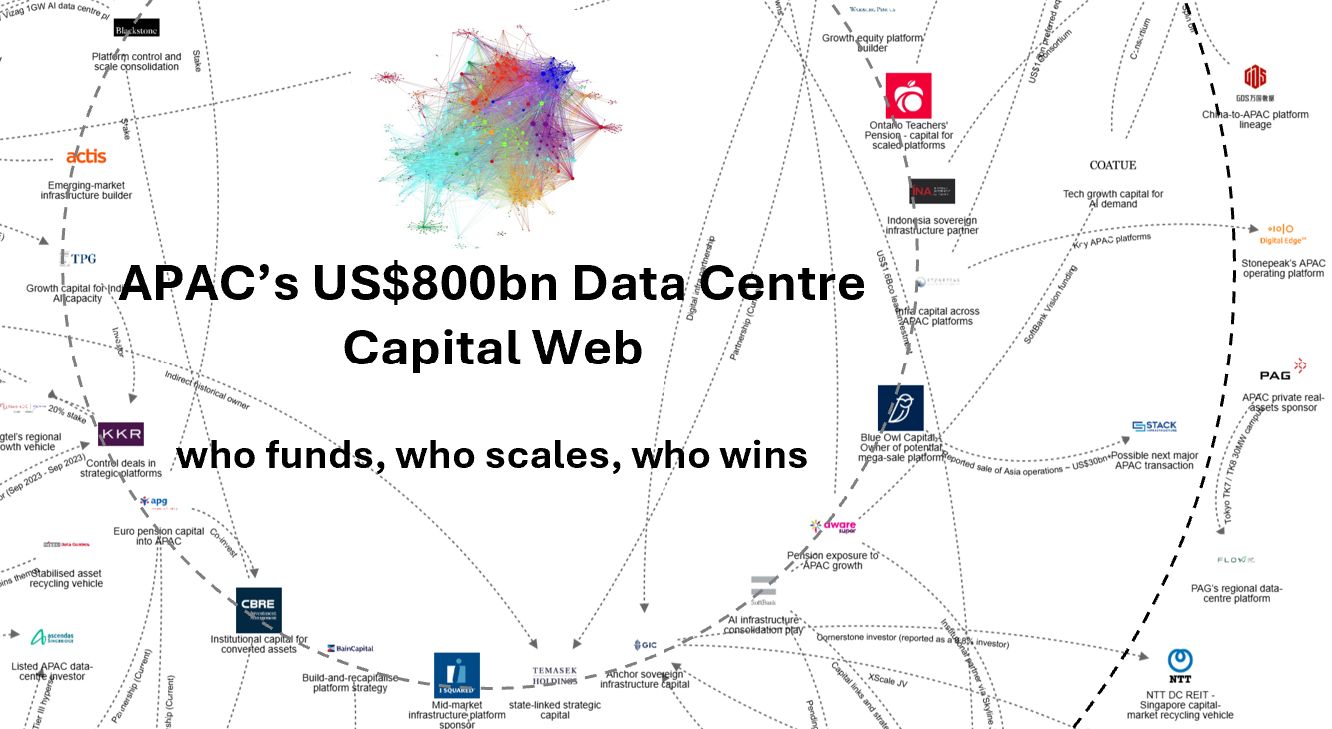
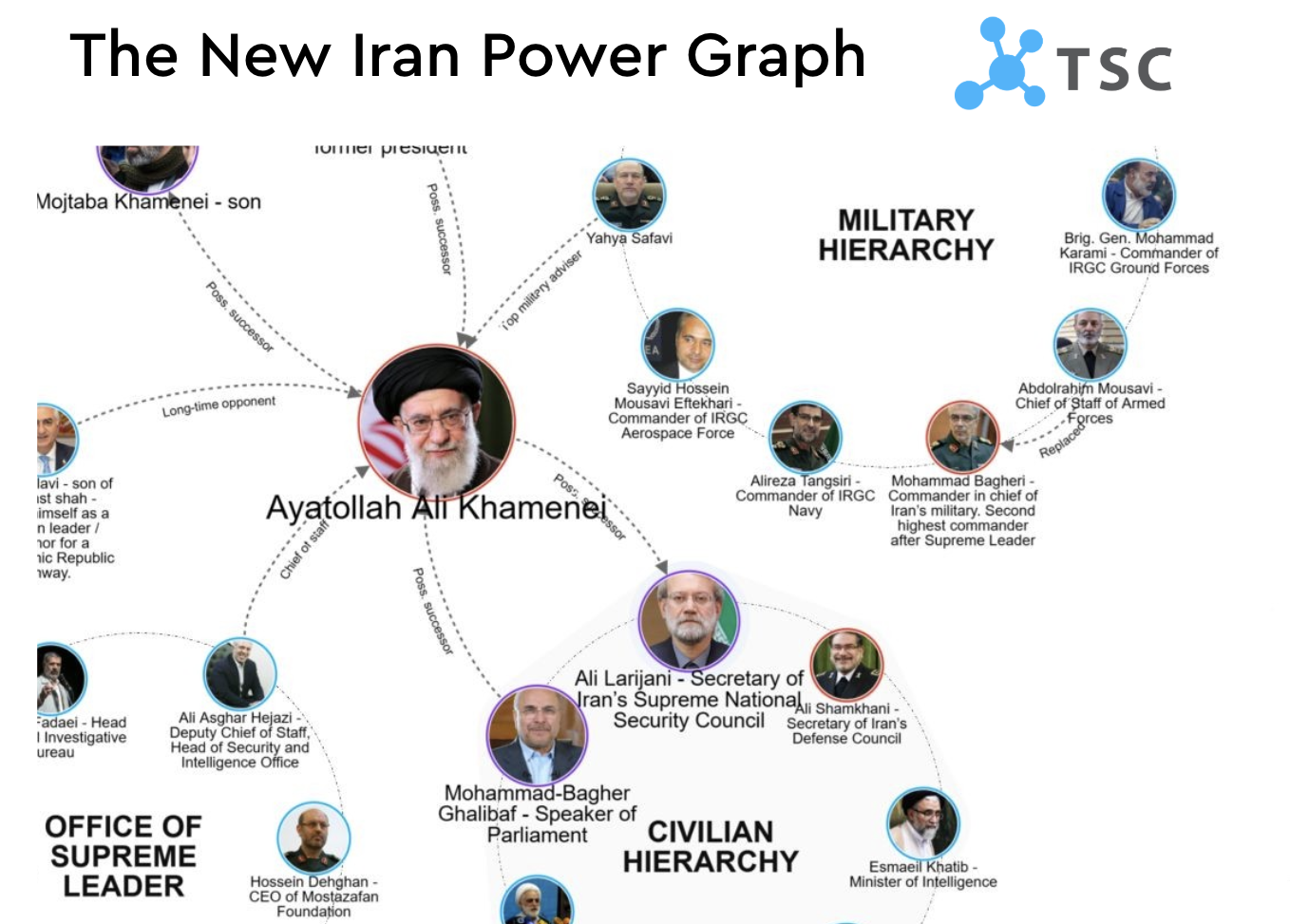
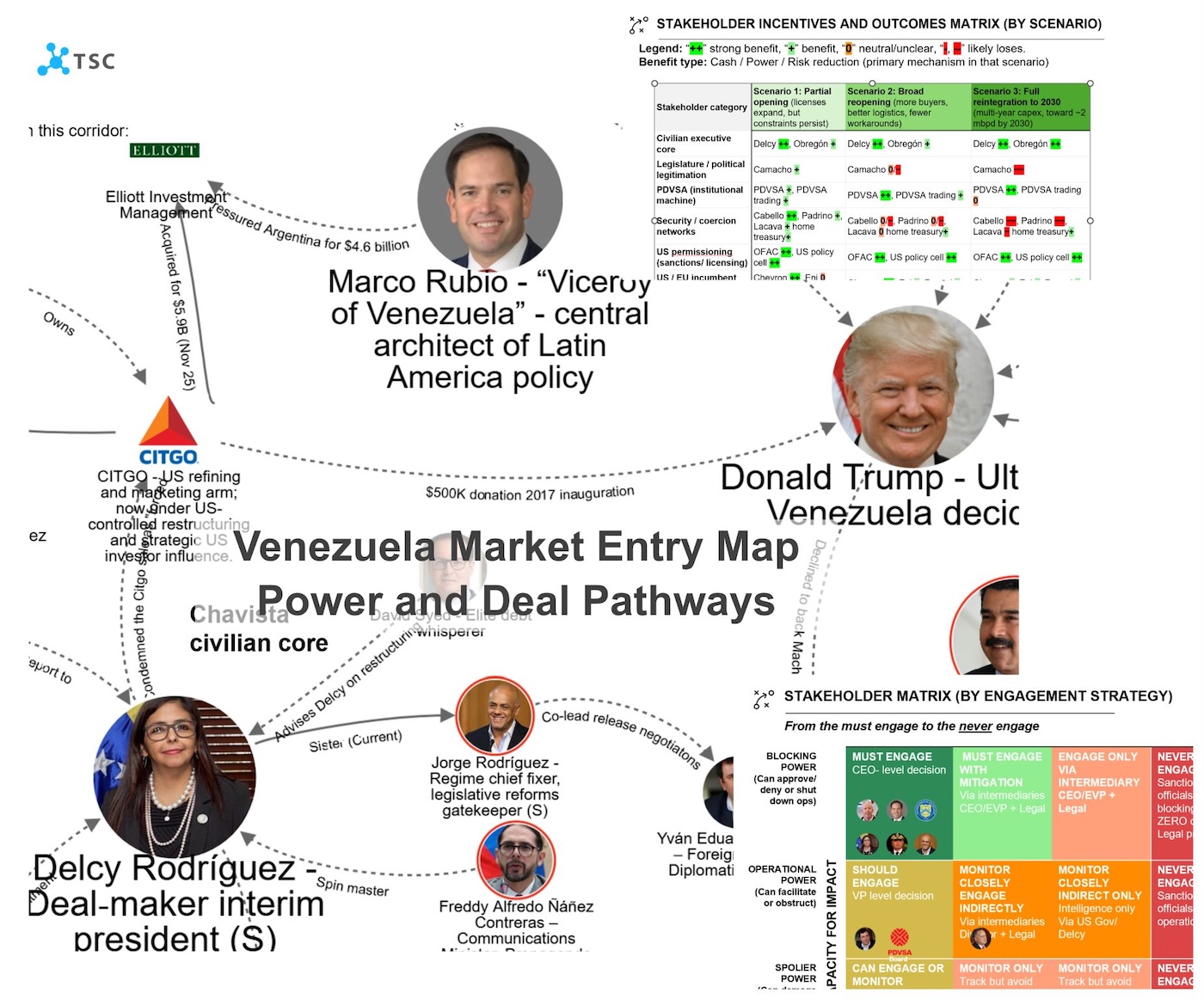
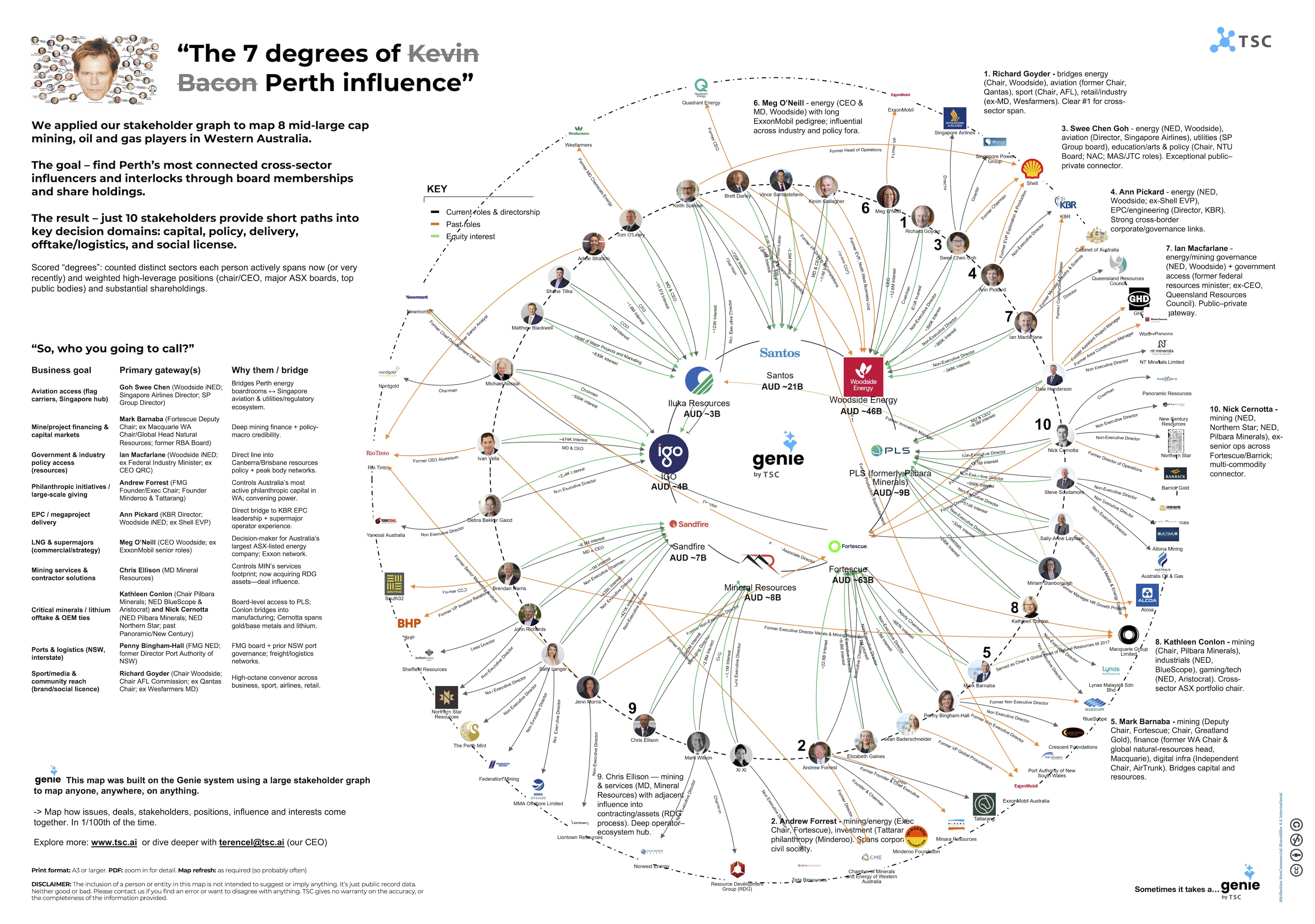

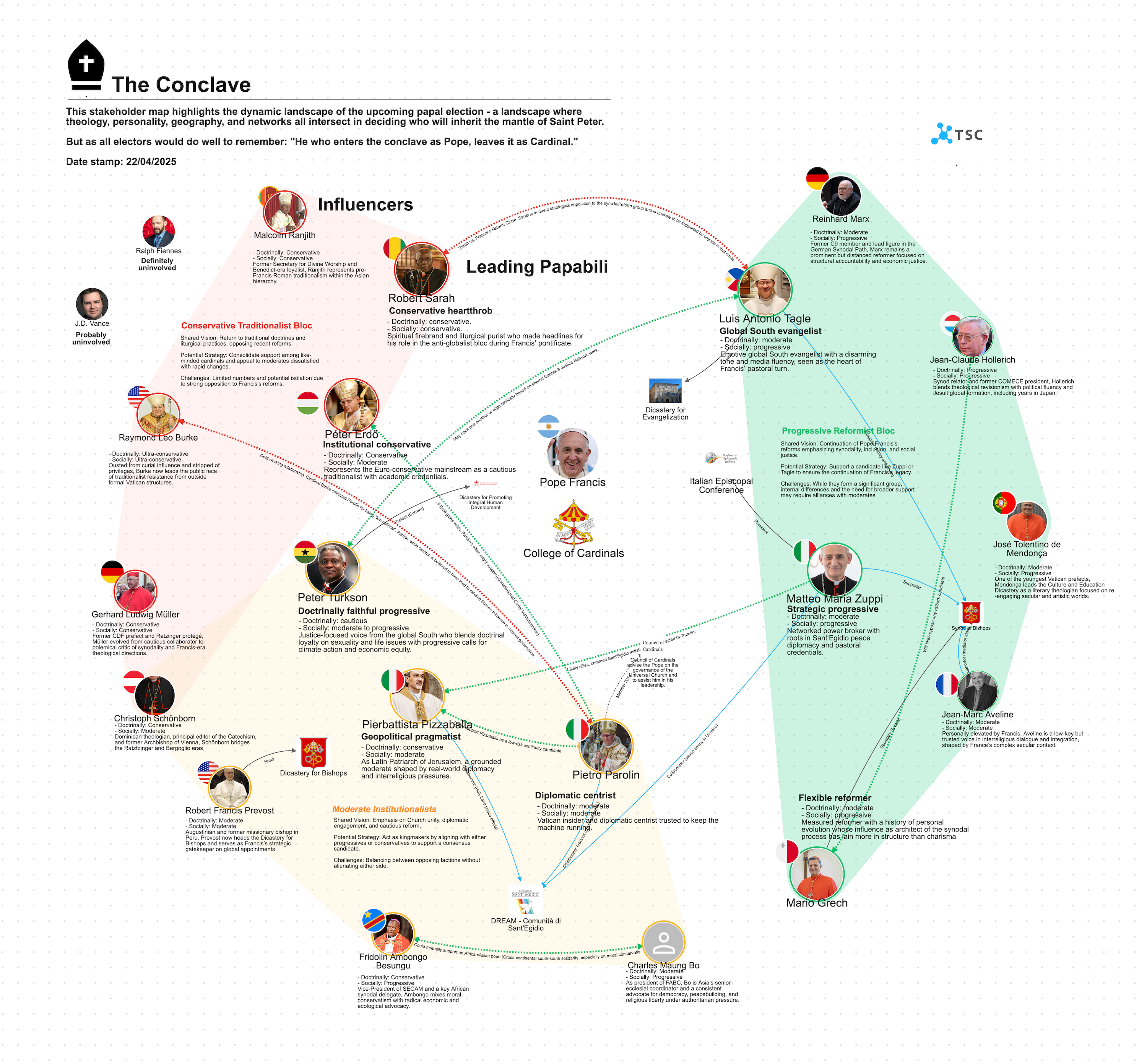
%20(1).png)