.png)
The company is one of the world’s largest independent commodity trading and logistics companies, operating across more than 40 countries in metals, minerals, oil, and energy. Its Corporate Affairs function manages relationships with governments, regulators, investors, civil society organisations, and the media across Africa, Latin America, Asia, the Middle East, and Europe.
For a company where a single regulatory decision, election outcome, or media inquiry can carry significant commercial and reputational consequences, fragmented knowledge is operational risk. Engagement histories stored in individuals’ inboxes, as well as media interactions spanning over a decade, could not be reliably searched, and cross-functional visibility between Corporate Affairs, Media Relations, and Legal was limited.
The company’s external-facing teams faced distinct but interconnected structural challenges:
Genie was deployed as the organisation’s centralised stakeholder and issue intelligence platform. Projects are structured either by country geography - the model used for teams managing bulk historical engagement records, or by function and issue, such as export credit agency financing and EU carbon border regulation, for teams organised around a specific mandate rather than a single market.
By logging global meetings across teams, it transforms a person-dependent, email-based workflow into a structured, searchable archive linked to stakeholders, issues, and geographies. AI-powered smart search alerts replaced keyword-based monitoring, providing contextually relevant intelligence on metals markets, geopolitical developments, and reputational issues.
Corporate Affairs manages relationships with governments, regulators, and civil society stakeholders across dozens of countries. As country managers engaged local stakeholders independently, engagement histories were recorded in personal notes and email chains.
The gap became tangible when a new government came to power in a key African market, and a series of high-level meetings took place within days without the wider team having visibility of what had changed.
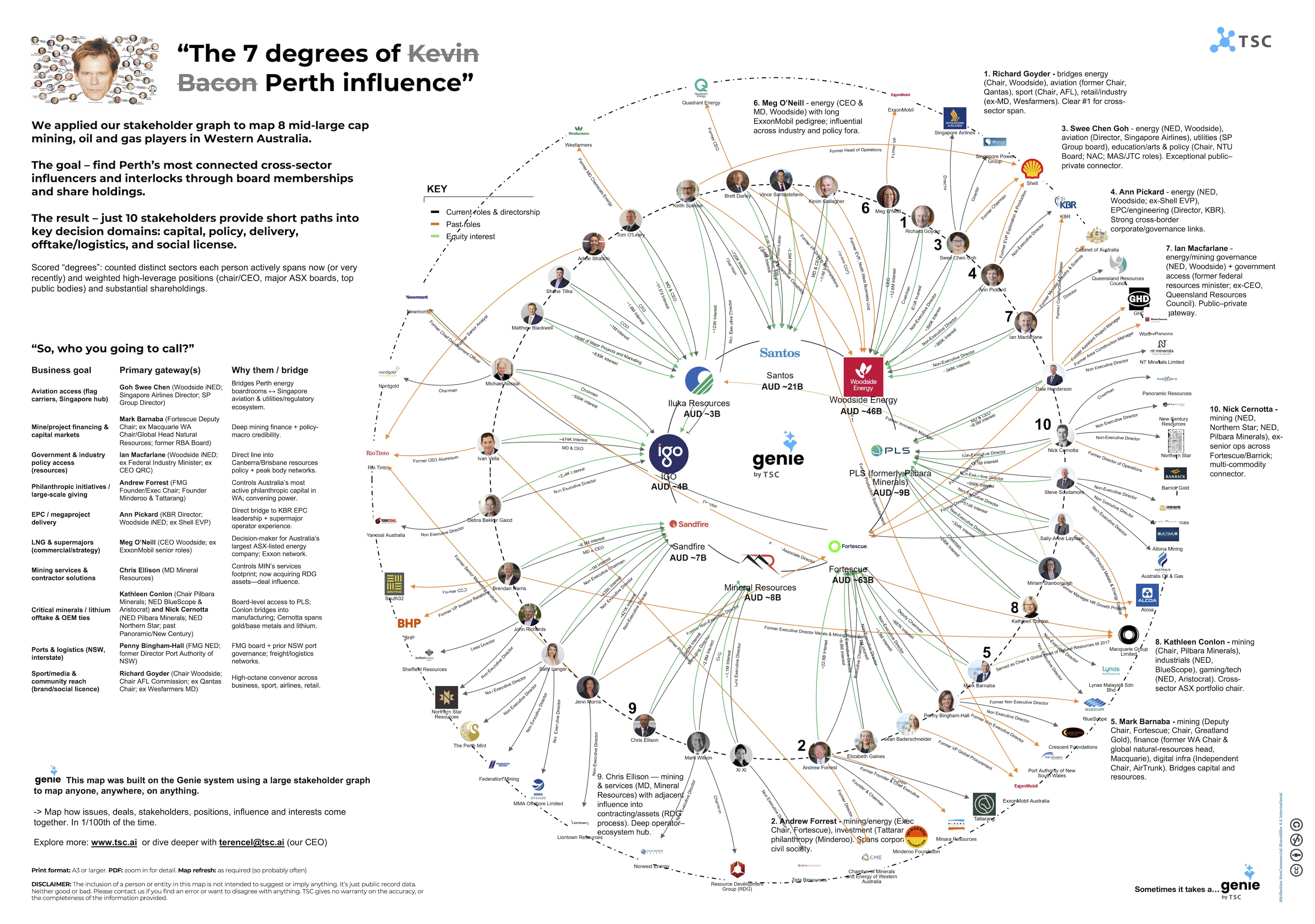
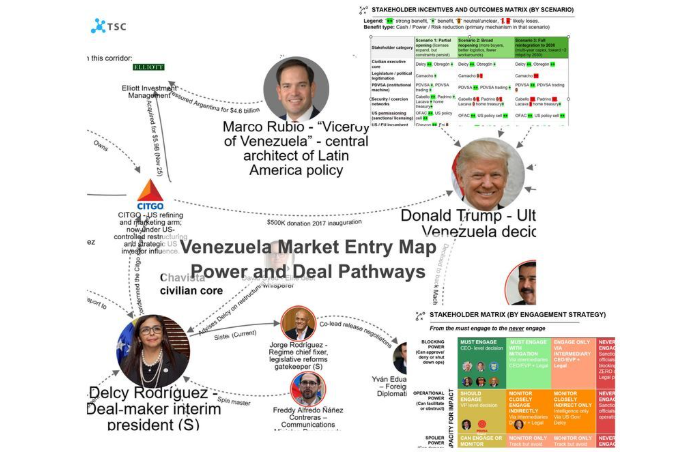
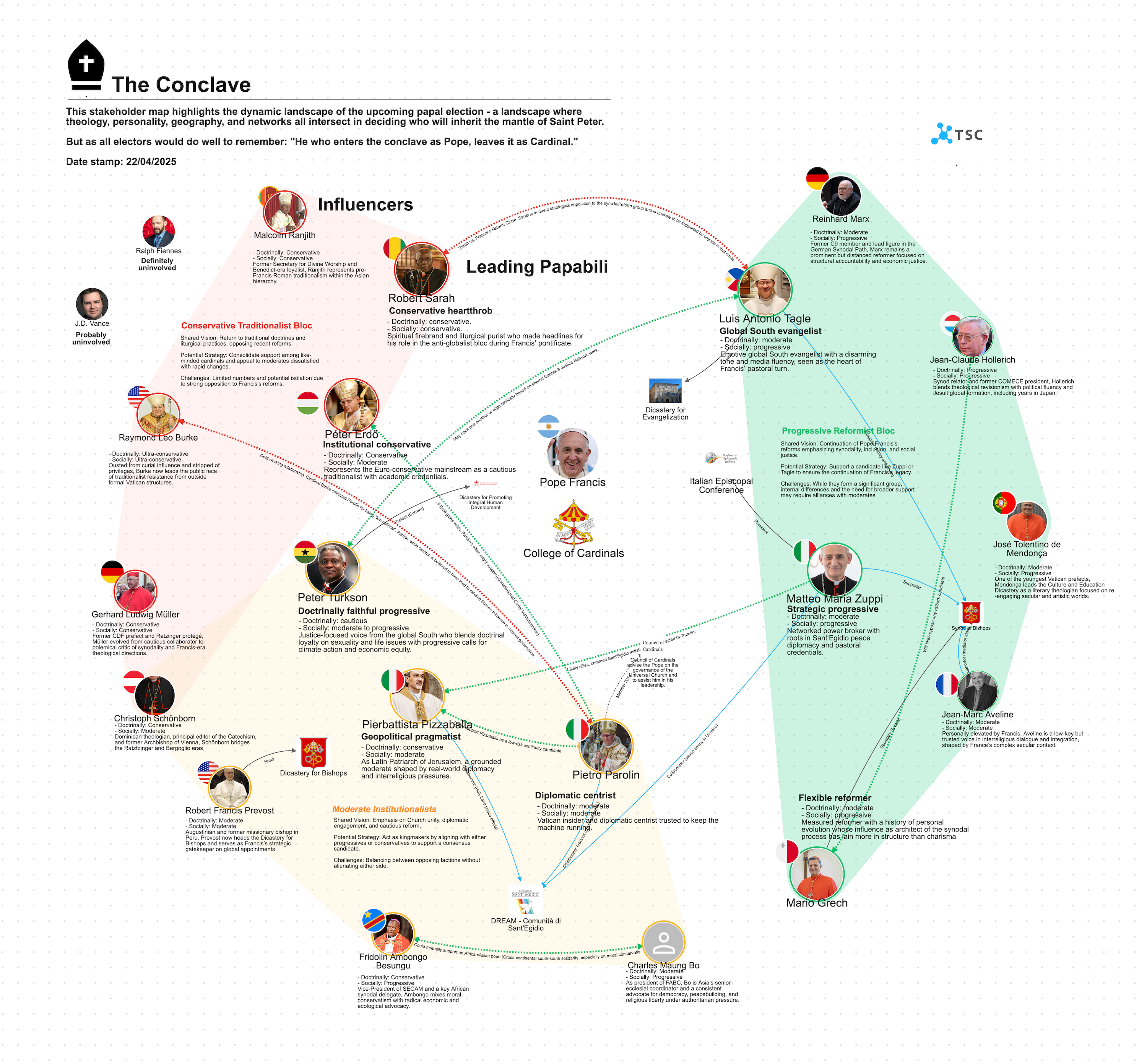
Genie now serves as the central repository for all global meeting records. Each touchpoint is linked to the relevant stakeholder profile, issue, and geographic project. A one-off stakeholder mapping exercise spanning eight markets - Indonesia, India, Australia, Brazil, the Netherlands, the US, the UK, and the EU - has profiled more than 200 stakeholders, giving the team a shared baseline view of who matters in each market.
The result is a shift from reactive, person-dependent knowledge to structured, transferable institutional memory.
The team responsible for the Americas tracks fast-moving political, regulatory, and sanctions developments across markets with very different dynamics; from Venezuela’s sanctions and energy-security landscape, to Bolivia’s state energy sector, to broader commodity and trade developments in the United States. Building a defensible engagement plan for a specific relationship meant assembling that context manually from disconnected sources.
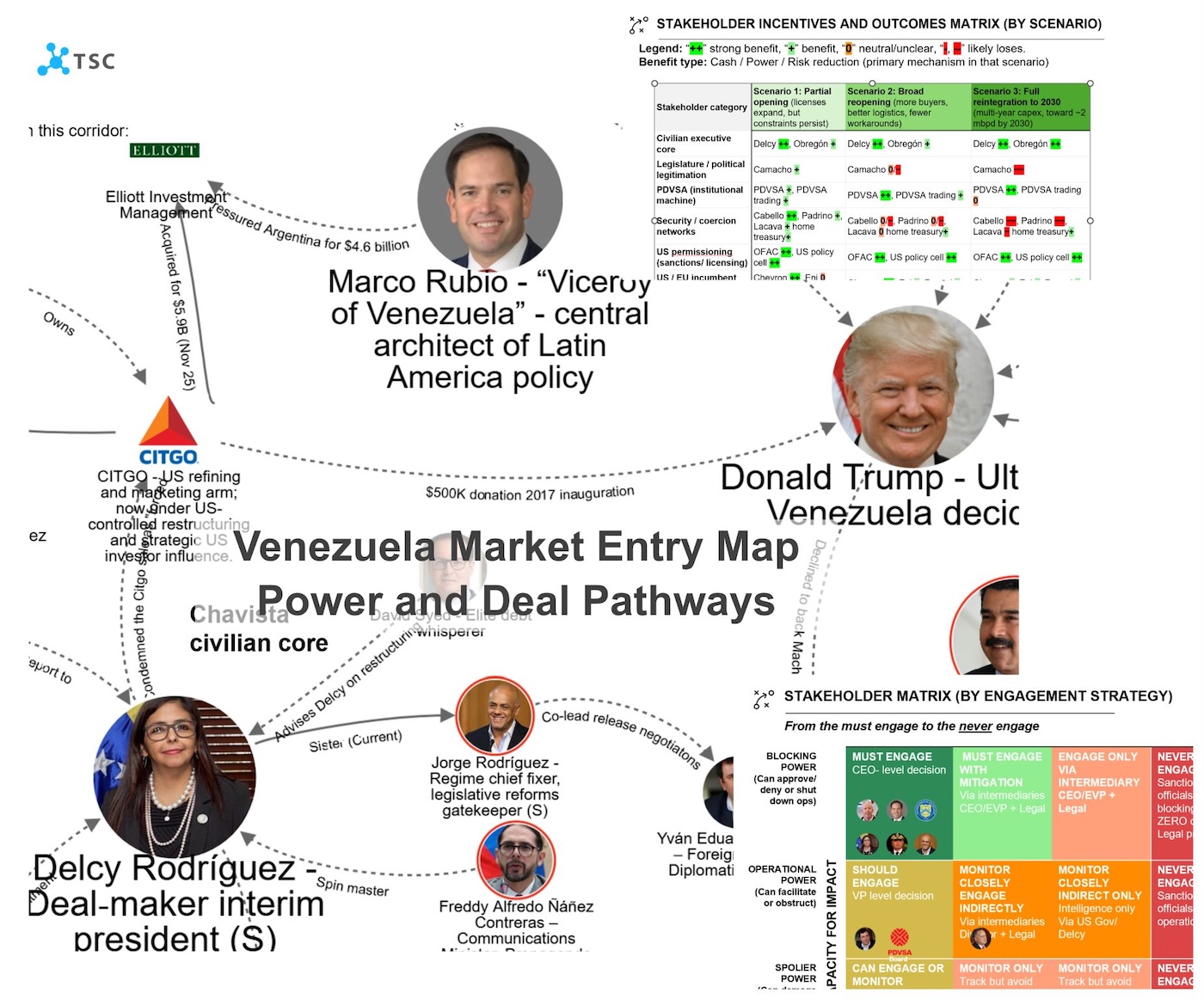
Weekly country-calibrated monitoring alerts now track Venezuela (oil and gas, commodity trade, shipping, sanctions and geopolitics), Bolivia (oil and gas, fuel supply, energy security and government policy), and the United States (minerals, raw materials, energy, shipping and commodities) as distinct, continuously updated feeds.
TSC then delivers a structured engagement brief and stakeholder map built around the team’s relationship with Bolivia’s state energy company, supporting stakeholder engagements with a clear evidence base.
Genie has enabled the organisation to build a centralised, cross-functional intelligence capability connecting stakeholder engagement records, issue monitoring, and event intelligence across more than 40 countries. What was previously a fragmented set of individual workflows dependent on personal memory, email chains, and disconnected tools is now a structured institutional system with a searchable history and growing adoption across Corporate Affairs, Media Relations, and Legal.
The company is one of the world’s largest independent commodity trading and logistics companies, operating across more than 40 countries in metals, minerals, oil, and energy. Its Corporate Affairs function manages relationships with governments, regulators, investors, civil society organisations, and the media across Africa, Latin America, Asia, the Middle East, and Europe.
For a company where a single regulatory decision, election outcome, or media inquiry can carry significant commercial and reputational consequences, fragmented knowledge is operational risk. Engagement histories stored in individuals’ inboxes, as well as media interactions spanning over a decade, could not be reliably searched, and cross-functional visibility between Corporate Affairs, Media Relations, and Legal was limited.
The company’s external-facing teams faced distinct but interconnected structural challenges:
Genie was deployed as the organisation’s centralised stakeholder and issue intelligence platform. Projects are structured either by country geography - the model used for teams managing bulk historical engagement records, or by function and issue, such as export credit agency financing and EU carbon border regulation, for teams organised around a specific mandate rather than a single market.
By logging global meetings across teams, it transforms a person-dependent, email-based workflow into a structured, searchable archive linked to stakeholders, issues, and geographies. AI-powered smart search alerts replaced keyword-based monitoring, providing contextually relevant intelligence on metals markets, geopolitical developments, and reputational issues.
Corporate Affairs manages relationships with governments, regulators, and civil society stakeholders across dozens of countries. As country managers engaged local stakeholders independently, engagement histories were recorded in personal notes and email chains.
The gap became tangible when a new government came to power in a key African market, and a series of high-level meetings took place within days without the wider team having visibility of what had changed.
Genie now serves as the central repository for all global meeting records. Each touchpoint is linked to the relevant stakeholder profile, issue, and geographic project. A one-off stakeholder mapping exercise spanning eight markets - Indonesia, India, Australia, Brazil, the Netherlands, the US, the UK, and the EU - has profiled more than 200 stakeholders, giving the team a shared baseline view of who matters in each market.
The result is a shift from reactive, person-dependent knowledge to structured, transferable institutional memory.
The team responsible for the Americas tracks fast-moving political, regulatory, and sanctions developments across markets with very different dynamics; from Venezuela’s sanctions and energy-security landscape, to Bolivia’s state energy sector, to broader commodity and trade developments in the United States. Building a defensible engagement plan for a specific relationship meant assembling that context manually from disconnected sources.
Weekly country-calibrated monitoring alerts now track Venezuela (oil and gas, commodity trade, shipping, sanctions and geopolitics), Bolivia (oil and gas, fuel supply, energy security and government policy), and the United States (minerals, raw materials, energy, shipping and commodities) as distinct, continuously updated feeds.
TSC then delivers a structured engagement brief and stakeholder map built around the team’s relationship with Bolivia’s state energy company, supporting stakeholder engagements with a clear evidence base.
Genie has enabled the organisation to build a centralised, cross-functional intelligence capability connecting stakeholder engagement records, issue monitoring, and event intelligence across more than 40 countries. What was previously a fragmented set of individual workflows dependent on personal memory, email chains, and disconnected tools is now a structured institutional system with a searchable history and growing adoption across Corporate Affairs, Media Relations, and Legal.
The company is one of the world’s largest independent commodity trading and logistics companies, operating across more than 40 countries in metals, minerals, oil, and energy. Its Corporate Affairs function manages relationships with governments, regulators, investors, civil society organisations, and the media across Africa, Latin America, Asia, the Middle East, and Europe.
For a company where a single regulatory decision, election outcome, or media inquiry can carry significant commercial and reputational consequences, fragmented knowledge is operational risk. Engagement histories stored in individuals’ inboxes, as well as media interactions spanning over a decade, could not be reliably searched, and cross-functional visibility between Corporate Affairs, Media Relations, and Legal was limited.
The company’s external-facing teams faced distinct but interconnected structural challenges:
Genie was deployed as the organisation’s centralised stakeholder and issue intelligence platform. Projects are structured either by country geography - the model used for teams managing bulk historical engagement records, or by function and issue, such as export credit agency financing and EU carbon border regulation, for teams organised around a specific mandate rather than a single market.
By logging global meetings across teams, it transforms a person-dependent, email-based workflow into a structured, searchable archive linked to stakeholders, issues, and geographies. AI-powered smart search alerts replaced keyword-based monitoring, providing contextually relevant intelligence on metals markets, geopolitical developments, and reputational issues.
Corporate Affairs manages relationships with governments, regulators, and civil society stakeholders across dozens of countries. As country managers engaged local stakeholders independently, engagement histories were recorded in personal notes and email chains.
The gap became tangible when a new government came to power in a key African market, and a series of high-level meetings took place within days without the wider team having visibility of what had changed.
Genie now serves as the central repository for all global meeting records. Each touchpoint is linked to the relevant stakeholder profile, issue, and geographic project. A one-off stakeholder mapping exercise spanning eight markets - Indonesia, India, Australia, Brazil, the Netherlands, the US, the UK, and the EU - has profiled more than 200 stakeholders, giving the team a shared baseline view of who matters in each market.
The result is a shift from reactive, person-dependent knowledge to structured, transferable institutional memory.
The team responsible for the Americas tracks fast-moving political, regulatory, and sanctions developments across markets with very different dynamics; from Venezuela’s sanctions and energy-security landscape, to Bolivia’s state energy sector, to broader commodity and trade developments in the United States. Building a defensible engagement plan for a specific relationship meant assembling that context manually from disconnected sources.
Weekly country-calibrated monitoring alerts now track Venezuela (oil and gas, commodity trade, shipping, sanctions and geopolitics), Bolivia (oil and gas, fuel supply, energy security and government policy), and the United States (minerals, raw materials, energy, shipping and commodities) as distinct, continuously updated feeds.
TSC then delivers a structured engagement brief and stakeholder map built around the team’s relationship with Bolivia’s state energy company, supporting stakeholder engagements with a clear evidence base.
Genie has enabled the organisation to build a centralised, cross-functional intelligence capability connecting stakeholder engagement records, issue monitoring, and event intelligence across more than 40 countries. What was previously a fragmented set of individual workflows dependent on personal memory, email chains, and disconnected tools is now a structured institutional system with a searchable history and growing adoption across Corporate Affairs, Media Relations, and Legal.
The company is one of the world’s largest independent commodity trading and logistics companies, operating across more than 40 countries in metals, minerals, oil, and energy. Its Corporate Affairs function manages relationships with governments, regulators, investors, civil society organisations, and the media across Africa, Latin America, Asia, the Middle East, and Europe.
For a company where a single regulatory decision, election outcome, or media inquiry can carry significant commercial and reputational consequences, fragmented knowledge is operational risk. Engagement histories stored in individuals’ inboxes, as well as media interactions spanning over a decade, could not be reliably searched, and cross-functional visibility between Corporate Affairs, Media Relations, and Legal was limited.
The company’s external-facing teams faced distinct but interconnected structural challenges:
Genie was deployed as the organisation’s centralised stakeholder and issue intelligence platform. Projects are structured either by country geography - the model used for teams managing bulk historical engagement records, or by function and issue, such as export credit agency financing and EU carbon border regulation, for teams organised around a specific mandate rather than a single market.
By logging global meetings across teams, it transforms a person-dependent, email-based workflow into a structured, searchable archive linked to stakeholders, issues, and geographies. AI-powered smart search alerts replaced keyword-based monitoring, providing contextually relevant intelligence on metals markets, geopolitical developments, and reputational issues.
Corporate Affairs manages relationships with governments, regulators, and civil society stakeholders across dozens of countries. As country managers engaged local stakeholders independently, engagement histories were recorded in personal notes and email chains.
The gap became tangible when a new government came to power in a key African market, and a series of high-level meetings took place within days without the wider team having visibility of what had changed.
Genie now serves as the central repository for all global meeting records. Each touchpoint is linked to the relevant stakeholder profile, issue, and geographic project. A one-off stakeholder mapping exercise spanning eight markets - Indonesia, India, Australia, Brazil, the Netherlands, the US, the UK, and the EU - has profiled more than 200 stakeholders, giving the team a shared baseline view of who matters in each market.
The result is a shift from reactive, person-dependent knowledge to structured, transferable institutional memory.
The team responsible for the Americas tracks fast-moving political, regulatory, and sanctions developments across markets with very different dynamics; from Venezuela’s sanctions and energy-security landscape, to Bolivia’s state energy sector, to broader commodity and trade developments in the United States. Building a defensible engagement plan for a specific relationship meant assembling that context manually from disconnected sources.
Weekly country-calibrated monitoring alerts now track Venezuela (oil and gas, commodity trade, shipping, sanctions and geopolitics), Bolivia (oil and gas, fuel supply, energy security and government policy), and the United States (minerals, raw materials, energy, shipping and commodities) as distinct, continuously updated feeds.
TSC then delivers a structured engagement brief and stakeholder map built around the team’s relationship with Bolivia’s state energy company, supporting stakeholder engagements with a clear evidence base.
Genie has enabled the organisation to build a centralised, cross-functional intelligence capability connecting stakeholder engagement records, issue monitoring, and event intelligence across more than 40 countries. What was previously a fragmented set of individual workflows dependent on personal memory, email chains, and disconnected tools is now a structured institutional system with a searchable history and growing adoption across Corporate Affairs, Media Relations, and Legal.
The company is one of the world’s largest independent commodity trading and logistics companies, operating across more than 40 countries in metals, minerals, oil, and energy. Its Corporate Affairs function manages relationships with governments, regulators, investors, civil society organisations, and the media across Africa, Latin America, Asia, the Middle East, and Europe.
For a company where a single regulatory decision, election outcome, or media inquiry can carry significant commercial and reputational consequences, fragmented knowledge is operational risk. Engagement histories stored in individuals’ inboxes, as well as media interactions spanning over a decade, could not be reliably searched, and cross-functional visibility between Corporate Affairs, Media Relations, and Legal was limited.
The company’s external-facing teams faced distinct but interconnected structural challenges:
Genie was deployed as the organisation’s centralised stakeholder and issue intelligence platform. Projects are structured either by country geography - the model used for teams managing bulk historical engagement records, or by function and issue, such as export credit agency financing and EU carbon border regulation, for teams organised around a specific mandate rather than a single market.
By logging global meetings across teams, it transforms a person-dependent, email-based workflow into a structured, searchable archive linked to stakeholders, issues, and geographies. AI-powered smart search alerts replaced keyword-based monitoring, providing contextually relevant intelligence on metals markets, geopolitical developments, and reputational issues.
Corporate Affairs manages relationships with governments, regulators, and civil society stakeholders across dozens of countries. As country managers engaged local stakeholders independently, engagement histories were recorded in personal notes and email chains.
The gap became tangible when a new government came to power in a key African market, and a series of high-level meetings took place within days without the wider team having visibility of what had changed.
Genie now serves as the central repository for all global meeting records. Each touchpoint is linked to the relevant stakeholder profile, issue, and geographic project. A one-off stakeholder mapping exercise spanning eight markets - Indonesia, India, Australia, Brazil, the Netherlands, the US, the UK, and the EU - has profiled more than 200 stakeholders, giving the team a shared baseline view of who matters in each market.
The result is a shift from reactive, person-dependent knowledge to structured, transferable institutional memory.
The team responsible for the Americas tracks fast-moving political, regulatory, and sanctions developments across markets with very different dynamics; from Venezuela’s sanctions and energy-security landscape, to Bolivia’s state energy sector, to broader commodity and trade developments in the United States. Building a defensible engagement plan for a specific relationship meant assembling that context manually from disconnected sources.
Weekly country-calibrated monitoring alerts now track Venezuela (oil and gas, commodity trade, shipping, sanctions and geopolitics), Bolivia (oil and gas, fuel supply, energy security and government policy), and the United States (minerals, raw materials, energy, shipping and commodities) as distinct, continuously updated feeds.
TSC then delivers a structured engagement brief and stakeholder map built around the team’s relationship with Bolivia’s state energy company, supporting stakeholder engagements with a clear evidence base.
Genie has enabled the organisation to build a centralised, cross-functional intelligence capability connecting stakeholder engagement records, issue monitoring, and event intelligence across more than 40 countries. What was previously a fragmented set of individual workflows dependent on personal memory, email chains, and disconnected tools is now a structured institutional system with a searchable history and growing adoption across Corporate Affairs, Media Relations, and Legal.
The company is one of the world’s largest independent commodity trading and logistics companies, operating across more than 40 countries in metals, minerals, oil, and energy. Its Corporate Affairs function manages relationships with governments, regulators, investors, civil society organisations, and the media across Africa, Latin America, Asia, the Middle East, and Europe.
For a company where a single regulatory decision, election outcome, or media inquiry can carry significant commercial and reputational consequences, fragmented knowledge is operational risk. Engagement histories stored in individuals’ inboxes, as well as media interactions spanning over a decade, could not be reliably searched, and cross-functional visibility between Corporate Affairs, Media Relations, and Legal was limited.
The company’s external-facing teams faced distinct but interconnected structural challenges:
Genie was deployed as the organisation’s centralised stakeholder and issue intelligence platform. Projects are structured either by country geography - the model used for teams managing bulk historical engagement records, or by function and issue, such as export credit agency financing and EU carbon border regulation, for teams organised around a specific mandate rather than a single market.
By logging global meetings across teams, it transforms a person-dependent, email-based workflow into a structured, searchable archive linked to stakeholders, issues, and geographies. AI-powered smart search alerts replaced keyword-based monitoring, providing contextually relevant intelligence on metals markets, geopolitical developments, and reputational issues.
Corporate Affairs manages relationships with governments, regulators, and civil society stakeholders across dozens of countries. As country managers engaged local stakeholders independently, engagement histories were recorded in personal notes and email chains.
The gap became tangible when a new government came to power in a key African market, and a series of high-level meetings took place within days without the wider team having visibility of what had changed.
Genie now serves as the central repository for all global meeting records. Each touchpoint is linked to the relevant stakeholder profile, issue, and geographic project. A one-off stakeholder mapping exercise spanning eight markets - Indonesia, India, Australia, Brazil, the Netherlands, the US, the UK, and the EU - has profiled more than 200 stakeholders, giving the team a shared baseline view of who matters in each market.
The result is a shift from reactive, person-dependent knowledge to structured, transferable institutional memory.
The team responsible for the Americas tracks fast-moving political, regulatory, and sanctions developments across markets with very different dynamics; from Venezuela’s sanctions and energy-security landscape, to Bolivia’s state energy sector, to broader commodity and trade developments in the United States. Building a defensible engagement plan for a specific relationship meant assembling that context manually from disconnected sources.
Weekly country-calibrated monitoring alerts now track Venezuela (oil and gas, commodity trade, shipping, sanctions and geopolitics), Bolivia (oil and gas, fuel supply, energy security and government policy), and the United States (minerals, raw materials, energy, shipping and commodities) as distinct, continuously updated feeds.
TSC then delivers a structured engagement brief and stakeholder map built around the team’s relationship with Bolivia’s state energy company, supporting stakeholder engagements with a clear evidence base.
Genie has enabled the organisation to build a centralised, cross-functional intelligence capability connecting stakeholder engagement records, issue monitoring, and event intelligence across more than 40 countries. What was previously a fragmented set of individual workflows dependent on personal memory, email chains, and disconnected tools is now a structured institutional system with a searchable history and growing adoption across Corporate Affairs, Media Relations, and Legal.
The company is one of the world’s largest independent commodity trading and logistics companies, operating across more than 40 countries in metals, minerals, oil, and energy. Its Corporate Affairs function manages relationships with governments, regulators, investors, civil society organisations, and the media across Africa, Latin America, Asia, the Middle East, and Europe.
For a company where a single regulatory decision, election outcome, or media inquiry can carry significant commercial and reputational consequences, fragmented knowledge is operational risk. Engagement histories stored in individuals’ inboxes, as well as media interactions spanning over a decade, could not be reliably searched, and cross-functional visibility between Corporate Affairs, Media Relations, and Legal was limited.
The company’s external-facing teams faced distinct but interconnected structural challenges:
Genie was deployed as the organisation’s centralised stakeholder and issue intelligence platform. Projects are structured either by country geography - the model used for teams managing bulk historical engagement records, or by function and issue, such as export credit agency financing and EU carbon border regulation, for teams organised around a specific mandate rather than a single market.
By logging global meetings across teams, it transforms a person-dependent, email-based workflow into a structured, searchable archive linked to stakeholders, issues, and geographies. AI-powered smart search alerts replaced keyword-based monitoring, providing contextually relevant intelligence on metals markets, geopolitical developments, and reputational issues.
Corporate Affairs manages relationships with governments, regulators, and civil society stakeholders across dozens of countries. As country managers engaged local stakeholders independently, engagement histories were recorded in personal notes and email chains.
The gap became tangible when a new government came to power in a key African market, and a series of high-level meetings took place within days without the wider team having visibility of what had changed.
Genie now serves as the central repository for all global meeting records. Each touchpoint is linked to the relevant stakeholder profile, issue, and geographic project. A one-off stakeholder mapping exercise spanning eight markets - Indonesia, India, Australia, Brazil, the Netherlands, the US, the UK, and the EU - has profiled more than 200 stakeholders, giving the team a shared baseline view of who matters in each market.
The result is a shift from reactive, person-dependent knowledge to structured, transferable institutional memory.
The team responsible for the Americas tracks fast-moving political, regulatory, and sanctions developments across markets with very different dynamics; from Venezuela’s sanctions and energy-security landscape, to Bolivia’s state energy sector, to broader commodity and trade developments in the United States. Building a defensible engagement plan for a specific relationship meant assembling that context manually from disconnected sources.
Weekly country-calibrated monitoring alerts now track Venezuela (oil and gas, commodity trade, shipping, sanctions and geopolitics), Bolivia (oil and gas, fuel supply, energy security and government policy), and the United States (minerals, raw materials, energy, shipping and commodities) as distinct, continuously updated feeds.
TSC then delivers a structured engagement brief and stakeholder map built around the team’s relationship with Bolivia’s state energy company, supporting stakeholder engagements with a clear evidence base.
Genie has enabled the organisation to build a centralised, cross-functional intelligence capability connecting stakeholder engagement records, issue monitoring, and event intelligence across more than 40 countries. What was previously a fragmented set of individual workflows dependent on personal memory, email chains, and disconnected tools is now a structured institutional system with a searchable history and growing adoption across Corporate Affairs, Media Relations, and Legal.
The company is one of the world’s largest independent commodity trading and logistics companies, operating across more than 40 countries in metals, minerals, oil, and energy. Its Corporate Affairs function manages relationships with governments, regulators, investors, civil society organisations, and the media across Africa, Latin America, Asia, the Middle East, and Europe.
For a company where a single regulatory decision, election outcome, or media inquiry can carry significant commercial and reputational consequences, fragmented knowledge is operational risk. Engagement histories stored in individuals’ inboxes, as well as media interactions spanning over a decade, could not be reliably searched, and cross-functional visibility between Corporate Affairs, Media Relations, and Legal was limited.
The company’s external-facing teams faced distinct but interconnected structural challenges:
Genie was deployed as the organisation’s centralised stakeholder and issue intelligence platform. Projects are structured either by country geography - the model used for teams managing bulk historical engagement records, or by function and issue, such as export credit agency financing and EU carbon border regulation, for teams organised around a specific mandate rather than a single market.
By logging global meetings across teams, it transforms a person-dependent, email-based workflow into a structured, searchable archive linked to stakeholders, issues, and geographies. AI-powered smart search alerts replaced keyword-based monitoring, providing contextually relevant intelligence on metals markets, geopolitical developments, and reputational issues.
Corporate Affairs manages relationships with governments, regulators, and civil society stakeholders across dozens of countries. As country managers engaged local stakeholders independently, engagement histories were recorded in personal notes and email chains.
The gap became tangible when a new government came to power in a key African market, and a series of high-level meetings took place within days without the wider team having visibility of what had changed.
Genie now serves as the central repository for all global meeting records. Each touchpoint is linked to the relevant stakeholder profile, issue, and geographic project. A one-off stakeholder mapping exercise spanning eight markets - Indonesia, India, Australia, Brazil, the Netherlands, the US, the UK, and the EU - has profiled more than 200 stakeholders, giving the team a shared baseline view of who matters in each market.
The result is a shift from reactive, person-dependent knowledge to structured, transferable institutional memory.
The team responsible for the Americas tracks fast-moving political, regulatory, and sanctions developments across markets with very different dynamics; from Venezuela’s sanctions and energy-security landscape, to Bolivia’s state energy sector, to broader commodity and trade developments in the United States. Building a defensible engagement plan for a specific relationship meant assembling that context manually from disconnected sources.
Weekly country-calibrated monitoring alerts now track Venezuela (oil and gas, commodity trade, shipping, sanctions and geopolitics), Bolivia (oil and gas, fuel supply, energy security and government policy), and the United States (minerals, raw materials, energy, shipping and commodities) as distinct, continuously updated feeds.
TSC then delivers a structured engagement brief and stakeholder map built around the team’s relationship with Bolivia’s state energy company, supporting stakeholder engagements with a clear evidence base.
Genie has enabled the organisation to build a centralised, cross-functional intelligence capability connecting stakeholder engagement records, issue monitoring, and event intelligence across more than 40 countries. What was previously a fragmented set of individual workflows dependent on personal memory, email chains, and disconnected tools is now a structured institutional system with a searchable history and growing adoption across Corporate Affairs, Media Relations, and Legal.
The company is one of the world’s largest independent commodity trading and logistics companies, operating across more than 40 countries in metals, minerals, oil, and energy. Its Corporate Affairs function manages relationships with governments, regulators, investors, civil society organisations, and the media across Africa, Latin America, Asia, the Middle East, and Europe.
For a company where a single regulatory decision, election outcome, or media inquiry can carry significant commercial and reputational consequences, fragmented knowledge is operational risk. Engagement histories stored in individuals’ inboxes, as well as media interactions spanning over a decade, could not be reliably searched, and cross-functional visibility between Corporate Affairs, Media Relations, and Legal was limited.
The company’s external-facing teams faced distinct but interconnected structural challenges:
Genie was deployed as the organisation’s centralised stakeholder and issue intelligence platform. Projects are structured either by country geography - the model used for teams managing bulk historical engagement records, or by function and issue, such as export credit agency financing and EU carbon border regulation, for teams organised around a specific mandate rather than a single market.
By logging global meetings across teams, it transforms a person-dependent, email-based workflow into a structured, searchable archive linked to stakeholders, issues, and geographies. AI-powered smart search alerts replaced keyword-based monitoring, providing contextually relevant intelligence on metals markets, geopolitical developments, and reputational issues.
Corporate Affairs manages relationships with governments, regulators, and civil society stakeholders across dozens of countries. As country managers engaged local stakeholders independently, engagement histories were recorded in personal notes and email chains.
The gap became tangible when a new government came to power in a key African market, and a series of high-level meetings took place within days without the wider team having visibility of what had changed.
Genie now serves as the central repository for all global meeting records. Each touchpoint is linked to the relevant stakeholder profile, issue, and geographic project. A one-off stakeholder mapping exercise spanning eight markets - Indonesia, India, Australia, Brazil, the Netherlands, the US, the UK, and the EU - has profiled more than 200 stakeholders, giving the team a shared baseline view of who matters in each market.
The result is a shift from reactive, person-dependent knowledge to structured, transferable institutional memory.
The team responsible for the Americas tracks fast-moving political, regulatory, and sanctions developments across markets with very different dynamics; from Venezuela’s sanctions and energy-security landscape, to Bolivia’s state energy sector, to broader commodity and trade developments in the United States. Building a defensible engagement plan for a specific relationship meant assembling that context manually from disconnected sources.
Weekly country-calibrated monitoring alerts now track Venezuela (oil and gas, commodity trade, shipping, sanctions and geopolitics), Bolivia (oil and gas, fuel supply, energy security and government policy), and the United States (minerals, raw materials, energy, shipping and commodities) as distinct, continuously updated feeds.
TSC then delivers a structured engagement brief and stakeholder map built around the team’s relationship with Bolivia’s state energy company, supporting stakeholder engagements with a clear evidence base.
Genie has enabled the organisation to build a centralised, cross-functional intelligence capability connecting stakeholder engagement records, issue monitoring, and event intelligence across more than 40 countries. What was previously a fragmented set of individual workflows dependent on personal memory, email chains, and disconnected tools is now a structured institutional system with a searchable history and growing adoption across Corporate Affairs, Media Relations, and Legal.

.png)

.png)



%20(1).png)