
How we compare.
Corporate diplomats share a set of jobs and a stack that was built for none of them. This page unpicks the jobs and plays them out across what a team can buy today.
Status quo
Corporate diplomats are served by a fragmented field of solutions.
Corporate diplomats exist across missions. They live in corporate, external and public affairs, in local and institutional relations, in strategic communications.
They share a mission. Solve hard, external problems. Know who matters, track what is moving, hold the relationship, brief the people who decide.
Their solution stack is fragmented. A range of tools focus on documents (legislation, media, reports) and a disconnected range of decision moments.
We built TSC for them.
Software
Most tools sell one size to fit every client. AI makes it possible to build the analysis around your team.
Legacy media monitoring, regtech and stakeholder CRMs were built for efficiency: one narrow job, done the same way for everyone. Your LLM reasons for you, but starts from a blank page every time. TSC is built around your mission: the right data with the right AI to deliver tailored intelligence at the quality of a good adviser and the scale of software.
Media monitoring: Maximalist coverage, measured by volume.
Clippings at volume, counted and trended.
TSC: The right capture, scoped to your mandate.
Across media, policy and specialist sources.
Media monitoring: An archive of clippings.
Years of coverage, searchable. Each mention is stored on its own.
TSC: A picture that compounds.
Every signal stays connected to the issues and stakeholders it concerns, so each year builds on the last.
Media monitoring: Keyword queries decide what you see.
Clean-up and deduplication are done well. They are the whole product.
TSC: Processing is just the first step.
Every signal is cleaned, classified and resolved to your issues and stakeholders. That is what makes attribution and deeper analysis possible.
Media monitoring: Legacy sentiment models.
The tone of posts adjacent to your company is scored as a view on it.
TSC: Contextual sentiment and stance.
LLM-based sentiment infers opinion and direction. Each mention is scored on what it says about you, and who says it.
Media monitoring: Metric-led analysis.
Volume, reach and share of voice. The numbers stand in for the read.
TSC: Specialised analytical agents.
Agents reason over clean, scoped evidence and cite what they used.
Media monitoring: Analysts as an add-on.
The vendor's analysts write to a template, on a schedule, for an extra fee.
TSC: Governed by analysts.
TSC analysts set the system up around your decisions and review what it produces.
Media monitoring: Dashboards and keyword alerts.
Alerts fire on a term or a spike, whatever the context. Briefers arrive as a stack of clippings.
TSC: Outputs built around your decisions.
Spike and scheduled alerts, set to any issue or stakeholder, with AI synthesis. Briefs and reports to your frameworks, governed by analysts.
Media monitoring: An LLM wrapper around a legacy product.
It summarises what the dashboard already shows.
TSC: Intelligence inside your own AI.
Structured, labelled data your copilot can query.
Not in scope for Media monitoring
- A graph of the stakeholders you manage
- Links to your issues, events and engagement
- An engagement record
TSC
Every signal is resolved onto one stakeholder graph. That graph connects to the issues, events and engagement your team manages.
CRM and grievance: A local log of your own engagement.
Contacts, meetings, commitments and grievances, entered by your team and kept properly.
TSC: Your log, joined to the public field.
What each stakeholder says and does in public, next to what your team recorded.
CRM and grievance: A log that grows.
Every entry your team made, kept for as long as you run the platform.
TSC: A record that compounds.
Each year adds what stakeholders said and did in public, connected to what your team logged.
CRM and grievance: Bring your own data.
The platform holds what your team enters. There is no intelligence layer on top of it.
TSC: An intelligence layer on your record.
Genie reads the outside world for every stakeholder you hold and attaches what it finds.
CRM and grievance: Reminders and activity reports.
Deadlines falling due, and a count of what the team logged.
TSC: Outputs built around your decisions.
Spike and scheduled alerts, set to any issue or stakeholder, with AI synthesis. Briefs and reports to your frameworks, governed by analysts.
CRM and grievance: An assistant over your own log.
It can only answer from what your team typed in.
TSC: Your record and live intelligence, in your own AI.
Your copilot queries both, with sources attached.
Not in scope for CRM and grievance
- Media, policy and social monitoring
- Sentiment and stance
- Stakeholders your team has not yet met
TSC
Genie captures the field outside your record and reads it for sentiment and stance. It connects what it finds to the people you already hold.
Legislative trackers: The formal record, at source.
Bills, regulations, consultations and filings, captured as they are published.
TSC: The debate around the record.
The media and stakeholder conversation that shapes each bill.
Legislative trackers: An archive of the record.
Past bills and filings, searchable. The debate around them is not kept.
TSC: A picture that compounds.
Every signal stays connected to the issues and stakeholders it concerns, so each year builds on the last.
Legislative trackers: Core focus on officials.
Legislator profiles, votes and seats are kept by the vendor.
TSC: Every actor shaping an issue.
Inside and outside government, across jurisdictions.
Legislative trackers: Sorted by policy area and bill.
Tags describe each document. The politics around it goes untagged.
TSC: Processing is just the first step.
Every signal is cleaned, classified and resolved to your issues and stakeholders. That is what makes attribution and deeper analysis possible.
Legislative trackers: Fast, reliable bill alerts.
Notice when a bill moves, a hearing is set or a filing lands. Briefings report what moved.
TSC: Alerts when positions move.
Set to any issue or stakeholder, with AI synthesis. Briefs and reports on top, governed by analysts.
Legislative trackers: Summaries of bills and documents.
The AI reads the record and statements by officials. The wider debate is never captured for it to read.
TSC: The full universe for your AI.
Your copilot draws on the record, the debate around it and the people in it, with sources attached.
Not in scope for Legislative trackers
- The wider media and social debate
- Sentiment and stance
- Monitoring of stakeholders outside government
TSC
Genie reads the media and stakeholder field around each issue for sentiment and stance. It holds your engagement with the people in it.
Generic LLMs: A sample from the top down.
It reads the top-ranked sources a search returns, in a different way every time.
TSC: Capture from the ground up.
The full universe is captured, and narrowed down to scope. That makes analysis traceable, and replicable between cycles.
Generic LLMs: Reasons about the names you give it.
No persistent record.
TSC: A persistent stakeholder record.
Entity-resolved and kept current.
Generic LLMs: Sorts relevance and tone while it writes.
Duplicates, names and noise are judged on the fly.
TSC: Refined before the model reads it.
Labels are computed once, validated and stored, so the model reasons over clean, scoped evidence.
Generic LLMs: Reads tone well.
With no framework or baseline, every score is a judgement call.
TSC: Contextual sentiment and stance.
LLM-based sentiment infers opinion and direction. Each mention is scored on what it says about you, and who says it.
Generic LLMs: Drafts from what it is given.
Each scheduled task reruns a search from scratch.
TSC: Repeatable outputs to your frameworks.
Briefs, alerts and reports from a standing pipeline, governed by analysts.
Generic LLMs: The strongest reasoning available.
TSC: Gives that reasoning structured data.
Your own AI queries Genie directly, sources attached.
Not in scope for Generic LLMs
- A standing capture pipeline
- A view shared across your team
- An engagement record
TSC
Genie runs the capture and holds the record. Every answer starts from the same picture.
Advisory
The advisory model is changing. We help design the change.
Clients expect more from their advisers, and the value has moved to what a generic model cannot reproduce. We work with independent thought leaders and larger firms to rebuild the offer: their judgement and the room, our data and continuity between engagements. The client keeps one shared picture.
Advisers bring
- The relationships and the access
- Judgement in the room
- Counsel on the decision
TSC brings
- The data platform and the people who run it
- Continuity between engagements
- An intelligence asset the client keeps
Tradecraft
Our latest thinking on the changing standard for the corporate diplomat's toolkit.
We spent 15 years helping corporate, external and public affairs teams handle ambiguity with tools that were never built for it. The stack has now caught up. Tradecraft is where we write about what that changes.
Tradecraft
How to Track Political and NGO Narratives in 2026
Tradecraft
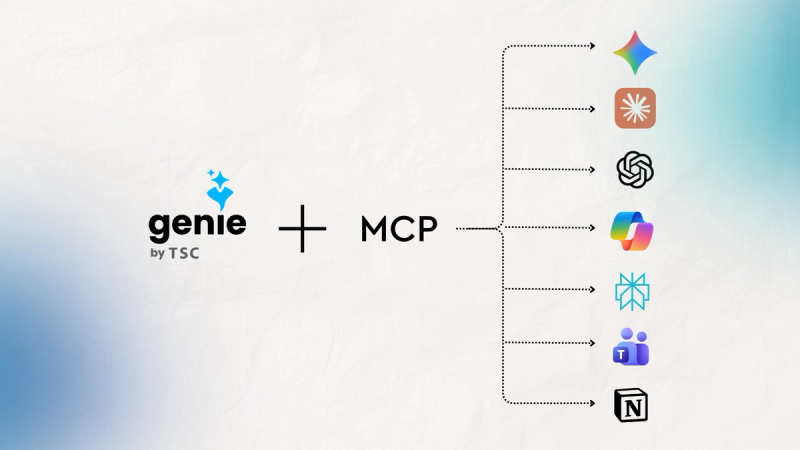
Genie now works where you do
Tradecraft
How Government Affairs Teams Should Engage Policymakers in 2026 (& How AI Augments the Work)
Tradecraft
What's Stakeholder Intelligence?
Tradecraft
Why Public Affairs Needs Specialised Media Monitoring Tools
Tradecraft
Top Alternatives to Simply Stakeholders for Stakeholder Engagement Software
Tradecraft
Comprehensive Guide on Stakeholder Network Mapping
Tradecraft
TSC.ai Featured as a Smart Innovator in Reputational Risk Software
Getting started
Bring the stack you run today.
Thirty minutes on your field and your tools. We will explore together what needs connecting, where there could be opportunities to improve, and what is missing.
- Book a briefing
Thirty minutes with our team. Tell us what you are trying to solve in your external environment, and we will work through the challenge together. No seat-count qualification. No generic demo.
- Define your scope
Start with the requirements that are already clear. The scoping tool connects the data, the stakeholders and the outputs into a working brief.