
Meet Genie.
Stakeholder and issue intelligence for organisations exposed to the world outside them. One platform, three ways to work with it, run with you.
- >2m
- signals processed /week
- >1m
- stakeholders monitored
- 20+
- AI/ML model pipeline
- 15 years
- of corporate diplomacy practice
Explore the pipeline
Genie builds one connected model of your external environment.
Genie is an intelligence asset built around your mandate. It holds one connected record of the stakeholders who matter to you, what they say and do, and how you have engaged them. Delivered with and for you. Your analysts work in it, it powers the outputs we design for you, and your own AI can call it.
- 01
Stakeholders
Genie maps the people and organisations around your mission.
Regulators, officials, executives, journalists, investors, NGOs, communities and the institutions they sit in. Each has a maintained profile: current and previous roles, positions by issue with their sources, and the date it last changed. Between them run the relationships, each typed, sourced and marked verified or inferred. Your scope decides who is in it, from the actors around one asset to the whole constituency around a company and its peers.
A stakeholder
Ministers, officials, executives, journalists and campaigners, and the ministries, regulators, companies, outlets and NGOs they belong to, each a profile of its own.
Where someone is and where they have been. A move from a regulator to a company board is on the record the day it happens.
What each stakeholder has said on each of your issues, with the source. Every stance is a quote.
Every profile carries the date it last moved.
How they connect
Role history is kept. A former regulator now advising a competitor is read as both.
Boards, committees, associations and coalitions. An organisation’s influence, traced through the people who sit in it.
Who finances whom, from filings, registers and reports. A campaign’s backers sit on the map beside the campaign.
Formal and informal advisory ties, from the public record and from what your own teams know, with the source kept on each.
Reporting lines inside institutions. Ask about a ministry and find the official who decides as well as the one who speaks.
- 02
Signals
Their positions and activity are continuously monitored.
News and wires, social media, academic work, government and regulatory records, NGO and campaign material, company filings and your own licensed feeds. Every item arrives with its source and its time.
Source types
Global and national outlets, trade titles and the wires, in the languages your markets read.
Posts by handle and by keyword across the main platforms, including the regional ones a global tool misses.
Gazettes, consultations, hearings and rulings, taken from the official sites themselves.
Reports, petitions and campaign pages from civil society, which is where many issues surface first.
Annual, sustainability and regulatory filings from you, your peers and your counterparties.
Your own subscriptions, connected so the same engine refines them beside the open sources.
- 03
Engagement
You build a single record of every engagement.
Meetings and emails with known stakeholders are logged from connected calendars and inboxes. Spreadsheets, CRM exports and attendee lists come in de-duplicated. It sits against the same people as the signals about them, permissioned by team and market, and it is the part of the model only you can supply.
What you add
Meetings and calls with known stakeholders, logged from connected calendars or by hand, with who was there, what was discussed and what was promised.
Emails to and from the people in the record, captured from connected inboxes. The last exchange sits beside the last article.
What your teams know and the public record does not: a read on a meeting, a warning from a colleague, a commitment made in a corridor.
Spreadsheets, CRM exports and attendee lists, matched to profiles and de-duplicated on the way in. The record starts from what you already hold.
- 04
Refine
20+ AI/ML models work to process, clean and label every item before anyone reads it.
Junk is sorted out and near-duplicates are grouped. One wire story syndicated forty times is one story. Then the labels: industry, geography, publisher, your issues, the tone towards each stakeholder named, a summary, a vector for search. Computed once, stored, and open to correction.
In the stack
Knows a paywall from a story and a job advert from a statement. Your feed carries coverage, and what you exclude is excluded everywhere.
Recognises the same story however many outlets carry it. A trend line counts each story once.
Genie classifies and reasons across the languages your stakeholders use, and keeps language as a field of its own. Read the Portuguese conversation alone, beside the English one, or together.
Every item knows its industry, the country it is about, the country it came from and who published it, which is what lets a global team cut the same feed by market and sector.
One model per issue in your taxonomy, trained on examples our analysts label with you. “Water stewardship” means what it means to your organisation. Every correction improves it.
Scores the tone towards each stakeholder named, not the mood of the article. A piece that praises a regulator and criticises you reads as both.
Writes a short, faithful summary of every item. Two hundred signals read in minutes, with the full text one click away.
Represents every item by its meaning. A search for “community opposition to the pipeline” finds the protest report that never used those words.
- 05
Resolve
Genie matches signals to stakeholders, building one connected database.
An entity linker matches each name in each item to a reference index of more than a million people and organisations. A headline, a filing and a meeting note land on the same record, whatever they called the person. Each statement then links to the organisation they speak for, the issue it touches and the meeting where it came up, and the whole graph is kept with its lineage, encrypted per organisation. Every product and every agent reads this one graph.
In the stack
Reads “the minister”, her name in three spellings and her former title as one person, against an index of more than a million people and organisations. A profile holds everything said about someone, whatever words were used.
Ties a stakeholder to an issue when the two appear together. A profile shows what each person has spoken on and when. An issue shows who is moving it.
Holds who works with whom, who speaks for which organisation and who you have met, as one graph. Every network map is drawn from it.
When a new name matters, a model researches and drafts the profile. A person checks it before it publishes. The index keeps pace with the news.
- 06
Analyse
The data is handed to agents built around your questions and frameworks.
Analytical agents configured to your frameworks run across the full dataset: who is moving on an issue, how a narrative is shifting, where a relationship has gone quiet. When a question is asked, the model is briefed on your mandate, sees only the evidence scoped to your workspace and ranked for it, and answers with every source attached. An analyst can check the working before trusting the conclusion.
What the model is given
The risk, reputation or policy frameworks your teams report against stay in place, configured into the agents. The output lands in a shape the board knows.
Only what your workspace includes, ranked for its issues, markets and preferred sources, and capped. The model reads the few hundred items that matter.
What matters to your organisation, the tests for relevance, the red lines and the sources to trust, added to every question, the way an analyst who knows the account reads a story differently from one who does not.
Every answer cites the items it was built from, with dates and publishers. A claim in a brief can be checked in a click and defended in a room.
- 07
Datahub
Your teams work in it.
The system of record for the teams who do the work. Analysts and country teams explore the profiles, the connected signal feed, the maps and the engagement record directly, and ask Genie the questions in between.
DatahubWhat your teams do in it
Every stakeholder in scope, with roles, positions by issue, relationships and the history behind each.
The connected signal feed, filtered by issue, stakeholder, source or market, and saved as standing views.
Who connects to whom around an issue, drawn from the typed relationships in the record.
Meetings, calls and correspondence against the stakeholder, visible to the teams allowed to see them.
A question in plain language, answered from the record with its sources attached.
- 08
Lens
Your leaders receive from it.
Briefs, network maps, alerts and decision-moment reads, produced on a cadence from the same model and delivered to the people who have to act. A TSC analyst is accountable for them, and each one stays in Lens against the issue it answers.
LensWhat arrives
A read on an issue, a stakeholder or a period, on the cadence you set, with every claim sourced.
The influence around a decision, drawn and annotated for the people who have to work it.
A spike, a new voice or a shift in position, flagged when it crosses the threshold you set.
What has moved before a hearing, a results day or a launch, and what it means for the call.
- 09
Assistant
Your AI calls it.
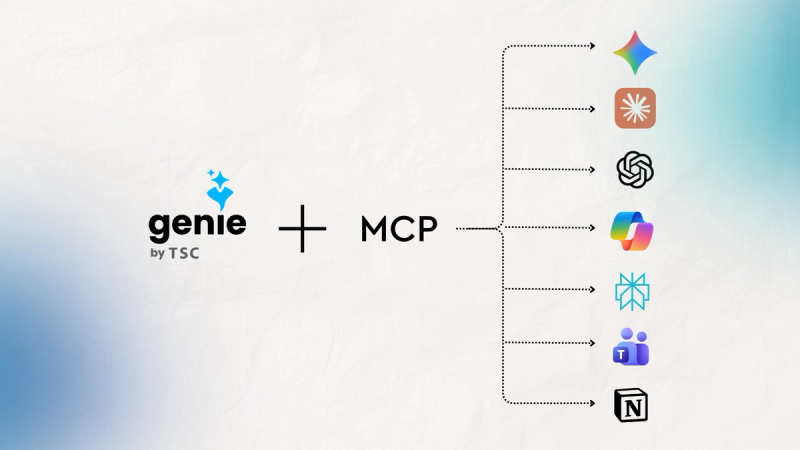
The same permissioned context, inside your copilot, over the Model Context Protocol. Your agent gets resolved identities, your engagement history and the delivered intelligence, with sources, and what it produces writes back.
AssistantWhat your agent gets
One stakeholder, however many ways their name appears, with the roles and positions on record.
Who in your organisation has met them, when, and what was said, within what the user is allowed to see.
The agent builds on the briefs and reads produced for you.
Every answer carries the items it came from. Check them where you asked.
A filter, an alert or a newsletter the agent drafts is approved before it saves into Genie.
Analytical governance
Our analysts work with you to tailor Genie to your mission, and scale it from there.
The models do the volume. People set the scope, and check the record and own the judgement where it matters. Three things decide how a deployment runs.
- 01 Scope
Scoped with you
Your engagement manager works with your team to scope the data, the system and the delivery: who is in the universe, which sources and issues, which frameworks, and what arrives on what cadence.
- 02 Deliver
Delivered to fit
Your teams work in Datahub themselves. Routine reads run end to end without a hand on them. Where the judgement matters, an analyst checks the record and owns the call before it reaches you. The mix is set at scoping and changed as you go.
- 03 Grow
Grown with you
The record compounds. Every correction, every engagement logged and every question asked makes the model better. A new market, mission or team builds on what is there. The longer it runs, the more it is yours.
Technical governance
Reviewed and approved by IT and security functions across the Global 500.
Source traceability
Every statement, classification and answer links back to the item it came from, with its date and source.
Permissioned records
Engagement data is permissioned by team and market. A user sees what their role allows, in Genie and in their own AI.
Visible AI
AI-generated content is labelled. A question asked in plain language is shown as the filters it became, for the user to inspect and adjust.
Data protection
Your data is encrypted with keys specific to your organisation. Language models run on zero-retention endpoints and nothing of yours trains a model.
In deployment
Proven on live mandates.
A system of record for one organisation. A reputation cadence for another. A feed into the systems a third already ran. The same connected model underneath each.

Stakeholder relationship management
A telecoms group built one stakeholder system across 21 market teams.
Twenty-one public-affairs teams across Europe, Africa and the Middle East had no shared view of stakeholder engagement. Genie connected more than 30,000 stakeholder records, local engagement history and recurring intelligence in one group-wide system.
- 21Markets connected
- 30,000+Stakeholder records
- 1,000+Engagements logged

Reputation & narrative intelligence
A global energy company built live reputation intelligence from large-scale social data.
A global energy company had a mature fieldwork programme and an established reputation framework. Its live media measure could not reliably distinguish nearby sentiment from stakeholder opinion about the company. TSC built a high-volume system to do that.
- ~250KMonthly mentions
- 6Covered platforms
- 8+Teams onboarded

Market intelligence
A lighting company found funded projects before they became tenders.
A major US stimulus created a short window for a lighting company to find funded projects before they reached tender portals. Genie linked public announcements to projects and decision-makers, then routed potential opportunities into Salesforce for account managers to qualify.
- US$50m+Potential opportunities surfaced in two weeks
- 70+Potential opportunities identified in six months
Worldview
Built on 15 years of thinking and writing at the edge of corporate diplomacy.
Analysis, influence maps and tradecraft from the team that builds and runs Genie. Read and cited inside the corporate affairs functions of the Fortune 500.
Tradecraft
How to Track Political and NGO Narratives in 2026
Tradecraft
Genie now works where you do
Influence map
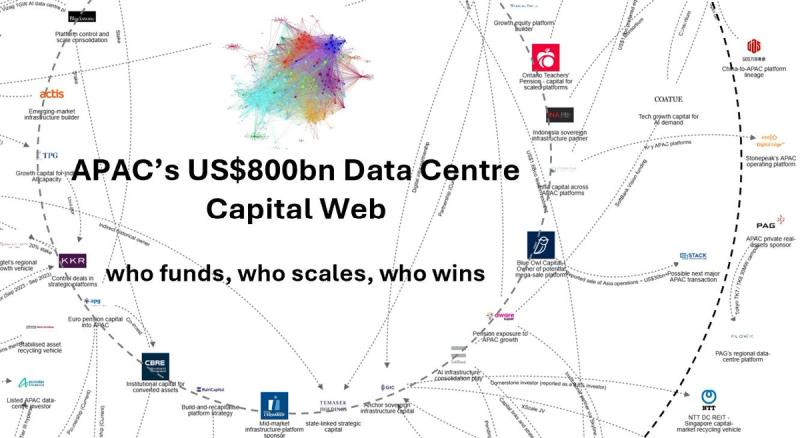
The $800bn APAC Data Centre Capital Web
Influence map
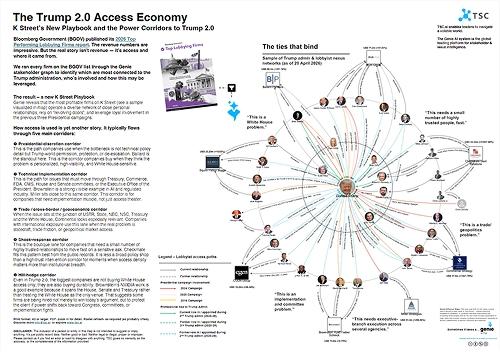
The Trump 2.0 Access Economy
Tradecraft
How Government Affairs Teams Should Engage Policymakers in 2026 (& How AI Augments the Work)
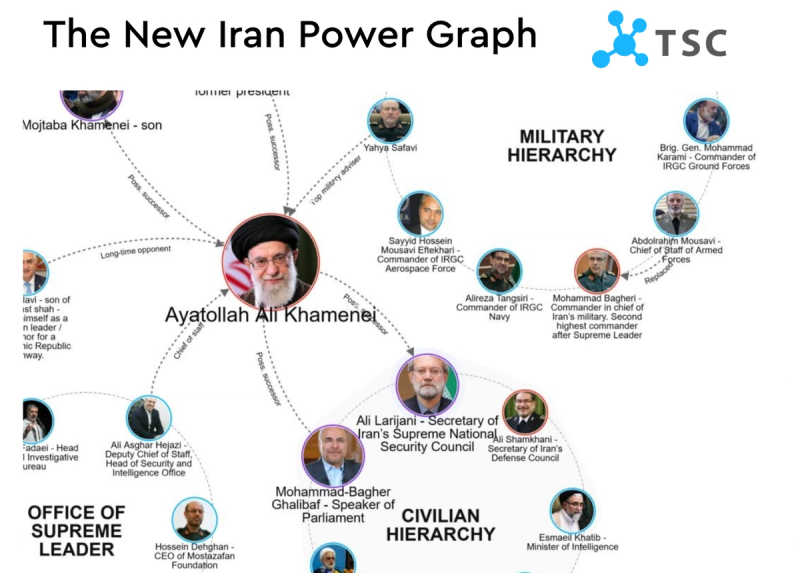
Influence map
The New Iran Power Graph 2026
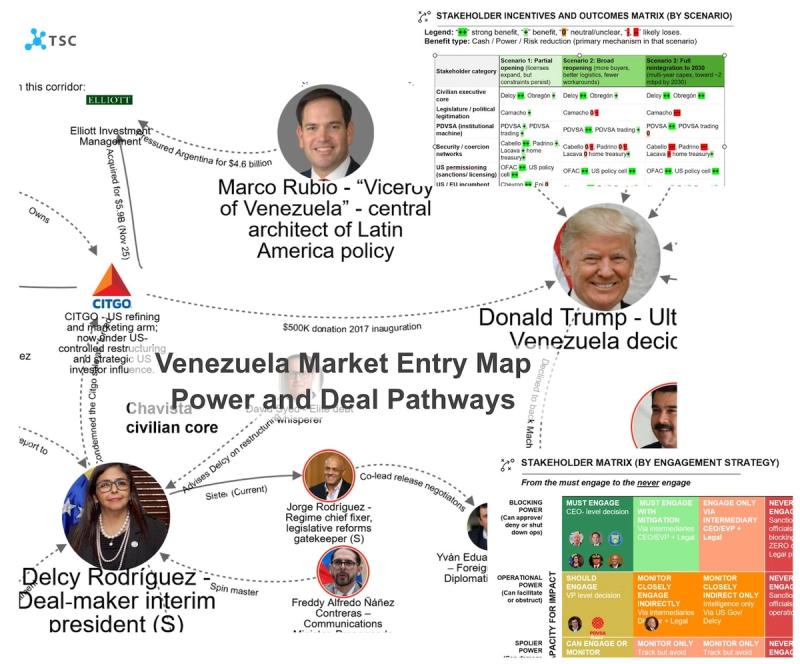
Influence map
Venezuela Oil Market Entry Map
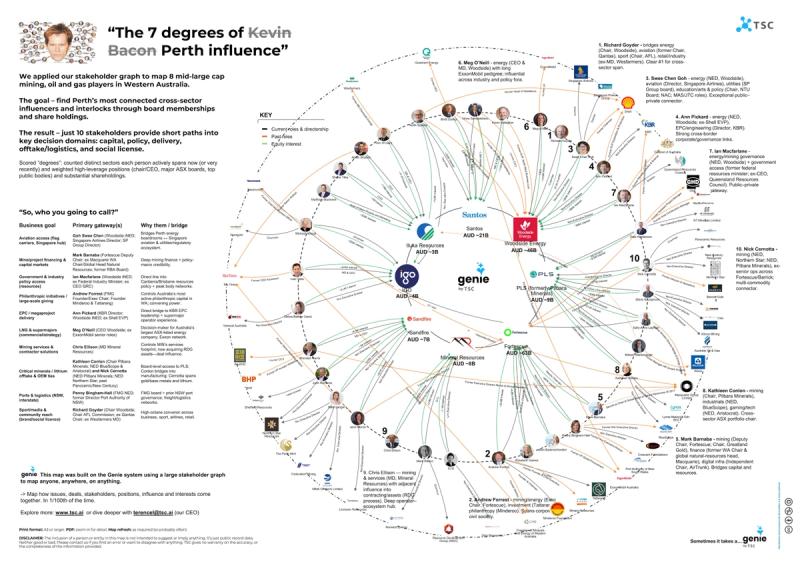
Influence map
The 7 degrees of Perth influence
Questions
Frequently asked questions
Is Genie a platform or a service?
Both, by design. Genie is the platform. TSC configures it around your mandate and, where you want it, runs the intelligence cadence with you. How we scope describes how an engagement takes shape.
Do we have to take all three products?
No. Most organisations start with one. Datahub, Lens and the MCP connection draw on the same asset. Adding one later involves no migration.
Where does our data sit, and who can see it?
In your Genie workspace, permissioned by team and market. The records your organisation builds remain yours to use, query and connect for the life of the engagement.
What is Ask Genie?
The conversational interface inside Datahub. It answers questions against your workspace’s connected context, shows the filters it used so you can adjust them, and links every answer to its sources.
Every deployment starts with an objective.
Describe the issue, market, asset or relationship set you are responsible for. We will propose a scope, the products involved and how we work together.